
The past few years have reshaped what it means to lead in procurement
Anyone who has lived through the extraordinary swings in demand, the sudden shortages, the factory shutdowns, and the countless late‑night escalation calls knows that our work hasn’t simply become harder – it has become fundamentally different.
As Chief procurement officer of a global company like Schneider Electric, I’ve seen firsthand how crisis not only disrupts the supply chain but forces the entire organization to reimagine what procurement is here to do.
We used to be viewed as a function focused on negotiation, cost, and continuity. Today, we sit at the heart of business strategy and resilience.
When crisis redefines what procurement must be
Anyone who has ever walked into the first hours of a brewing crisis knows the feeling: a blur of conflicting information, people scrambling for answers, and a sense that everything is moving faster than anyone can get a grip on. In that moment, the best thing a leader can do is slow everything down, not in speed, but in thinking. Sometimes it’s as simple as taking a deep breath, bringing down the adrenaline levels and clearing the mind.
My first move is to install a management system that goes back to the basics. Ask ‘What is fact? What is assumption? And what is noise?’ and importantly ‘who owns what and by when’. Once those basics are in place, the temperature drops. People stop spiraling. The path forward becomes clearer. Having a clear management system is what drives effective action, never raw emotion.
I’ve seen how quickly uncertainty can create panic. My job in those moments isn’t to give stirring speeches but to create calm and reassure people that we are a strong team, and we have what it takes.
Over time, I’ve realised what we call “crisis management” is really about culture. If your culture is built on ownership and concrete accountability, you can find your footing even when everything is shaking. If it isn’t, the cracks show immediately.
Why procurement must now sit at the strategy table
One thing the unpredictability of the past few years has made clear is this: procurement can not be an afterthought in a company’s strategy.
Supply continuity, risk assessment, cost-to-serve, supplier capabilities, access to technology and geopolitical exposure are part of the strategic equation now, and these inputs are critical to how products are defined and designed today.
Of course, influence doesn’t happen overnight. We often say: don’t wait to be invited to the table, bring your own table. That mindset shift happens when you contribute solutions to real problems and operate with a commercial perspective. When you do that, credibly and repeatedly, influence naturally follows.
Leading teams through uncertainty as a modern CPO
Today’s operating environment evolves at unprecedented speed. Technology advances rapidly, while geopolitical and economic shocks arrive with little warning. In this context, leadership must move away from centralised decision-making towards distributed judgment.
Trust and empowerment are no longer ‘soft skills’ for a CPO; it’s the operating model. Empowerment and ‘air-cover’ give teams the confidence to operate autonomously at pace.
For me, empowerment means setting clear guardrails and providing genuine support. Teams need autonomy to act quickly within those boundaries, and confidence that leadership will stand behind them. When circumstances exceed those guardrails, the answer is adjustment – not delay.
The only reason I can move with speed is because I trust the people around me. That trust is built long before the crisis starts. I hire for curiosity and grit. I look for people who take ownership and real accountability, who propose solutions instead of asking for direction, who treat mistakes as fuel for learning rather than a place to hide.
Equally important is checking in on how people are coping. Pressure is often invisible until it becomes a problem. Crisis exposes people quickly. Some step forward instinctively while others freeze. In fact, it’s rarely about competence but mindset. Leaders cannot assume resilience; they must actively create environments where people feel supported, heard, and able to perform sustainably. In high-intensity situations, attentiveness and consistency matter as much as decision quality.
The role I stepped into years ago is not the role I live today. My contribution now extends beyond costs, contracts, and performance metrics. It includes resilience, risk, cross-functional alignment, and navigating the very human realities of operating under sustained pressure.
The strongest people I’ve worked with are the ones who consistently leave situations a little better than they found them. They don’t just solve the fire in front of them; they strengthen the system behind it.
The future of procurement leadership
If crisis has taught me anything, it’s that our role cannot be defined by defending the past. The systems, habits, and assumptions that worked before won’t automatically serve us tomorrow. Complacency is a slow-moving threat, and it catches organizations far faster than they expect.
I’m energized by the future, not because it’s predictable but because we now can reshape procurement from a position of strength. We’re no longer reacting to the world around us; we’re helping shape how the business deals with uncertainty, adapts, and grows.
The modern CPO is not simply a negotiator, a cost manager, or a supply troubleshooter. We’re builders of resilience, architects of transformation, and leaders of people navigating some of the most complex challenges in business.
Crisis didn’t redefine procurement; it revealed the full extent of what we’re capable of contributing.
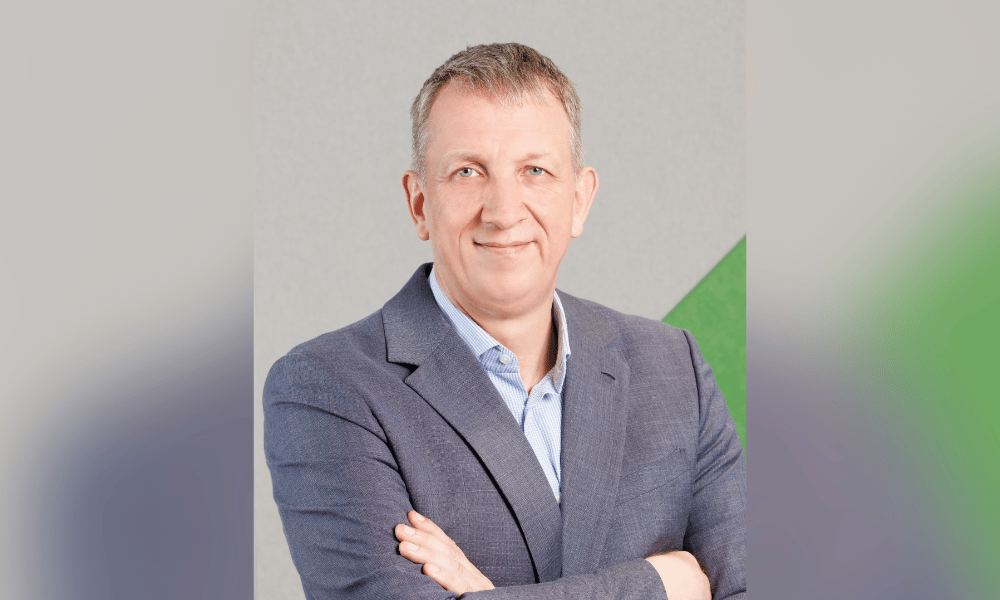
By Ard Verboon, chief procurement officer at Schneider Electric


