
Discover how Coles approaches HR at massive scale to keep 100,000 plus frontline workers safe, resilient and deeply connected to their communities across Australia
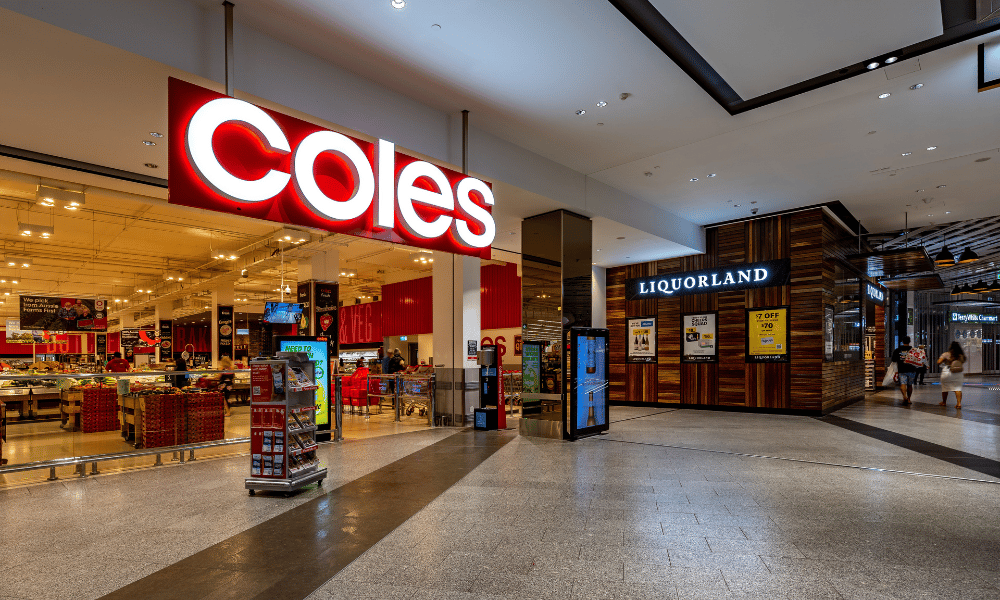
When you employ more than 100,000 people across one of the world’s widest land masses, HR stops being a back‑office function and becomes an operational necessity. That’s the reality for supermarket giant Coles, which ranks as the third‑largest employer in Australia.
Speaking with HRD, Coles’ head of people and culture for supermarket operations, Liam Mahon paints a picture of a function that is simultaneously hyper‑local and massively scaled: keeping frontline team members safe in stores from Kalgoorlie to inner‑city Sydney, building leaders who can cope with complex community dynamics, and still finding ways to ensure every voice is heard.
The emotional weight of HR at the frontline
For Mahon, HR at Coles begins with an uncomfortable truth: on any given day, something can go seriously wrong in a store.
HR holds everybody’s confidences, including the worst‑case scenarios, put in perspective by the rising number of assaults and violence against retail workers.
With retail violence at unacceptable levels across all retailers nationally, he noted, this has a significant impact when you are responsible for “such a large workforce of a hundred thousand team members.”
In response to this threat, Coles has made safety the non‑negotiable starting point for every discussion.
"While most of our customers do the right thing, unfortunately a small number don’t. Despite record levels of investment in technology, security guards and safety training, our team continue to experience unacceptable levels of abuse and threatening behaviours and in response to this threat, Coles has made safety the non‑negotiable starting point for every discussion," said Mahon.
The organisation’s intent is blunt: team members must go home safe, every day.
That philosophy shows up in two ways: de‑escalation training and heavy investment in store technology. Team members are repeatedly reminded that their safety is the absolute top priority.
Resilience isn’t a module – it’s lived experience
If safety is the baseline, resilience is the long game. But Mahon is sceptical of the idea that you can “train” resilience in a classroom.
“Resilience is a hard one, because resilience isn't something that I necessarily think that you can just train for a training module, it's lived experiences,” he explained.
As leaders move through their careers – managing underperformance, growing a P&L, dealing with tricky customer interactions and complex community issues – they build what Mahon calls their “leadership muscle”. But the type of resilience they need is highly contextual.
A store manager in the bush may face very different social and economic stressors compared with someone in the city, shaped by local demographics, crime rates and community dynamics.
Coles can deploy its “best store manager” into a remote community, Mahon noted, but if they haven’t seen that environment before, their resilience will be tested in new ways.
In his view, HR’s job is to ensure leaders have the “right mentors and right guidance” around them when those big resilience moments arrive, so that – whether they succeed or stumble – they learn and grow from the experience.
Talent mobility as a development engine
One of the most powerful levers Coles has is geography itself. With stores in growth corridors, regional hubs and remote towns nationwide, talent mobility becomes both a staffing strategy and a development engine.
The company thinks about the “art of the possible” – how a team member who once pushed trolleys in a car park or stacked shelves can one day lead a store.
For some leaders, that journey includes becoming highly mobile, taking on progressively more complex stores in different parts of the country.
Mobility also helps Coles solve a real‑world problem: in metro areas, turnover is often lower, and senior roles can be “locked” for long stretches. Offering high‑potential leaders a bigger, more complex store in a different region can be a way to “unlock opportunities faster” in their careers.
The catch is Australia’s vastness. Some stores are hard to staff because of their sheer remoteness or perceived complexity.
Coles’ answer is to back people in – even if they “might not be able to tick all the boxes,” the organisation surrounds them with the right leadership support and positions the move as a stretch opportunity rather than a risk.
Listening at scale: AI, surveys and stop lines
Making 100,000‑plus voices heard requires more than open‑door policies. Coles has invested heavily in what Mahon calls “scalable solutions” to give every team member an entry point to HR support and information.
The centrepiece is a revamped intranet platform with a built‑in AI bot that team members can access “from anywhere”, at any time, to look up policies, find information or simply get “a front door in” to the people function.
Twice a year, Coles runs a whole‑of‑workforce engagement survey to “sense check on how our team are thinking and feeling” and surface any systemic issues early. For more serious concerns, there is Stopline – a confidential channel team members can call or email to raise grievances or ethical concerns.
Layered over these tools is a sustained investment in leadership capability. Over the past few years, Coles has poured resources into leadership programs so that store and line managers understand how to manage large, diverse teams and act as the first line of support.
In a workforce that can include first‑time workers, students, parents seeking flexible hours, and semi‑retirees with long corporate careers behind them, that capability is critical. HR’s task is to help leaders understand where each person is at and why they come to work – and to adapt their approach accordingly.
Culture, community and Coles’ ‘magic’ value
For all the systems, processes and scale, Mahon argues that Coles’ real differentiator is cultural: a strong sense of community in stores and a genuine, everyday commitment to its values.
He speaks with particular pride about “the energy, the connection and the diversity that we have in our stores,” describing it as something “you can’t beat.”
Long‑serving customers become part of that community too – including older shoppers for whom a conversation at the checkout might be one of the most meaningful interactions of their day.
Coles anchors this culture in its four Cs – care, customer, create and courage. While care remains a powerful foundation, Mahon is equally clear that courage is essential: the courage to make decisions, to try new things, to challenge old assumptions and to create better experiences for customers and teams.
Unlike organisations where values stay “on the wall” or “on a piece of paper,” he believes Coles genuinely lives and breathes all four – and that this is what underpins its consistently strong engagement results.
Today, Coles is seeing these values work in combination, with care and courage showing up side by side in the way teams lead, innovate and respond to challenges. As store managers progress through leadership programs, the organisation is explicit about what it means to be a leader at Coles: to lead through the values, not around them, and to put customer, care, courage and creativity at the centre of every decision.
Culture is reinforced store by store, leader by leader. From AI bots to stoplines, from remote mobility moves to de‑escalation drills, Coles’ HR ecosystem is undeniably complex. But in Mahon’s telling, it all circles back to something simple: ensuring team members and customers are safe, heard and supported, and that leaders have the courage and creativity to keep improving how Coles serves communities across Australia.


