We've handed AI the keys to almost everything we do at work, and now it won't stop asking us what to do next
We are well past the stage of treating AI as an experiment, typing a prompt and hoping for a useful response. AI is now embedded across the modern workplace, from email and meetings to reporting, planning and customer service.
It's enabled a way to streamline tasks that were previously tedious and free up space for us to focus on more important things while AI does the heavy lifting.
A study published in Nature Human Behaviour found that AI-assisted brainstorming can increase idea diversity in the short term, but may also encourage convergence over time, as people gravitate toward AI-generated suggestions and away from more original thinking.
The cognitive effort shifted from generation to selection, and that shift came with its own costs.
While there is broad agreement that AI is helping solve a major productivity challenge for time-poor humans, it's also creating another burden entirely that's chipping away at our mental state more than we realise: decision fatigue.
Decision fatigue from AI is burning us out
We're at a point now in Australia's corporate workforce where we're no longer overwhelmed by just workload, but also by the decisions we need to make to ensure we're not operating with low-quality, generic or unreliable output.
There's a level of integrity and reputation at stake if we don't critically assess what quality is and what is not, and this constant judgment call, repeated dozens of times a day, is quietly eroding our capacity to think well.
The micro-decisions pile up fast. Open your inbox, and AI suggests replies – you review, tweak, and decide what sounds genuinely human and not too generic. Sit in a meeting, and AI transcribes the conversation and produces a summary; you decide what matters and what doesn't.
Use almost any modern tool, and it offers multiple "better" options – you choose one, then another, then another, and before you know it, you've spent more time directing the AI than it would have taken to do the work from scratch.
But what happens when employees aren’t trained enough to make the right decision?
One in four Australian workers are using AI daily, yet only a third have received any formal AI training from their employer, and 72% are concerned about breaching data or regulatory rules when using it; signalling that they’re making many high-stakes decisions about AI output without adequate support.
This indicates that not only are workers overwhelmed by high-stakes decisions via AI generation, but they’re also not equipped with the tools to critically make the right choice.
Moreover, the fatigue doesn't ease up as the expertise and AI training rise. In healthcare, AI can suggest possible diagnoses, but clinicians remain responsible for interpreting context, identifying exceptions and making the final call. In logistics, systems optimise routes, but humans monitor and intervene when things go off track.
Whether the decision is which email reply to send or whether to override an AI-generated diagnosis, the cognitive load keeps accumulating – and that's the problem.
More than anything, decision fatigue stems from a design flaw in AI infrastructure. So how do we address it?
It's a problem we see play out across almost every industry we work in. And what's crystal clear is this: the best systems don't create more decisions, but remove the ones that don't need a human in the first place.
And that all starts with output design.
Instead of flooding users with options, systems should surface a single, high-confidence recommendation with clear reasoning behind it. That shifts the human role from constantly reviewing every output to only stepping in when something genuinely requires their judgement, which is a far more sustainable way to work.
It also requires clear decision boundaries.
Where AI is deployed effectively, there's no ambiguity about who owns what; the system handles what it can do reliably at scale, and humans step in where judgment, context, or accountability is actually required. Without that clarity, people get stuck in a constant loop of second-guessing that defeats the whole point.
What's equally important is designing for the environment in which the system actually operates. Frontline workers, clinicians, and operations managers do not have the luxury of reviewing ten different options – they need clarity, speed, and trust in the output, otherwise the whole system crumbles.
The shift we actually need to make
The framing that gets us somewhere useful is this: AI should remove humans from low-value decisions so they can focus on high-value ones. Not co-pilot every decision, and not to make complexity more accessible while leaving the same volume of choices on the table. Remove the noise, and protect the signal.
This is where deliberate AI product design makes the difference. Working closely with domain experts – clinicians, engineers, operations leads, analysts – you can map exactly which decisions genuinely require human judgement and which can be safely resolved by a well-designed system.
That specificity is what separates AI that actually reduces cognitive load from AI that just moves it around.
Here’s an example. A supply chain team we worked with at AIBUILD was drowning in daily routing exceptions that each technically required a human sign-off. By redesigning the decision logic, making the AI's thresholds explicit and auditable, they cut those interruptions by more than 70%, and operations managers got their focus back.
The AI didn't replace the team, but instead respected their time.
What productivity actually looks like now
More output doesn't mean better outcomes, and more decisions don't mean better performance.
In many cases, the most effective systems are the ones that quietly reduce cognitive load, allowing people to focus on fewer, higher-quality decisions.
That's where AI delivers its real value; not by doing everything, but by removing what doesn't need to be done by us.
The promise of AI was never just speed, but making work better. If we get this wrong, we won't be freeing people up, but burning them out in a different way, one overloaded decision at a time.
The future of AI won't be defined by how much it can do, but by how well it allows humans to think clearly, act decisively, and switch off at the end of the day. At AIBUILD, that's the measure we hold ourselves to: not the volume of decisions our systems enable, but the number of unnecessary ones they eliminate.
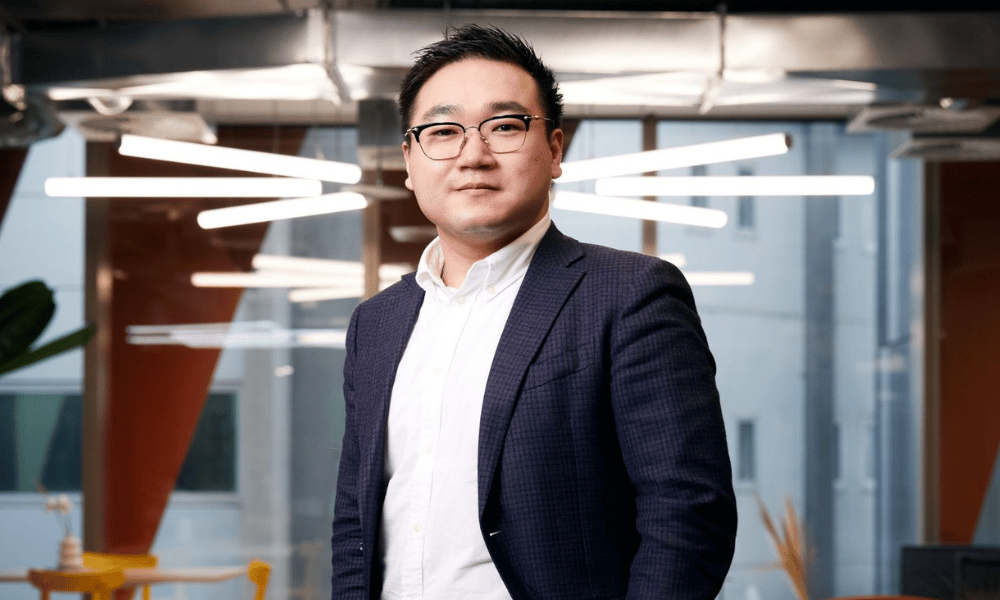
Yifei Wang is the founder and CEO of AIBUILD