Headline inflation soars to 4.6% amid surging fuel costs
Headline inflation surged to 4.6% in March 2026, rising to its highest level in three years, with both employers and unions making their case for appropriate adjustments to the upcoming minimum wage decision.
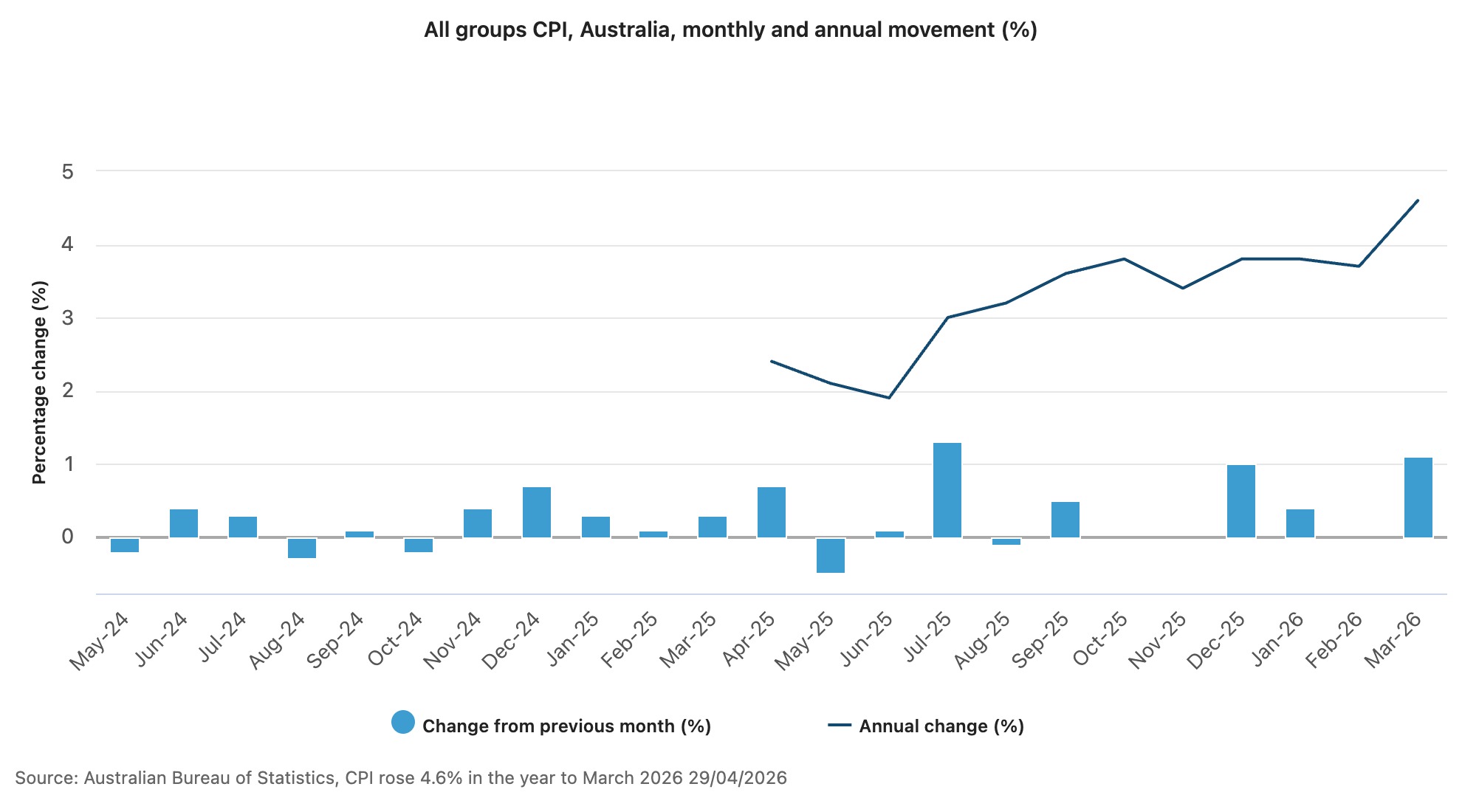
The Consumer Price Index (CPI) rose 4.6% in the 12 months to March 2026, significantly higher than the 3.7% annual inflation recorded in February, as per the latest data from the Australian Bureau of Statistics (ABS).
"Annual CPI inflation is the highest it's been since September 2023," said Sue-Ellen Luke, ABS head of prices statistics.
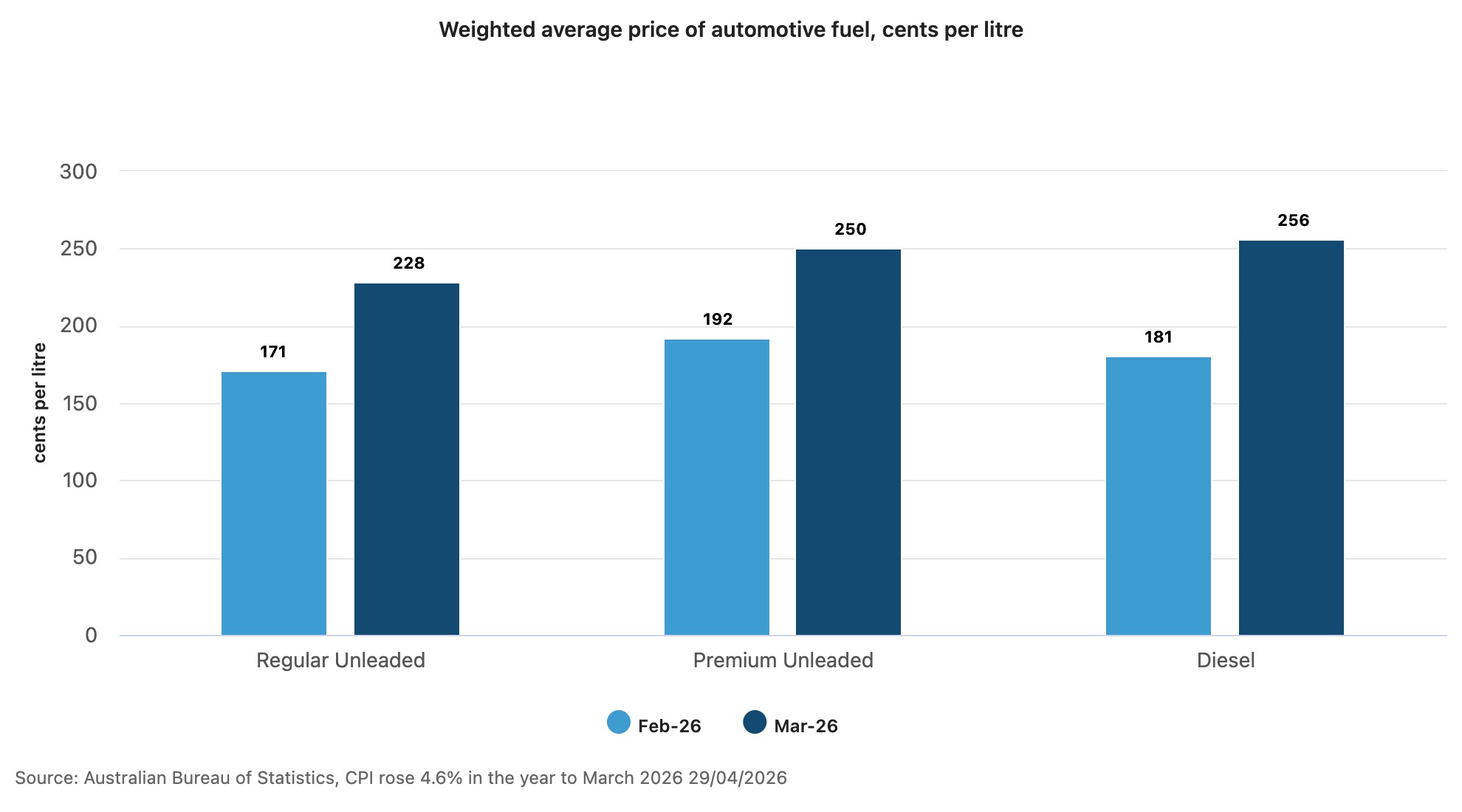
According to the ABS, the CPI monthly movement for March was 1.1%, as automotive fuel prices logged a 32.8% monthly increase and drove Transport consumer prices to 9.2%.
"Automotive fuel prices rose 32.8% from February to March, which pre-dates the halving of the fuel excise on 1 April," Luke said.
"The increase in March is the largest monthly increase since the series began in 2017, reflecting the impact of the conflict in the Middle East on fuel prices."
Treasurer Jim Chalmers said the increase in inflation was "expected" because of the global pressures.
"These numbers show Australians are paying a hefty price for the war in the Middle East. These are the costs and consequences of a conflict on the other side of the world," he said in a statement.
Impact on minimum wage increase
The worsening inflation prompted employers and unions to call for appropriate adjustments to the minimum wage, which is scheduled for an annual review next month.
The Australian Chamber of Commerce and Industry (ACCI), which is calling for a minimum wage increase of around 3.5%, said the latest inflation figures make it more important for the Fair Work Commission to take a "measured approach" when deciding on the increase in minimum wage.
The rising inflation is putting more pressure on businesses across the country, which are already experiencing higher operating and input costs, according to a recent ACCI poll.
"Most businesses are unable to pass on these costs, with 64% reporting that they are absorbing the higher costs," said Andrew McKellar, chief executive of the ACCI, in a statement.
Meanwhile, the Australian Council of Trade Unions (ACTU) said the worsening inflation underscores the need for stronger minimum wage increases and vehicle allowance so employees can keep up with the cost of living.
ACTU previously proposed a five per cent increase to the minimum wage to $26.19 per hour, citing the rising cost-of-living pressures and high petrol prices.
But the latest inflation figures show that the increase should be beyond five per cent amid the risk of petrol prices "wiping out the entire wage claim," according to ACTU.
"Working people should not go backwards because of a conflict overseas. They were not responsible for petrol prices surging more than 30% in a month, and they should not be punished for that with a real wage cut," said ACTU President Michele O'Neil in a statement.
Wage growth in Australian businesses has remained neutral for three months now as employers become more cautious on wage and hiring decisions amid rising uncertainty, according to Employment Hero.
"Combined with wage growth that has remained neutral for three months now: 0.0 per cent from December to March," said James Keene, Managing Director APAC at Employment Hero, in a statement.
"What this points to is an economy that is in a holding pattern, where both businesses and workers are navigating with uncertainty and under significant strain until the situation subsides."
Flexible positions are also up 9.2% in small and medium businesses, significantly higher than the 4.1% increase for permanent roles.
"Casual roles have grown at more than twice the rate of full-time positions, highlighting a clear preference for short-term workforce strategies as businesses manage rising operating costs," Keene said.