146 workers kept showing up, handed in uniforms, then joined the replacement contractor
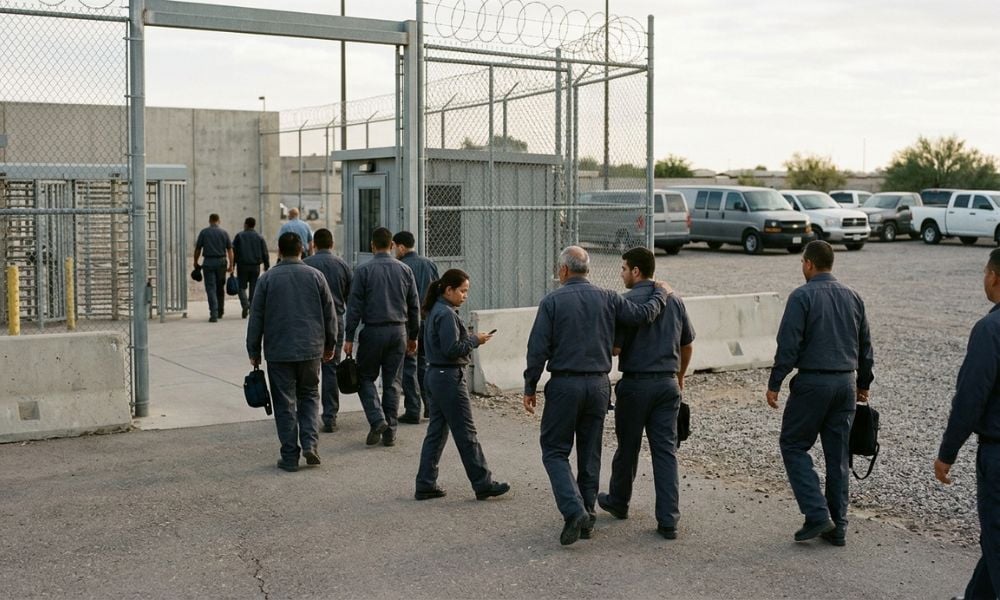
A company that ran Australia's immigration detention centres for more than 15 years must pay redundancy to 146 workers who walked straight into jobs with the replacement contractor.
The Federal Court dismissed Serco Australia's bid for declarations that it owed nothing, finding the company could not sidestep its enterprise agreement obligations simply because the workers found new employment.
The ruling, handed down on November 3, 2026, turned on a deceptively simple question: when a government contract changes hands and an employer stops needing workers' jobs, does redundancy "occur" - even if the employer never formally decides to make anyone redundant?
The answer was yes.
Fifteen years of detention, then a contract lost
Serco Australia had provided onshore immigration detention services under successive contracts with the Department of Home Affairs since 2009. In early December 2024, it was announced that Secure Journeys Pty Ltd would take over, with Spotless Services Australia Limited picking up some of the work.
For 146 employees at two Western Australian facilities - the Perth Immigration Detention Centre and the Yongah Hill Immigration Detention Centre - the transition created an awkward limbo. Serco kept operating until 8pm on March 13, 2025, to give the incoming contractor time to get ready. During that window, Serco sent a stream of communications encouraging workers to declare their intentions: seek redeployment within Serco, confirm they were exiting and collect redundancy, or confirm they were joining Secure Journeys or Spotless.
The 146 workers did none of those things. They kept working their shifts, handed in their uniforms at the end, and started with the new contractor.
Three categories, one assumption
Serco had organised its workforce into three groups. "Category 1" workers sought redeployment within the company. "Category 2" workers confirmed they were leaving the industry entirely - Serco agreed they were entitled to redundancy pay. "Category 3" covered those who had accepted or intended to accept employment with the incoming contractor.
Then there were the 146 workers who stayed silent. In a final communication on March 11, 2025, Serco told them: since you have not indicated your intentions, "we have assumed that you have signed or intend to sign a contract of employment with Secure Journeys or Spotless."
Serco then treated them as having "brought [their] employment to an end" and processed them out - wages, accrued leave, long service leave. No redundancy.
What the enterprise agreement said
Under the Serco Immigration Services Enterprise Agreement 2023, redundancy "occurs" when Serco decides it no longer requires a job to be done by anyone. Redundancy pay kicks in when employment is "terminated by reason of redundancy."
The agreement also contained a clause dealing specifically with a change of service provider. Under clause 26.1, Serco was excused from paying redundancy only in limited circumstances - for example, where the new employer recognised the workers' prior service for the purpose of calculating long service leave, annual leave, and redundancy pay.
That did not apply here. It was common ground that neither Secure Journeys nor Spotless recognised the workers' Serco service for redundancy purposes.
Serco's own emails told the story
The court found that Serco's communications during the transition period made the position clear. From the very first message on November 22, 2024, Serco spoke of finding "suitable alternative employment" for affected workers - language that only makes sense if the existing jobs were going. Weekly "redeployment opportunity" emails encouraged workers to apply for correctional officer roles and other positions across the Serco group. None of those roles involved detention work under the old contract.
The court held that by the transition date, Serco had necessarily decided it no longer required the jobs the employees had been doing - because the contract under which those jobs existed was gone.
Serco's operations director had given evidence that he never made a decision to terminate anyone or confirm any redundancy. The court found this reflected a "misunderstanding" of when redundancy occurs under the enterprise agreement. A formal decision to "confirm redundancy" was not required. The decision was baked into the commercial reality: when the contract ended, the jobs ended.
Did the workers quit? The court said no
Serco argued the workers effectively resigned by accepting jobs with the new contractor. The court rejected this. It found that merely accepting an offer of future employment, while still working for Serco, did not amount to repudiating the employment contract - particularly where Serco was never actually aware, on or before the transition date, that any of the workers had accepted those offers. Serco had only assumed they had.
The evidence showed the workers completed their final shifts and returned their uniforms as Serco had directed. The court also found significant reliability problems with the schedule of employment data Serco relied on - some contracts showed start dates that were earlier than the date the worker accepted the offer, and others reflected the original, pre-delay transition date of March 6 rather than the actual date of March 13.
For HR teams managing contract transitions and outsourcing changeovers, the practical takeaway is direct: if the jobs disappear, redundancy occurs - and routing workers into replacement employment does not automatically extinguish the obligation to pay.