His own psychiatrist's report couldn't save him once the facts fell apart
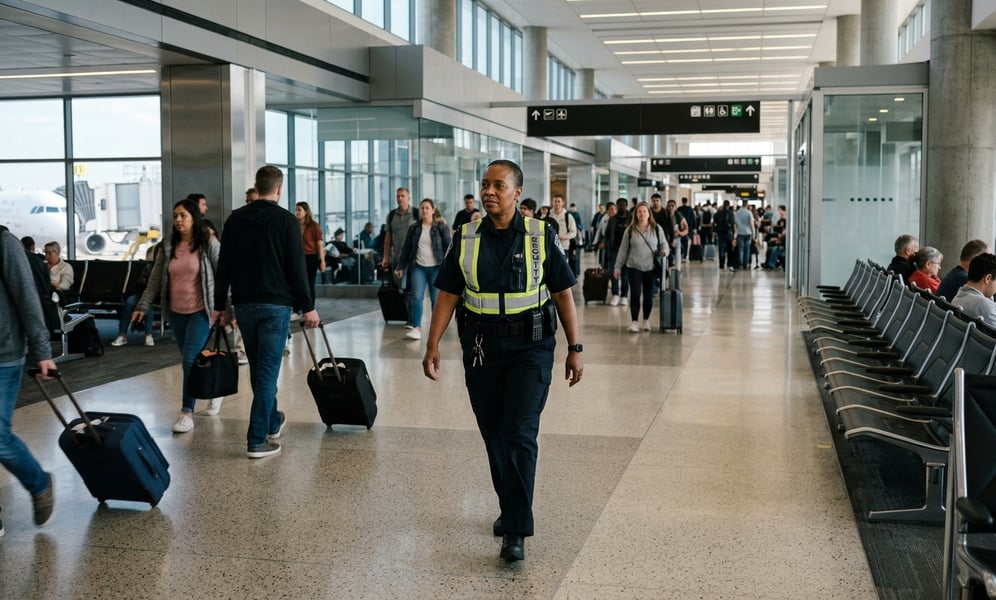
A security officer who claimed workplace bullying caused a mental breakdown has now lost the same fight three times over.
The worker was employed as an aviation protection officer at Perth Airport by ISS Security Pty Ltd from 2016 until May 2022. On May 6, 2022, he filed a workers' compensation claim alleging he had suffered a stress-related mental disorder and physical injuries on the job. His claim pointed to 14 separate incidents he described as "workplace stressors" - including what he characterised as defamation, bullying, harassment and discrimination.
The Western Australian Court of Appeal refused him leave to appeal and dismissed his case on September 23, 2026, with reasons published on October 6. It was the third decision-maker to find against him.
The whole thing turned on credibility.
The case first went to arbitration in the Workers Compensation Arbitration Service. The arbitrator accepted that the worker had a mental disorder - that part was not in dispute. What the arbitrator could not accept was that the worker's employment had contributed to it to the "significant degree" required under s 5(1)(c) of the Workers' Compensation and Injury Management Act 1981 (WA). That is the threshold that separates a compensable workplace injury from a condition that simply coexists with a job.
The arbitrator assessed each of the 14 alleged incidents against the evidence and concluded that the worker was not a credible witness, that the incidents had not occurred as he described them - or, in some cases, at all - and that there was a lack of contemporaneous records or objective evidence backing his claims.
Then there was the expert evidence problem.
A consultant psychiatrist, engaged by ISS Security itself to examine the worker for the arbitration, had concluded that the worker's adjustment disorder was caused by his perception that his employer had not adequately responded to his workplace complaints. That perception, the psychiatrist said, originated around the date of a grievance letter on March 21, 2022.
But the psychiatrist's opinion rested partly on a factual assumption: that rumours had been circulating about the worker in the workplace. The arbitrator found no evidence any such rumours existed. No witness had heard them. The worker's own evidence about the rumours was hearsay.
The worker appealed to the District Court of Western Australia, raising 14 grounds. The hearing stretched over three days. The District Court judge found that the arbitrator had made one error - failing to properly evaluate the psychiatrist's report and explain why it was rejected. Leave to appeal was granted on that ground.
That concession did not save the claim.
The District Court judge assessed the evidence independently and reached the same destination by a different route. The psychiatrist's opinion on what caused the worker's condition started with his distress about workplace rumours. Without an accepted factual basis that those rumours existed, the judge found the psychiatrist's opinion was "diminished to a point where it cannot be relied upon." The remaining grounds were treated as challenges to factual findings rather than legal questions, and leave was refused on all of them.
The worker then took his case to the Court of Appeal, representing himself - as he had done at every hearing. He raised eight grounds of appeal.
The Court of Appeal was not persuaded.
On the core ground - whether the District Court judge had misread the psychiatrist's report - the court found the worker was really challenging findings of fact, not raising a legal question. How much weight to give a medical report, and whether employment contributed to a condition, are factual questions.
The worker also argued that the arbitrator and the District Court had demanded too high a standard of proof on the rumours question. The Court of Appeal disagreed, finding both had understood and applied the ordinary civil standard - the balance of probabilities.
On the remaining grounds - touching on credibility reviews, procedural fairness, the exclusion of fresh evidence, and the absence of an appeal book on day one of the District Court hearing - the court found none raised a legal question, or if they did, any error was not material to the outcome. On the appeal book point, the court noted the worker had not objected to proceeding at the time and had been able to refer to the documents he needed.
The court observed that a litigant who has already lost before both an arbitrator and a court will "ordinarily have difficulties" establishing that yet another appeal is in the interests of justice.
For HR teams managing workplace stress and bullying complaints, the case is a sharp reminder that contemporaneous records matter enormously - both in defending claims and in proving them. A psychiatric opinion built on facts that do not survive scrutiny at hearing will not carry a claim home, no matter how many times it is appealed.
The decision is final. The worker was ordered to pay ISS Security's costs of the application. None of the allegations were tested on their merits at this stage - the appeal was refused on the basis that it did not raise a question of law warranting further review.