Workers allegedly kept going after the solar power ran out
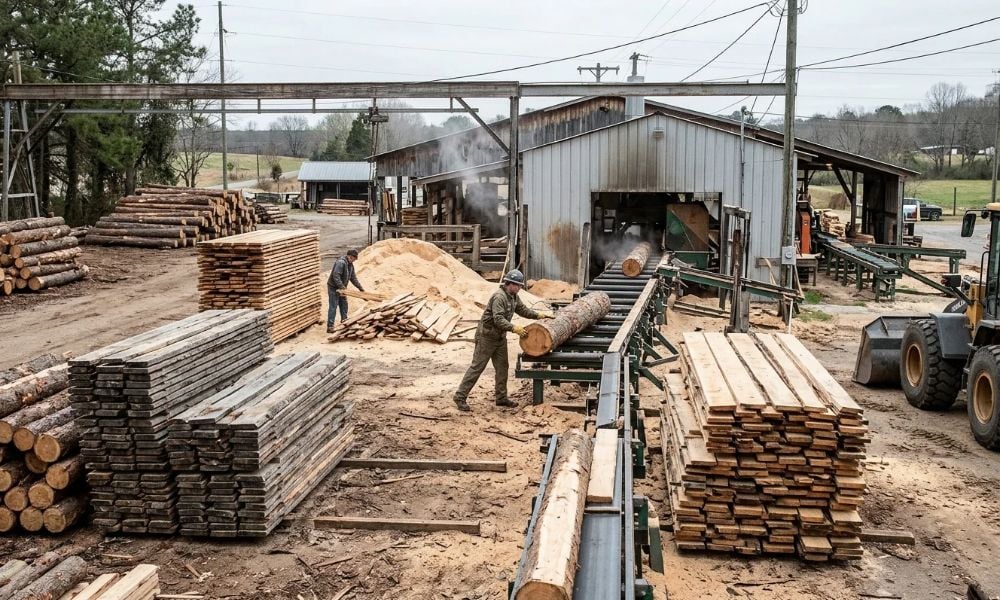
A union's overtime case on behalf of 12 sawmill workers has survived an attempt by the employer and host company to have it thrown out - in part because of the employer's own alleged failure to keep accurate time records.
The South Australian Employment Tribunal dismissed strike out applications brought by Labour Solutions Australia (LSA) and its co-respondents on October 29, finding the union's allegations were "minimal" but sufficient to proceed.
The case turns on a provision that should be on every HR team's radar: section 557C of the Fair Work Act 2009. It works like this - where an employer was required to keep time records and failed to do so, a worker's version of the hours they worked is presumed correct unless the employer can prove otherwise.
The back story
The Construction, Forestry, Mining & Energy Union (CFMEU) brought the proceedings on behalf of former employees of LSA, a labour hire company. The workers were directed to perform work at a sawmill in Dublin, South Australia, operated by Morgan Jamestown Sawmill Pty Ltd (MSJ).
Two sets of alleged breaches of the Fair Work Act were filed. First, that all 12 workers were required to perform unpaid overtime averaging 1.5 hours per day during specified claim periods in 2025. Second, that eight of those workers were incorrectly classified at Level 1 under the Timber Industry Award 2020 for periods longer than three months without any permitted extension.
The working conditions described in the union's filed particulars paint a vivid picture. Workers on cutting duties started at approximately 7:45 am and finished between 6:00 pm and 7:00 pm. Those on other duties started around 8:00 am and knocked off at the same time. Everyone took a 45-minute break around noon.
Then there was the solar element. According to the particulars, cutting work would generally conclude at approximately 5:30 pm or later, "depending upon the availability of solar power to operate the facility." After the machines stopped, workers performed chopping, stacking and cleaning duties - and were "instructed by management to complete this work prior to concluding their shift."
The record-keeping problem
The union's case relies heavily on the allegation that LSA did not keep accurate records of the overtime worked. According to the filed particulars, time was recorded on timesheets at the worksite, but those records were "in some cases inaccurate and in others modified after their completion by persons other than the Workers."
That allegation is doing serious work in this case. It is the reason the union says it cannot provide the exact dates, times and hours that the respondents demanded.
Instead, the union invoked s 557C of the Fair Work Act - which shifts the onus onto the employer to disprove the claimed hours when it has failed to keep proper records. The claim periods for each of the 12 workers ranged between three weeks and four months in 2025.
The strike out bid
All respondents applied to have the overtime allegations thrown out under s 41 of the SAET Act, arguing the particulars were so vague the case lacked substance. LSA called it "speculative litigation based on broad assertions" and complained it did not know the specific dates and times overtime was worked, the applicable hourly rates, or the dollar value of the alleged underpayments.
MSJ and two individual respondents - who face separate penalty applications for alleged involvement in the breaches under s 550 of the Fair Work Act - made similar arguments.
None of the respondents challenged the particulars of the second category of allegations: incorrect classification. And LSA did not address the union's express reliance on s 557C.
What the tribunal found
The tribunal agreed the allegations were "minimal." But that was not enough to strike them out.
The application identified each worker, their respective claim periods, the nature of the overtime work, and an alleged average of 1.5 hours per day. Pay rates for ordinary hours and overtime, the tribunal noted, were "known to the employer and host employer" and were "not controversial facts."
The absence of specific dates and times was explained by the allegation that accurate overtime records were not kept. Demanding that level of detail "is unrealistic and would tend to defeat the purpose of s 557C," the tribunal held.
LSA's fallback request for further and better particulars was also rejected. The tribunal found it "still fails to recognise the necessarily imprecise allegations of worked overtime in the alleged absence of accurate time records."
The CFMEU's cross-application for costs was dismissed too. The tribunal found the strike out applications were "not unreasonably brought" given what it described as the union's "notably inefficient approach to date."
For HR teams and payroll managers, the practical signal is clear: if you do not keep accurate, unaltered time records, the law may presume a worker's version of events is correct - and a tribunal will not throw out a case simply because the claim lacks the precision your own record-keeping gaps made impossible to provide.