A site visit observation about a beer fridge spiralled into a Full Bench rebuke
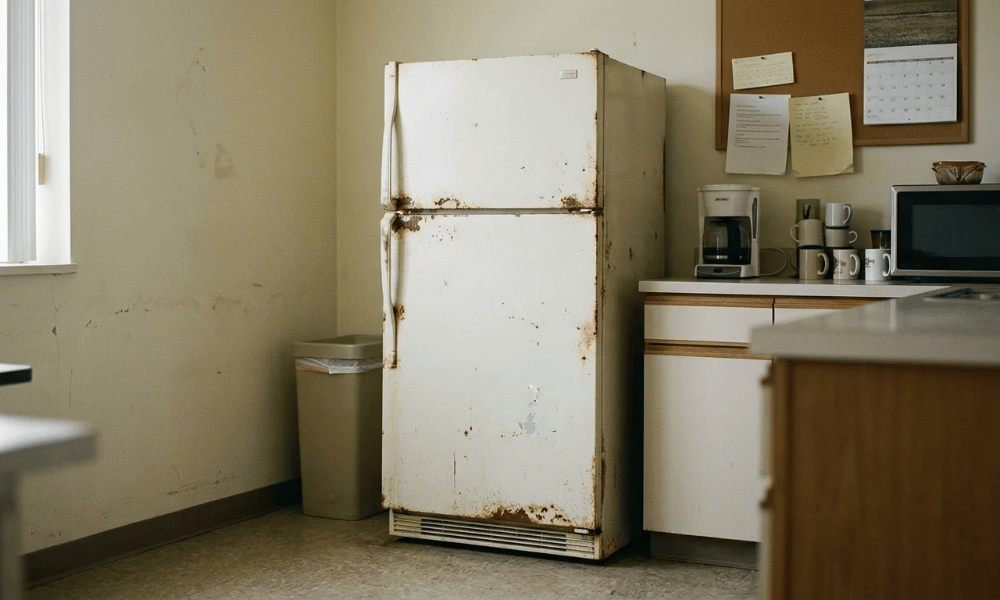
A Fair Work Commissioner's colourful side-commentary about a rusty fridge has cost him his ruling - with a Full Bench quashing the entire decision.
The case started simply enough. A disability care worker employed by Golden Glow Corporation NT Pty Ltd in Darwin argued he had been wrongly classified under the Social, Community, Home Care and Disability Services Award 2010 - the SCHADS Award. He said he should sit in the higher-paid Social and Community Services stream in Schedule B, not the Home Care Employees - Disability Care stream in Schedule E.
He also wanted a first aid allowance under the Award, and a superannuation top-up to match any back pay owed.
Golden Glow disagreed on all counts.
The Commissioner who first heard the dispute sided with the worker in a decision handed down on June 23, 2026. But how he got there was the problem.
A fridge too far
Rather than matching the worker's actual duties against the classification descriptors in the Award - the standard approach - the Commissioner took a different route. He based the reclassification largely on his reading of the first aid allowance clause. His logic: because the worker provided first aid to clients rather than just coworkers, he could not be a home care employee and must fall under Schedule B instead.
The Full Bench was not persuaded. In its decision dated October 16, 2026, it found that the first aid allowance clause sets out when the allowance is payable - it does not determine which employees are allowed to give first aid. Using it as a shortcut to decide classification was an error.
Then there was the fridge.
During a site visit to Golden Glow, the Commissioner had observed an old refrigerator "covered in rust." He said that forcing clients to eat food stored in it was "outrageous" and that he would not use it "even as a beer fridge." He went further, noting that the company's maintenance officer was married to a 50 per cent shareholder who was also the director of nursing, that their son was the NDIS coordinator, and that the son's wife was the HR manager. In the Commissioner's view, the decision not to replace the fridge was an attempt to save costs for a family business - and if Golden Glow would not spring for a new fridge, it was "not surprising" it would resist reclassifying the worker or paying the allowance.
The Full Bench was blunt. Those remarks were "unnecessary and did not assist in resolving the classification dispute." The inference that Golden Glow was cutting corners was "not substantiated by the material before the Commissioner."
Golden Glow had also raised concerns about bias and procedural fairness around those comments, but the Full Bench did not need to go there. Two errors in reasoning were enough.
Back to square one
The employer asked the Full Bench to decide the dispute itself, arguing the original Commissioner's factual summary effectively supported Golden Glow's position. The Full Bench declined. Nobody had yet done the basic work of matching the worker's duties to the classification descriptors in the Award - and that was a job for one member, "not three."
The original decision was quashed and the matter sent back to a different member of the Commission for a fresh hearing.
There was also a procedural wrinkle. The original decision did not record whether the parties had agreed to let the Commissioner decide the dispute by arbitration - a requirement under the Award's dispute resolution clause. Golden Glow conceded it had impliedly agreed through its conduct, so the Full Bench accepted that and moved on.
For HR teams in disability and community services, the decision is a practical reminder that award classification disputes turn on the actual work an employee performs, matched against the classification descriptors - not on creative readings of allowance clauses or impressions formed during site visits.