He had skin cancer before he started. Qantas said the job didn't make it worse
A worker who spent 12 years on the tarmac at Sydney Airport has won a major workers compensation battle against Qantas, after the airline failed to overturn a finding that his job worsened his pre-existing skin cancer.
The NSW Court of Appeal dismissed the airline's appeal on November 17, 2026, and ordered Qantas to pay costs.
The worker had been treated for skin cancer since the 1970s. He spent nearly two decades outdoors at a stevedoring company, then worked as a porter for Ansett from 1993 to 2001. In March 2002 - just six months before joining Qantas - he was treated for melanoma for the first time. That same year, Ansett compensated him for facial and bodily disfigurement caused by his skin cancer.
He started at Qantas in September 2002.
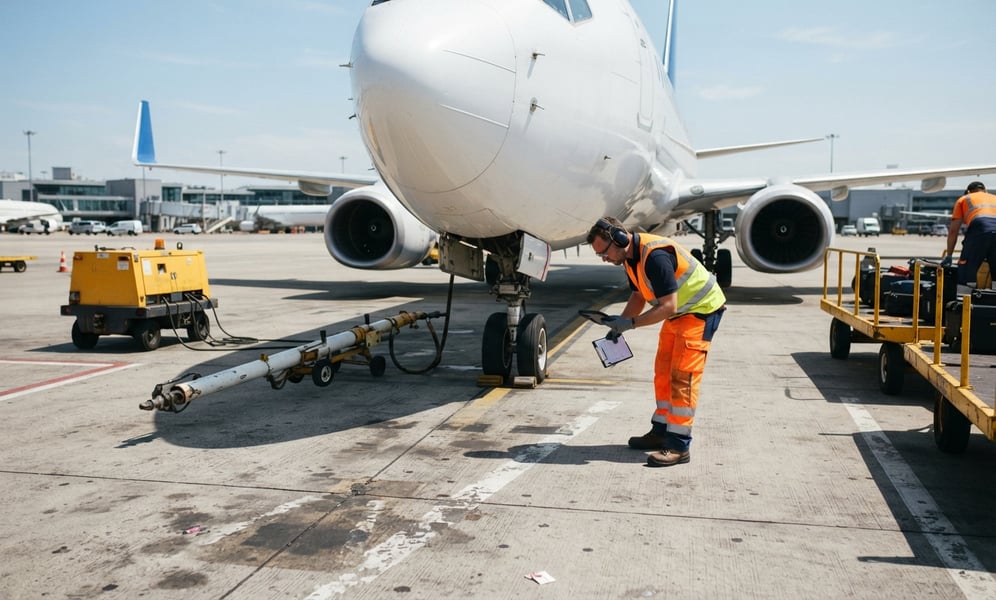
For the next 12 years, he delivered parts across the airport, exposed to direct sunlight and glare bouncing off the tarmac. A colleague who worked alongside him told the tribunal the worker spent around 20 per cent of his day in the sun.
After retiring in 2014, the worker lodged fresh compensation claims in 2023 and 2024 against both Qantas and Ansett, seeking a lump sum for permanent impairment tied to his skin cancer. The claim against Qantas turned on one question: had his employment there made the disease worse - and was it the "main contributing factor" to that worsening, the threshold set by the Workers Compensation Act 1987 (NSW)?
Qantas said no.
Duelling doctors
The Personal Injury Commission heard sharply divided medical evidence. A plastic and hand surgeon engaged by the worker, who prepared seven separate reports, concluded that the Qantas employment was the main contributing factor to the aggravation of the worker's skin cancer. A second plastic surgeon, engaged by Ansett, agreed the condition had been aggravated by both Ansett and Qantas employment, noting the sun damage was "cumulative and irreversible."
Qantas had its own experts. A reconstructive surgeon attributed the skin cancer entirely to the worker's earlier years at the stevedoring company. A dermatologist went further, telling the tribunal that while aggravation was "technically possible," it was "highly unlikely" - because the worker had already contracted skin cancer before Qantas and was "relatively careful" with sun protection.
The PIC's senior member was not persuaded. Evidence from both the worker and his former colleague contradicted the idea that sun protection had been adequate. The senior member found the worker had suffered an aggravation, and that the Qantas employment was the main contributing factor.
Qantas appealed to a presidential member of the PIC. That appeal was dismissed too, with the presidential member reaching the same conclusion.
Qantas shifts tack in the Court of Appeal
Qantas then took the matter to the Court of Appeal, arguing the presidential member had made two errors of law: failing to give adequate reasons, and failing to consider a batch of medical reports from 2002 that Qantas said showed the worker's later skin cancers were simply the expected consequences of his pre-existing condition.
Here is where things got awkward for the airline. Qantas had not actually raised those 2002 reports in its submissions to either the senior member or the presidential member. The court noted that Qantas's submissions to the presidential member "made no mention whatsoever of the reports prepared in 2002."
The shift in emphasis came only on appeal.
The court was unimpressed. The presidential member had plainly understood Qantas's argument - that the worker's condition was running its pre-existing course, not getting worse because of the job - and had rejected it on the evidence. The more recent expert reports from 2023 and 2024, which were the actual focus at every earlier stage, had already taken the worker's full medical history into account.
Decision-makers do not have to address every report
On the adequacy-of-reasons ground, the court held that the law required only a brief statement of reasons covering the key factual findings, the law, and the reasoning. The presidential member met that standard.
There was no implied obligation to work through every individual medical report, particularly when the parties themselves had not flagged those reports as important. As the court put it, the reasons a decision-maker gives "are bound to be a reflection of the way the parties advanced their respective cases."
On the second ground - that the presidential member failed to consider relevant evidence - the court held that the argument assumed a legal duty that simply does not exist at that level. A decision-maker must consider each party's case, but that does not mean separately addressing every document in the file.
The court also rejected the suggestion that the presidential member had fundamentally misunderstood Qantas's case. That doctrine - known as constructive failure to exercise jurisdiction - applies where a decision-maker misses the point entirely. Here, the presidential member understood the argument and rejected it. That is a different thing.
Leave to appeal was granted, but the appeal was dismissed. The finding that Qantas is liable to compensate the worker stands. The worker's permanent impairment has been assessed at 19 per cent whole person impairment, with his compensation quantified at $52,940, though that medical assessment is itself under separate appeal in the PIC.
For HR teams managing outdoor workers, the case is a pointed reminder: a pre-existing condition does not shield an employer from an aggravation claim, especially when years of cumulative sun exposure sit in the middle.