Six versions, 775 paragraphs, 13 respondents - and a PDF with "live links"
A coal mine truck driver who raised safety concerns and then sued her employer and 12 others has had her case thrown out - six attempts later.
The Federal Court of Australia struck out the worker's statement of claim on October 8, 2026, and refused to let her try again. The document she filed - a formal outline of her legal case - was the sixth version she had produced since launching the proceeding in November 2024.
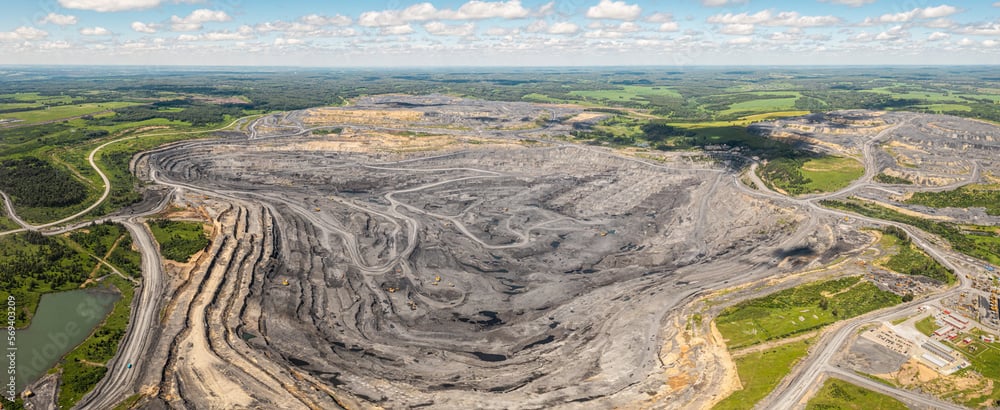
The worker had been employed as a haul truck operator at the Coppabella Mine in central Queensland - part of the Coppabella-Moorvale Joint Venture majority-owned by NYSE-listed Peabody Energy - from January 2023 until her dismissal on May 23, 2024.
Between March and May 2024, she raised multiple safety concerns at the mine, including issues with respirable dust in truck cabins. After her employment ended, she brought claims under three separate pieces of legislation: whistleblower protections under the Corporations Act, adverse action provisions under the Fair Work Act, and reprisal protections under Queensland's Coal Mining Safety and Health Act. She named 13 respondents - four Peabody corporate entities, the US parent company, and eight individual managers and executives.
The scale alone was striking. The case generated 121 filed documents, two earlier interlocutory judgments, and an appellate decision - all before anyone got near the question of whether the claim was fit for trial.
The problem, the court found, was not that the worker lacked arguable claims. The respondents themselves accepted she had causes of action she could pursue "in the usual way." The problem was that after six attempts, she had not managed to state those claims in a form the other side could meaningfully respond to.
Version five of the document ran to 266 pages. The court ordered version six be capped at 60. She complied - technically. But those 60 pages contained 775 single-spaced paragraphs, mostly a line-by-line account of conversations, meetings, and events across several months. The court described it as "dense, repetitious," reliant on "extensive cross-referencing," and clogged with evidence rather than the core facts each claim required.
The cross-referencing drew particular criticism. To understand one paragraph setting out a workplace right, a reader had to click through as many as four layers of back-references to earlier sections. The worker argued this was manageable because the document contained "live links" navigable in Adobe PDF Viewer using keyboard shortcuts. The court was unmoved, noting that a document requiring technology to navigate "rather highlights the complaints made by the respondents as to its inaccessibility."
The worker also attempted to set out roughly 150 possible variations of workplace rights across 17 occasions, each framed "cumulatively or in the alternative" - a combination the court found logically problematic and unnecessarily burdensome on the respondents.
On two of her ten claims, the court found the causes of action were not reasonably arguable. One, brought under the Coal Mining Safety and Health Act, alleged that an investigation into her safety disclosures - which found them "unsubstantiated" - itself amounted to unlawful detriment. The court held that such a claim would make it impossible to investigate safety disclosures if adverse findings were automatically treated as retaliation. A similar claim under the Corporations Act whistleblower provisions met the same fate. "It defies logic," the court stated.
The worker was self-represented throughout, and the court acknowledged this was not by choice. She had approached the miners' union, private law firms, pro bono clinics, and barristers directly, all without success. When she eventually received funds to engage a lawyer, she contacted only two firms - one declined to provide a quote, the other refused the brief when she insisted on including her mining safety claims.
The court also noted that the Queensland mining safety regulator, Resources Safety and Health Queensland, had declined to take any action, satisfied there had been no reprisal. And the provisions the worker sought to rely on under the Coal Mining Safety and Health Act - sections 275AA and 275AB - had never been judicially considered.
The worker argued she was not just pursuing her own case but seeking to "clarify" the law and "price the deterrent" for reprisal action in mining. The court found this widened the burden on the respondents well beyond the ordinary cost of defending a claim, particularly given the essentially no-costs protections under both the Fair Work Act and the Corporations Act.
After weighing whether to grant one more chance, the court declined. On each previous occasion, the document had become "more, rather than less, difficult to grapple with." The time had come to "draw the line," the court said. Enough was enough.
The statement of claim and the originating application were both struck out. No costs order was made.
For HR teams and workplace safety managers, the case is a pointed reminder that raising legitimate safety concerns and being able to prosecute a legal claim about them are two very different things - and that even arguable claims can die on the procedural table if they cannot be clearly stated.
The decision is a ruling on the adequacy of the worker's formal case document. The court did not make findings on whether the respondents engaged in the conduct alleged.