When a star employee's independent venture collides with their employer's values, who draws the line – and how?
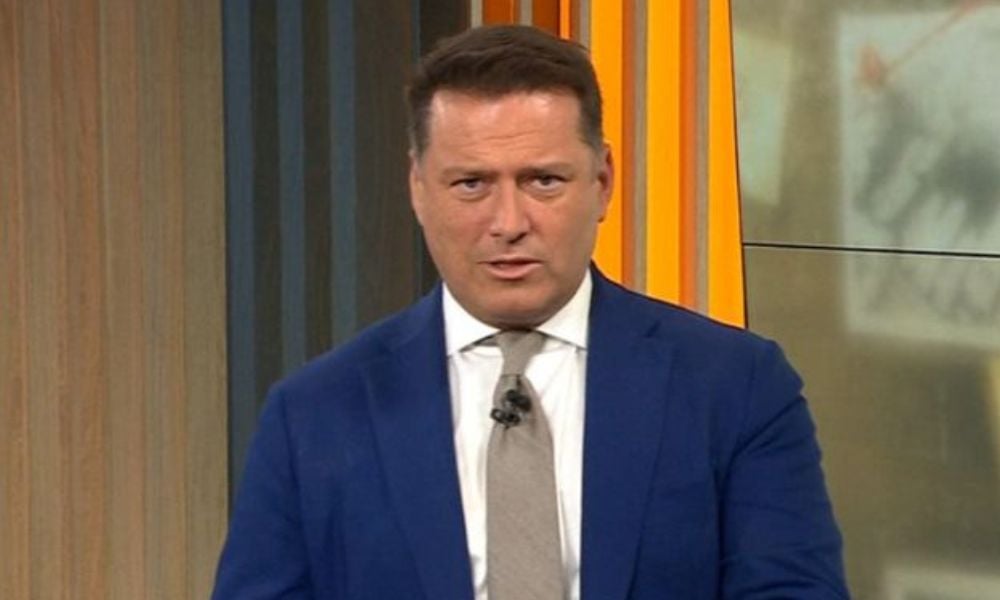
Nine Entertainment has reportedly moved to cut ties with Today show host Karl Stefanovic after his independent podcast interview with British far-right activist Tommy Robinson triggered a day of emergency board-level meetings at the network's North Sydney headquarters today (24 June).
The fallout raises urgent questions for HR leaders across Australia: what obligations do employers have when high-profile staff pursue outside work, and where does editorial independence end and reputational liability begin?
According to multiple reports, Nine executives convened from 9.30am that day before deciding to end Stefanovic's tenure – a decision expected to be formalised through legal counsel in the coming days. Stefanovic, who is currently on two weeks' leave in London, has been with Nine for more than two decades and is reported to be earning upwards of $2 million annually under a 12-month contract that still has six months to run.
Nine confirmed it is "taking this matter seriously" while continuing to distance itself from the content. "The Karl Stefanovic Show is a completely independent production," a Nine spokesperson said. "Nine has no involvement, including in the guest selection and other editorial processes."
How outside work became a conduct issue
The controversy centres on a podcast episode in which Stefanovic appeared alongside Robinson – a figure with convictions for assault, mortgage fraud, contempt of court, and using a false passport, who has been condemned by multiple British prime ministers. Stefanovic praised Robinson's "tenacity" and "courage," and the almost hour-long interview drew immediate criticism for failing to challenge any of Robinson's anti-immigration and anti-Islam positions.
Within 12 hours, the episode had been deleted from YouTube, Spotify, Apple Podcasts, and Instagram. But the removal did little to contain the damage. One Nation leader Pauline Hanson subsequently republished the full 55-minute interview on her social media channels, framing it as an act of censorship.
Reports indicate that Stefanovic's contract contains a clause preventing him from bringing the network into disrepute – a provision that HR and employment law practitioners will recognise as a standard but often-contested clause in senior employee agreements.
The HR challenge: independent work, shared reputation
The case illustrates a growing tension in modern employment: the rise of employee-led content platforms operating in parallel with full-time roles. For HR leaders, the Stefanovic situation is a case study in what can go wrong when outside-employment policies lack specificity.
Nine granted Stefanovic editorial independence to launch his podcast as part of his 2025 contract renegotiation – a concession that reportedly also included a salary reduction of more than $500,000 from his previous $3 million contract. It was, by most accounts, a deliberately negotiated arrangement. Yet as the podcast grew from two episodes per week to five and as its roster of guests became increasingly controversial, that editorial independence collided with the network's commercial and reputational interests.
For HR practitioners, the lesson is clear: broad clauses permitting outside work must be paired with equally clear parameters. Provisions that specify content categories, reputational risk thresholds, and approval requirements for external platforms are no longer optional for organisations employing public-facing talent.
The Australian HR Institute's guidelines on managing employee conduct and performance recommend that organisations review outside-employment clauses annually, particularly where staff hold dual public profiles.
As AI-driven media scrutiny intensifies and advertiser pressure campaigns become more organised, activist group Mad F---ing Witches has vowed to run a campaign against Nine similar to that which contributed to the end of Kyle Sandilands' KIIS FM breakfast show, the commercial consequences of reputational misalignment have never been more immediate.
What comes next for Nine and for HR policy
ARN Media, which contracted Stefanovic for a weekly show alongside Eddie McGuire, also moved to distance itself from the podcast. "His external media activities, including his podcast, are undertaken in a personal capacity and are entirely separate from the network," an ARN spokesperson said.
The dual distancing from both Nine and ARN points to an emerging reality for HR teams managing talent in the media and communications sectors: reputational liability now travels faster than any employment contract can anticipate.
Nine's decision, if confirmed, will also test the enforceability of its existing contract terms. With more than $1 million reportedly remaining on Stefanovic's deal, the settlement discussions between legal teams will be closely watched by employment lawyers and HR leaders alike.
For organisations yet to revisit their outside-work and social media policies in light of the podcast era, the Nine situation is a timely reminder that employee conduct frameworks require regular review – not as a bureaucratic exercise, but as a genuine risk management imperative.