The Greens are calling on Labor to strip KPMG of $27.4 million in federal contracts amid mounting corporate governance failures
The government's consultation lands as KPMG Australia faces one of the most high-profile corporate whistleblower failures in recent memory, and a direct test of whether existing protections are fit for purpose.
Now, The Greens are demanding the federal Labor government immediately ban KPMG Australia from all government contracting work, as the accounting firm formally admitted its handling of a whistleblower's allegations "fell short" of expected standards, and as the full scale of its exposure to public sector work comes into focus.
According to the government's own AusTender procurement portal, the federal government holds dozens of active audit contracts with KPMG worth a combined $27.4 million across multiple departments.
The Australian National Audit Office (ANAO) holds the largest share, multiple active contracts valued at more than $6.428 million, followed by the Commonwealth Scientific and Industrial Research Organisation (CSIRO) at $4.9 million, the Bureau of Meteorology at $2.1 million, the Department of Industry, Science and Resources at $1.748 million, and the Australian Taxation Office at $680,000.
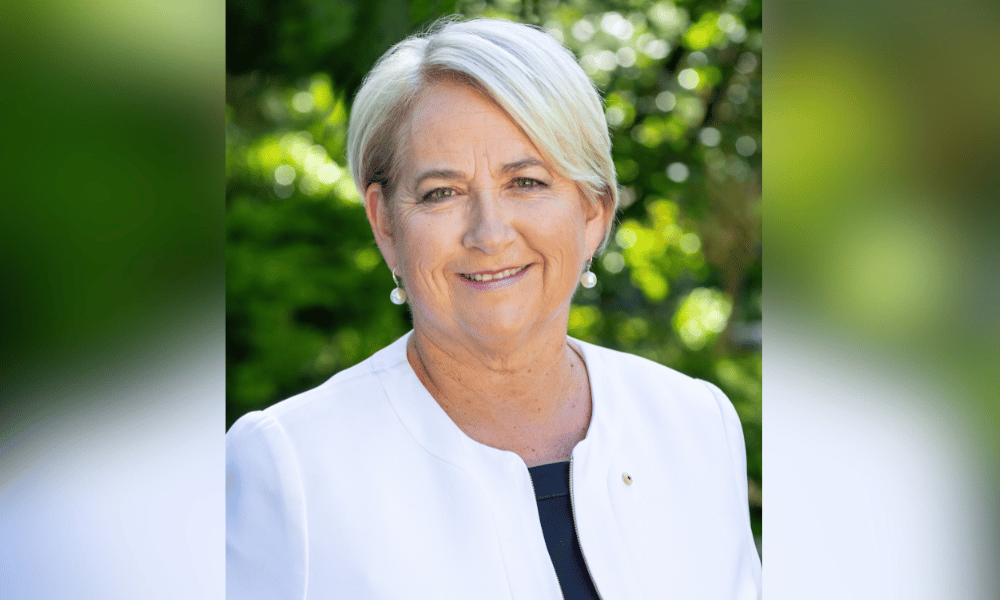
Greens senator Barbara Pocock, the party's spokesperson for finance and the public sector, said the figures exposed a fundamental contradiction at the heart of the government's response to the scandal.
"Why would the government hire a firm that's been accused of sharing confidential client information, to audit its books?" Pocock said.
"Labor must immediately ban KPMG and stop these corrupt firms from milking taxpayers of millions of dollars while abusing the system for their gain."
KPMG concedes systemic failures
In a formal statement, KPMG Australia's board acknowledged shortcomings across three areas: the management of the whistleblower and their concerns; the rigour of the investigations undertaken; and the action taken by leadership in response to the allegations raised.
The firm confirmed that its initial internal investigation, which did not substantiate the whistleblower's allegations when they were first formally lodged in May 2024, "was in hindsight not conducted with the necessary rigour required."
A subsequent external legal review supported that flawed internal inquiry. It was only after the whistleblower escalated concerns directly to independent board members that a board sub-committee, led by the deputy chair and including three independent directors, appointed law firm Allens to conduct a further external investigation – one that remains ongoing as at the date of this article.
That expanded Allens investigation has since uncovered a third separate incident in which internal documents containing client information were shared inappropriately – in addition to the two previously reported conduct matters.
The firm has disclosed this new finding to affected clients, regulators, professional bodies, and the Parliamentary Joint Committee on Corporations and Financial Services (PJCCFS).
KPMG chairman Martin Sheppard said the firm was committed to rebuilding trust through action rather than words.
"We apologise unreservedly to the whistleblower," Sheppard said. "We commit to learning from this process to ensure we create an environment where it is safe and easy to surface concerns that will be acted upon."
The board has also engaged Principia Advisory, described as a leading global specialist in ethical organisational culture, to independently review the firm's speak-up policies and processes. KPMG committed to publishing Principia's findings publicly and acting swiftly on its recommendations.
The political pressure mounts
The Greens' call for a ban follows a pattern familiar to anyone who watched the PwC tax leaks scandal unfold in 2023, when an informal government freeze on new PwC contracts preceded formal action. Pocock noted the precedent directly, questioning why the federal government had not moved as decisively as some state governments.
"If the NSW government can call for a ban on KPMG, why can't the federal government?" she said.
The Greens introduced legislation in 2025 that would have allowed the Commonwealth to exclude contractors found to have engaged in misconduct from future government work – a bill that both Labor and the Coalition declined to support.
Federal Finance Minister Katy Gallagher said earlier this week that the government was "deeply concerned" by the allegations. A public parliamentary hearing before the PJCCFS is scheduled for 19 June 2026, at which up to a dozen current and former KPMG partners have been summoned to give evidence, including former chief executive Andrew Yates and former chief operating officer Eileen Hoggett, who stepped down from her executive role on 4 June 2026.
Pocock's statement went further than individual conduct, calling for structural reform of how the federal government regulates the Big Four consulting firms – Deloitte, Ernst and Young (EY), KPMG, and PricewaterhouseCoopers (PwC).
"The government must stop allowing the Big 4 to self-regulate," she said. "Labor needs to put an end to their special treatment – on tax, public reporting, professional liability and whistleblower protections – and regulate the Big 4 like other large Australian firms."
What this means for HR and workplace culture leaders
For HR executives and people and culture professionals, the KPMG case is shaping up as a landmark test of how speak-up frameworks hold, or fail, under institutional pressure.
The firm's own admission that its internal investigation process "fell short of the necessary rigour" is a pointed reminder that the integrity of any whistleblower programme depends not just on policy design, but on the independence and courage of those who administer it.
Australia's whistleblower protections were significantly broadened under the Corporations Act 2001, as amended by the Treasury Laws Amendment (Enhancing Whistleblower Protections) Act 2019.
Those laws impose substantive obligations on eligible companies, including large proprietary companies, to protect disclosers and investigate their allegations thoroughly. The government's concurrent review of those laws, currently open for public consultation until 29 July 2026, takes on new weight in this context.
For HR leaders navigating speak-up culture and psychological safety frameworks in Australian workplaces, the KPMG saga underscores a risk that is often underestimated: that investigation processes can be compromised not by malice, but by a structural failure to insulate the process from business continuity concerns.