'This is putting stress on everyone,' FWC president says on surge in AI-assisted claims
The Fair Work Commission (FWC) is preparing to trial a new requirement mandating parties to disclose whether they used artificial intelligence in their applications, as the agency grapples with a surge of AI-assisted claims over the past few years.
FWC President Justice Adam Hatcher said in a presentation to the Victorian Bar Association that reforms within the tribunal's procedures are needed amid AI-generated disruption.
"The main initiative which is directedly targeted at AI use will be to embed in our procedures a requirement to disclose the use of AI in all forms and documents," Hatcher said.
"We are currently doing this on an ad hoc basis but we will shortly commence public consultation concerning a draft guidance note on the use of AI together with modifications to our forms to systematise this."
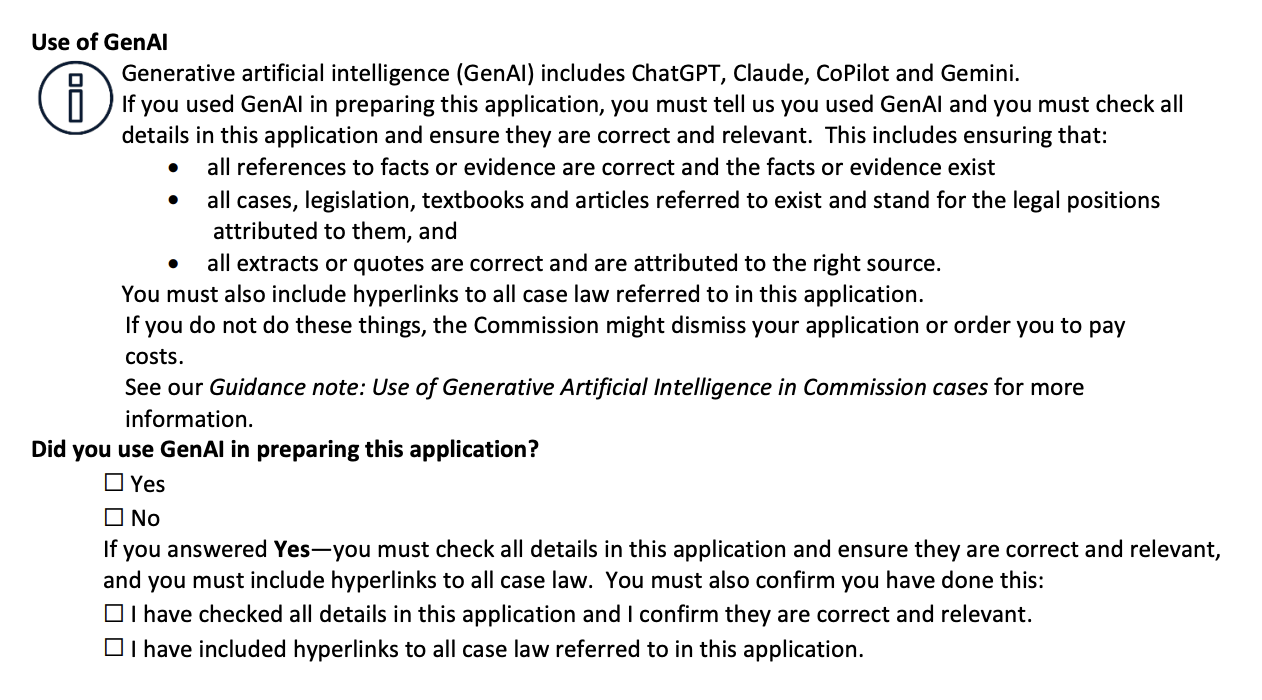
Hatcher presented a sample of the AI disclosure requirement form (pictured above), adding that the goal is to modify all its forms to include the requirement.
The FWC president added that the AI disclosure mandate will include witness statement templates, which will come with a warning that any false or misleading evidence will be considered an offence under the Fair Work Act.
AI's impact on FWC workload
The proposal comes following a surge in claims handled by the FWC over the past few years, which Hatcher attributed to the increasing use of AI tools by potential litigants.
In 2023–24, the FWC received around 40,000 cases in total, a sudden increase from the number of matters lodged with the commission in the past two years.
This increase continued in 2024–25, when it jumped to more than 44,000 cases.
"For 2025–26, we are looking at a number between 50,000–55,000, which will be another record," Hatcher said. "There is no sign of this growth trend plateauing out, and we have no idea what the 'new normal' will be."
While the increase comes in the wake of new FWC powers and functions under the FW Act reforms, Hatcher pointed out that the surge was in traditional matter types, such as dismissals and general protections disputes.
"The clue that the growth in lodgments was AI-driven first became apparent by the widespread use of AI-generated language in the applications being filed," he said.
"Once you learn what this looks like, it becomes pretty easy to spot."
'Putting stress on everyone'
The impact of AI-assisted claims on the FWC's workforce has been disruptive.
"Obviously, the workload on members and staff has increased significantly, and this is putting stress on everyone," Hatcher said.
Performance is also dipping because of the workload pressure, with FWC members falling below their key performance benchmark for the first time in many years, according to the FWC president.
"I expect further slippage in other areas as the workload continues to increase," he said.
The workload is also impacting the FWC's capacity to deal with major cases, such as gender-based undervaluation matters, reviews of award provisions relating to working from home, and the establishment of minimum standards orders for digital platform workers.
One of the core functions of the FWC, which is to facilitate enterprise bargaining on request, is also becoming challenging as Hatcher noted the difficulty in managing time and resources for the activity.
"So if you're offered an appointment to the FWC, don't accept it on the basis that you think you will have a better work-life balance. You won't," Hatcher told the Victorian Bar Association.