
Suicide kills ten times more construction workers than on-site accidents – and the pressure is only mounting
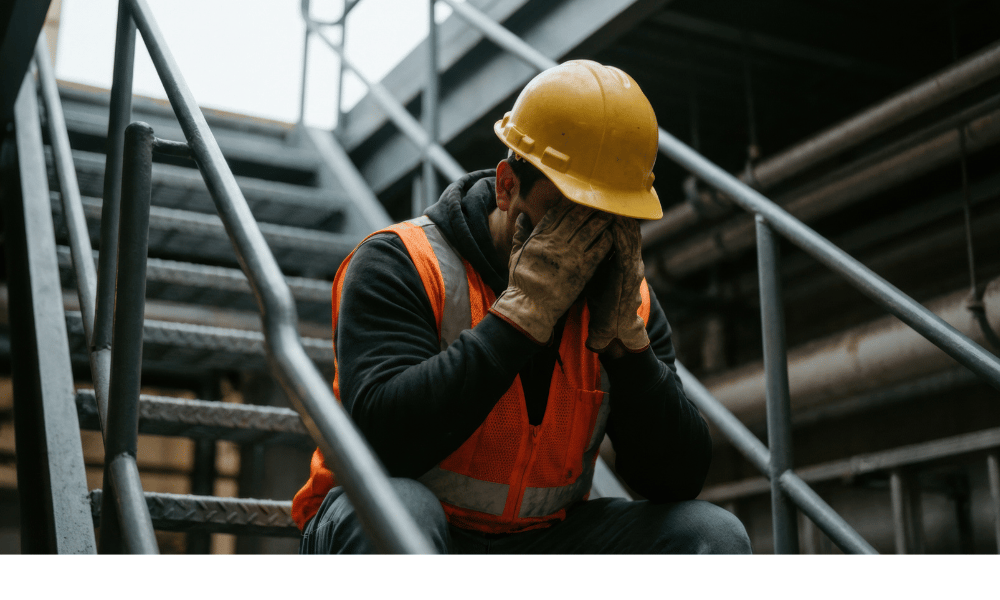
Australia's construction industry is losing more than 200 workers to suicide every year – a rate roughly double that of other employed men – and experts warn that mounting financial pressure, workplace bullying and a chronic shortage of skilled labour are placing the workforce needed to deliver the nation's housing targets at serious risk.
New long-term analysis of national coronial data, published in Labour and Industry in 2026 by researchers King, LaMontagne and Maheen, confirms male construction workers die by suicide at a rate of 26.6 per 100,000 – compared with 13.2 per 100,000 for other employed men.
A separate study of construction and utilities workers by the Black Dog Institute found one in four workers reported high symptoms of depression and/or anxiety, and a quarter of those who needed mental health support never sought it.
The findings arrive as the industry braces for one of its largest-ever building programs. Under the National Housing Accord, Australia has committed to delivering 1.2 million new homes by 2029. The National Housing Supply and Affordability Council now forecasts only around 980,000 homes will actually be completed, leaving a shortfall of more than 200,000 – a gap that will widen if the workforce fractures further under psychological strain.
The pressure points driving the crisis
Marti Amos, founder of The Professional Builder – says the crisis is being driven by a convergence of financial, structural and cultural forces.
"Right now the pressure on builders is coming from multiple directions. It's being driven by rising interest rates, shrinking client budgets, labour constraints and regulatory change. What we are seeing is a convergence of economic and structural pressures that are fundamentally changing how the sector operates," Amos said.
Supply chain disruption is compounding the problem. Amos says fuel prices surged approximately 45 per cent during the Iran crisis, with diesel reaching more than $3.20 a litre in some parts of the country. He reports that petroleum-based products such as PVC piping have risen around 30 per cent in price, while freight surcharges are flowing across concrete, steel and other transported materials.
"When you combine materials, labour and day-to-day operating expenses, the cumulative effect is sustained pressure on margins in a sector where profitability is already tight," Amos said.
The Black Dog Institute's workplace research team identifies additional psychological risk factors at the job level: unclear or conflicting work responsibilities, and limited worker control over how their job is done.
Dr Andrew Arena, a postdoctoral research fellow in the institute's Workplace Mental Health Research Team, says these dynamics compound the high physical demands already inherent in construction roles.
"When a worker's role is ambiguous, or conflicts with another work role they have, it adds considerable complexity and mental strain to their daily work life," Dr Arena said.
Young workers bearing a disproportionate burden
New South Wales presents a particularly acute picture. According to government data cited by The Professional Builder, NSW has recorded 1,176 male construction worker suicides over the past 19 years – the highest of any Australian state. Researchers have identified workers aged 25 to 34 as the highest-risk group, with suicide rates in that cohort reaching approximately 35 per 100,000.
Amos attributes much of this to the vulnerability of apprentices and younger tradespeople, who often lack the financial security or workplace authority to push back against poor conditions or seek help openly. "The latest research shows younger construction workers are at the centre of the sector's elevated suicide risk. That should be a wake-up call for every builder, subcontractor and site manager in NSW," he said.
The Black Dog Institute research points to stigma as a persistent barrier. In male-dominated industries, rates of help-seeking tend to be low, and construction workers typically show a strong preference for self-reliance.
What employers and HR leaders can do
For HR leaders and people managers operating in or adjacent to the construction sector, the research points to several evidence-based levers. The Black Dog Institute's workplace studies show mental health training for managers returns up to $10 for every dollar invested, through improved productivity and reduced workers' compensation claims. Giving workers greater control over their roles, reducing role ambiguity, and creating psychologically safe channels for help-seeking are all identified as high-impact interventions.
Amos argues that the industry also needs a structural shift in how builders are prepared to run businesses. "Builders are highly capable when it comes to delivering projects, but many have not been given the tools to manage the financial systems, cashflow dynamics and operational complexity that sit behind those projects. Without that foundation, many find themselves working long hours, carrying significant financial pressure and sacrificing their personal lives," he said.
"We talk about materials, planning, finance and land supply as constraints on housing delivery, but the human constraint is just as serious. If the people building the homes are under unsustainable pressure, the pipeline itself is at risk."
If this story raises concerns for you or someone you know, contact Lifeline on 13 11 14. In an emergency, call 000


