Backlash as taxpayers fork out the bill for political travel. Employers should take note
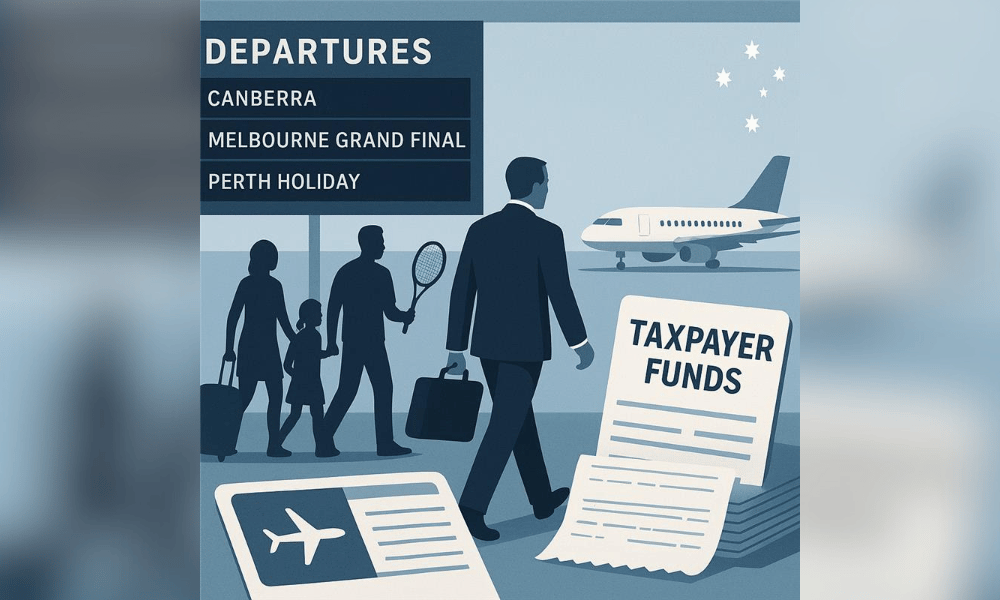
The last financial year saw federal MPs and senators spend over $1.1 million in taxpayer money on family travel.
Of this total, $700,000 was spent on travelling to and from Canberra, and $400,000 on flights to other areas of the country.
The situation drew more attention after it was revealed that Communication and Sport Minister Anika Wells used thousands in taxpayer money to attend sporting events and even take her family on a trip to Thredbo.
While Wells has submitted her spending for auditing, the Labor Government is still under heat from the media and the public following what some believe is exorbitant spending.
Wells wasn’t alone, with Health Minister Mark Butler having he and his family attend the Australian Open men’s final on the ‘company card’ and attorney general Michelle Rowland ordered to repay part of an over $21,000 family trip to Western Australia.
The question employers should be asking is when does company travel go too far?
Neal Woolrich, director of Advisory in Gartner’s HR practice said the key to understanding this is whether the travel supports business objectives or not.
In conversation with HRD, he said that the key to avoiding situations like the government is in right now is by creating clear travel guidelines from the outset.
Identifying if it is appropriate for the company depends on whether there is a benefit to the organisation.
Things like developing sales opportunities, training events, or building stakeholder relationships are all acceptable uses, said Woolrich.
“It must address budgetary limitations and outline a clear governance framework that outlines processes to select the appropriate form and duration of travel and approval processes,” he said.
It must also be cost effective, while still being convenient for employees. This is a delicate balancing act that needs to be upheld.
“Determining when ‘the line has been crossed’ is often difficult and subject to interpretation, but it will typically happen when thresholds are exceeded or the purpose of the travel doesn’t meet a clear business need,” Woolrich added.
“For example, if an employee chooses unnecessary upgrades, or frequently engages in hybrid business and personal travel where there isn’t a clear demarcation between the professional and the personal components.”
How HR can draw the line
It is often the responsibility of HR to delineate between what is acceptable and what is not.
Woolrich noted that clarity is key. Employees should be aware of what is protocol by being provided clear, objective, and transparent travel guidelines and benchmarking best practices.
“One approach could be to define specific budgetary limits for different categories of spending, such as travel, training or technology,” he said.
“For example, a daily food allowance may help reduce ambiguity for managers and employees.”
Woolrich urged employers to communicate procedures with staff regularly.
Tech can also assist, with some systems allowing for automated expense monitoring to flag discrepancies.
Regular audits can help to keep on top of spending trends and foster a culture of compliance and accountability.
In addition, HR can foster a culture of compliance and accountability by establishing a regular audit review process to dissect spending patterns.
Where the government went wrong
Being in a highly regulated, public, and taxpayer funded industry like politics makes the recent government debacle far harder to hide from.
Woolrich said the accountability in this sector extends beyond just the department.
“Where public funds are used, taxpayers expect accountability to ensure that funds are used for legitimate government business and are aligned to strategic outcomes,” he said.
“There are also ethical considerations and legal frameworks to ensure that government spending is defensible and tied to the public or organisation mission.”
Where the challenge lies for HR is balancing the operational flexibility with public accountability.
People in government positions must be able to act independently, but not so much so that it tarnishes goodwill with the public.
This is where HR must establish clear guidelines for acceptable use and consequences for non-compliance.