New guide supports employers in identifying hazards, managing risks and creating safer workplaces
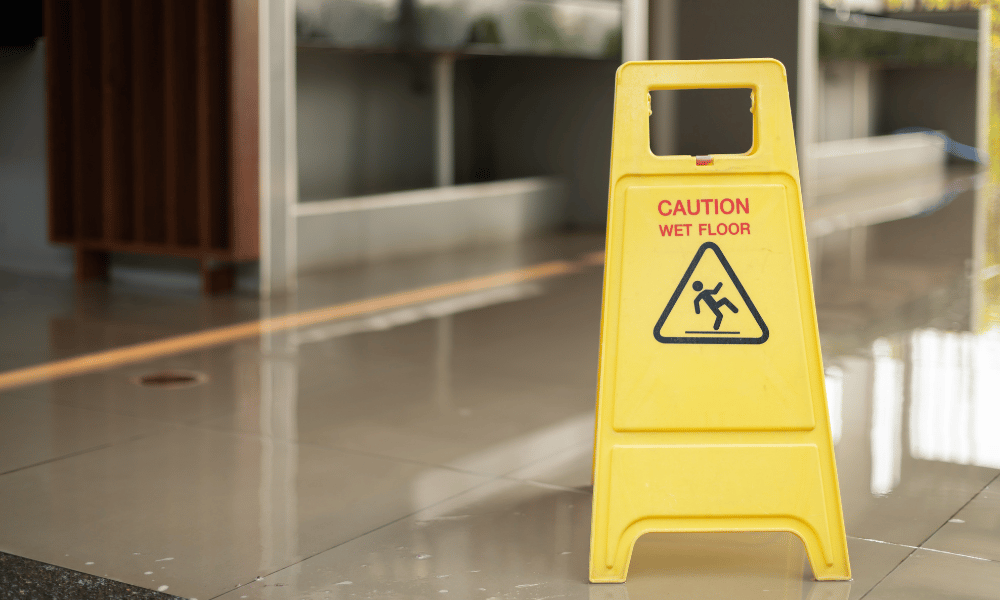
Safe Work Australia has published a new guide for workplaces to manage the risks of slips, trips and falls following thousands of compensation claims for serious injuries related to them.
The guide, now available on the Safe Work Australia website, provides practical information and a downloadable checklist to help workplaces identify slip, trip and fall hazards and implement effective control measures.
"Designed as a practical, easy-to-use resource, the guide can be used across a wide range of industries and workplaces," Safe Work Australia said.
"It supports employers to take a proactive approach to identifying hazards, managing risks, and creating safer work environments."
High compensation claims from risks
The new guide comes after 32,000 workers' compensation claims were made for serious injuries resulting from slips, trips and falls in 2024–25, according to Safe Work Australia.
Of these claims, falls on the same level accounted for 68.3%, falls from a height accounted for 24.4%, while stepping, kneeling, or sitting on objects accounted for 7.3%.
The guide notes that while these incidents are often linked to various physical factors, such as uneven surfaces, poor housekeeping or inadequate lighting, the risks may also include how work is organised and managed.
"When job demands are very high, long term, or frequent, they may be considered psychosocial hazards," it said. "They may interact or combine with other hazards to change, increase, or create new risks."
Among the psychosocial hazards that the guide noted can cause physical harm at work are time pressure and fatigue.
"Time pressure can lead to a worker feeling rushed and pressured to 'cut corners,' which can increase the risk of slips, trips and falls. Time pressure can also increase the risk of fatigue," the guide said.
In Australia, employers have a duty under work health and safety laws to eliminate risks to health and safety, or minimise them so far as is reasonably practicable.
"Understanding and addressing the factors that contribute to slips, trips and falls is an important part of meeting these obligations and preventing harm at work," Safe Work Australia said.
There were 146,700 serious workers' compensation claims involving at least one week of working time lost, according to the Key Work Health and Safety Statistics Australia 2025.
Body stressing accounted for 50,600 or 34.5% of serious claims during the period, followed by falls, slips and trips with 32,000 or 21.8% of serious claims.
Being hit by moving objects accounted for 23,400 or 16.0% of serious claims, while mental stress accounted for 16,800 or 11.5% of serious claims.