More than 600 HR professionals gathered in Melbourne for the inaugural HRFutureFest - a major new industry event
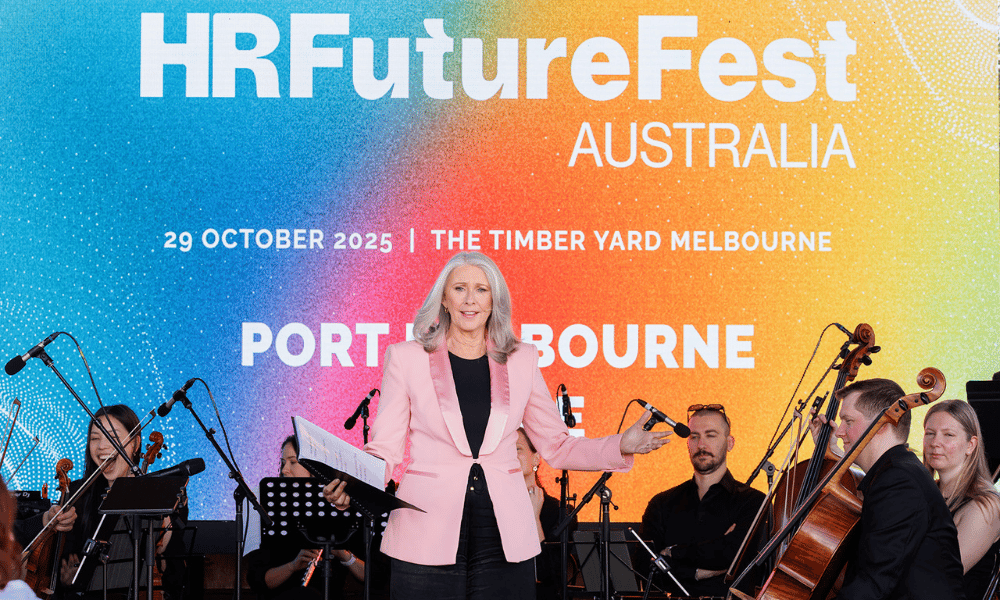
AI is everywhere, but it’s not everything, warn CHROs.
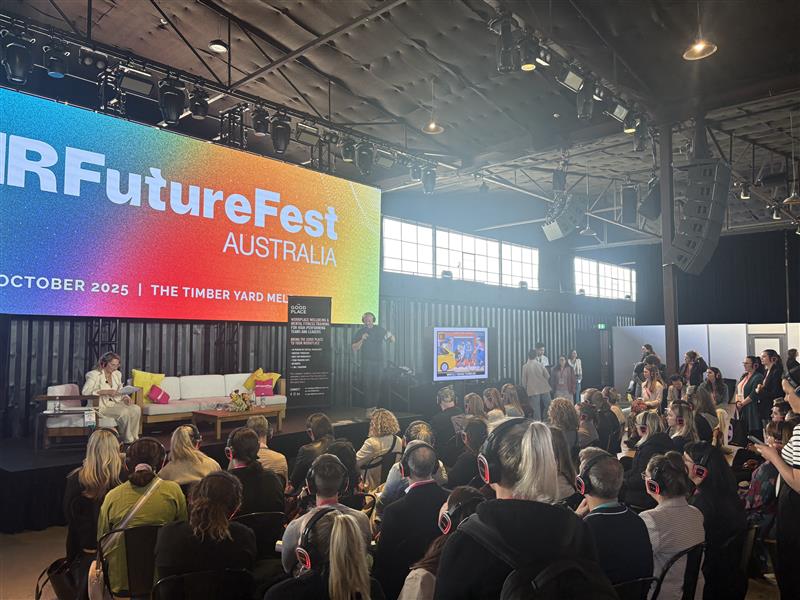
As more than 600 hundred senior HR professionals gathered for the inaugural HRFutureFest in Melbourne on October 29, the AI-led transformation of workplaces was a major discussion point.
But there are plenty of other issues that are keeping HR leaders awake at night. HRD spoke to numerous senior leaders to find out what the biggest challenges and opportunities are for people leaders right now.
What emerged was a complex list ranging from employment law issues, diversity, and attracting the best talent, to legislative changes and equipping managers to lead change during a time of ambiguity.
Are managers ready for change?
It was that last issue that was a key takeaway for HR FutureFest panellist Lauren Cahill, Head of People, ANZ and Global Functions at Intrepid Travel.
“What stuck out to me … is around how do we support our leaders to be really positive change agents,” she told HRD.
“We don't know where this [AI transformation] will lead us. And I don't think any business does right now," she told HRD.
"That's kind of the beauty of it. So how do we see the challenges and opportunity? And how do we help our leaders be on that same journey and role model that for our people.That shift from always knowing and to always learning and recognising that it's going to be a period of ambiguity."
Pritho Saxena, Director HR, Australia, China and South East Asia at Amazon, believes leaders need to give themselves permission to not know things as they try to define a path and a destination point when the technology is constantly changing.
“The technology is evolving at a much faster pace than we can assimilate it into our organisations … I think that’s a big challenge," he said.
“Leaders have to give themselves permission to not know things and be comfortable with it and lead without a definite vision. This is going to be messy and adapting and being comfortable with that mess while we figure it out is going to be important.”
HR in the driver’s seat
Sarah Novelli, Executive Director, People and Culture at BGIS, a global facilities management business with more than 12,000 employees, believes AI is changing HR from custodians of culture, engagement and recruitment to productivity enablers.
“I think that we're going to play the leading role when it comes to strategy,” she said.
“I would say that we are going to be responsible for overseeing and showing what productivity enablement looks like in our organisations for competitive advantage and I think that that is actually going to change our role from being a supporting function to a leading function delivering on strategies of organisations.”
Can we talk?
Ben Roberts, Head of Talent Acquisition at retailer David Jones, believes one of the challenges for CHROs is deciding what to focus on amid so much change and complexity.
“I think the fix to that … is around how does the HR community come together. I think everyone is facing the same issues, probably for the first time ever," he said.
"Let’s pull down the Chinese walls and talk about what’s going on here, who can share ideas and this is a great event to do that. I think for the first time there is an opportunity to see what can we collectively do.”
Diversity remains key to success
Sarah Derry, Group Chief People Officer at The Star Entertainment Group, said HR leaders needed to stay on top of the legislative changes that had been coming through in the past 18 months, including positive duty.
"The other thing is making sure we are responding to the ways workplaces are changing and we know there are some pushes to get people to get back into offices, other organisations are becoming more flexible but what do our future employees want," she said.
"I also think diversity and inclusion is really important. We need to have diversity in our workplaces to get successful results and to reflect our community. While it’s not the only metric we need to consider, I think we need to continue to make sure that we are continuing to be workplaces where all people are welcome, where our communities feel welcome and we represent the broader community. I want to keep that at the top of the agenda.”
Read More from HRFuture Fest: How Bunnings keeps its culture alive amid transformation
Winning the talent war
For Amart Furniture Chief People Officer Nick Shelton one of the big challenges is attracting and retaining top talent.
“I think the war for talent is certainly hot right now and having a good ability to tell the story of what your business does to attract and retain people is a big focus for us right now,” he said.
But AI is also a big opportunity, and the business is about to launch its first AI agent to respond to team member questions that would have gone to the HR admin email box.
“It’s now how do we incorporate that without losing the human component of what we do.”
Phil Wells, head of people development and learning at L’Oreal, agrees that the war for talent is a major challenge.
“I don't think we're keeping up with the demands of business, with the demands of commerce and so I think good people are hard to find because there's so much opportunity out there for good people,” he said.
He also believes HR needs to keep a “laser focus” on how they create value for the business.
"Being really concrete, being very laser focused on, financial metrics, but also how managing and developing human capital is going to have a concrete impact on the business.
“So I really think it's how do we find the right people and then how do we use the right people in the business to create value.”
HRFuture Fest 2025
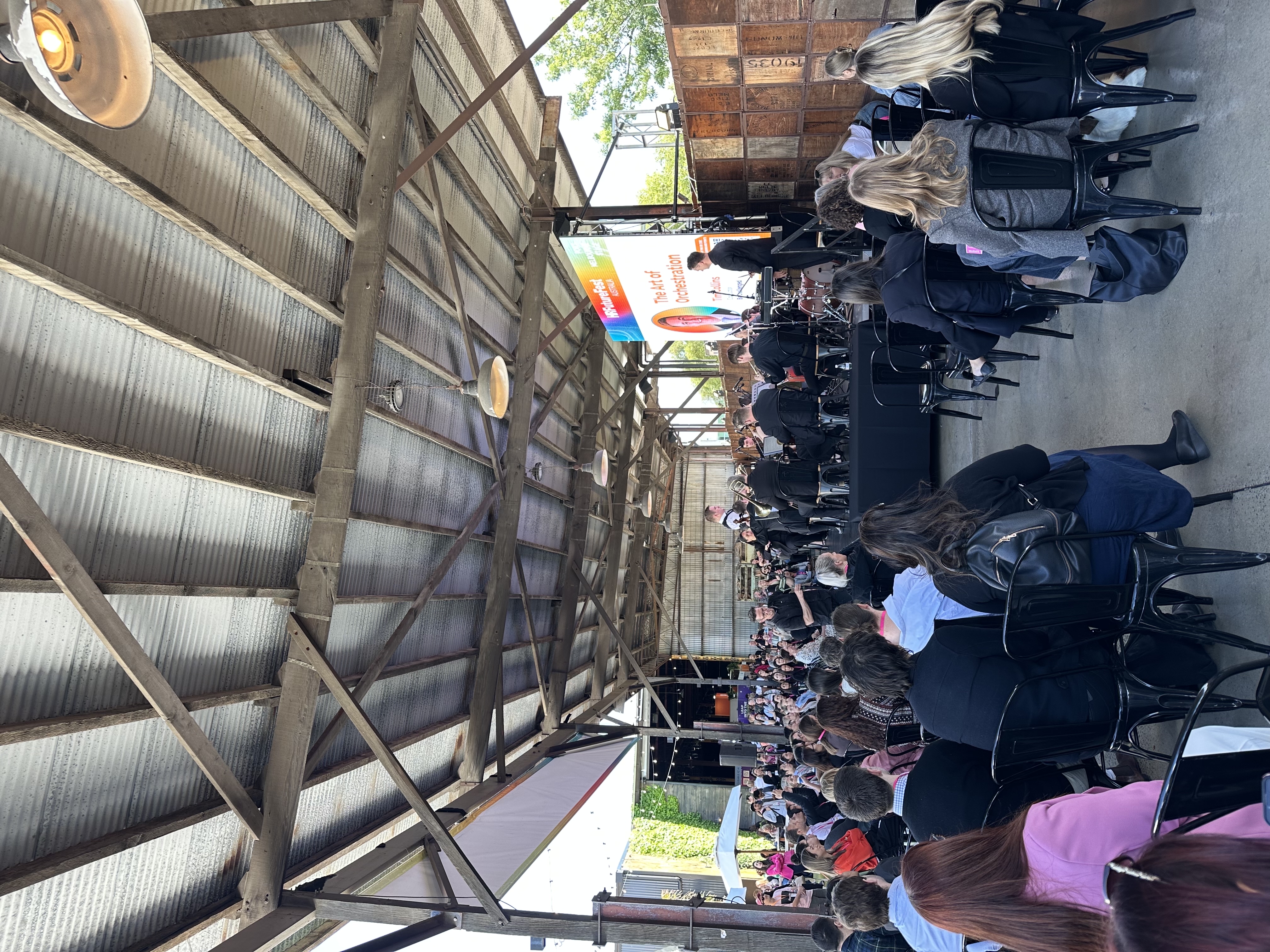
The inaugural HR Future Fest held in Melbourne on October 29 attracted more than 600 senior HR professionals.
With more than 60 industry-leading speakers, essential business topics and a raft of festival activities, HRFutureFest has cemented its place as a not-to-miss event.