New data reveals how burnout remains common amid work's negative impact on wellbeing
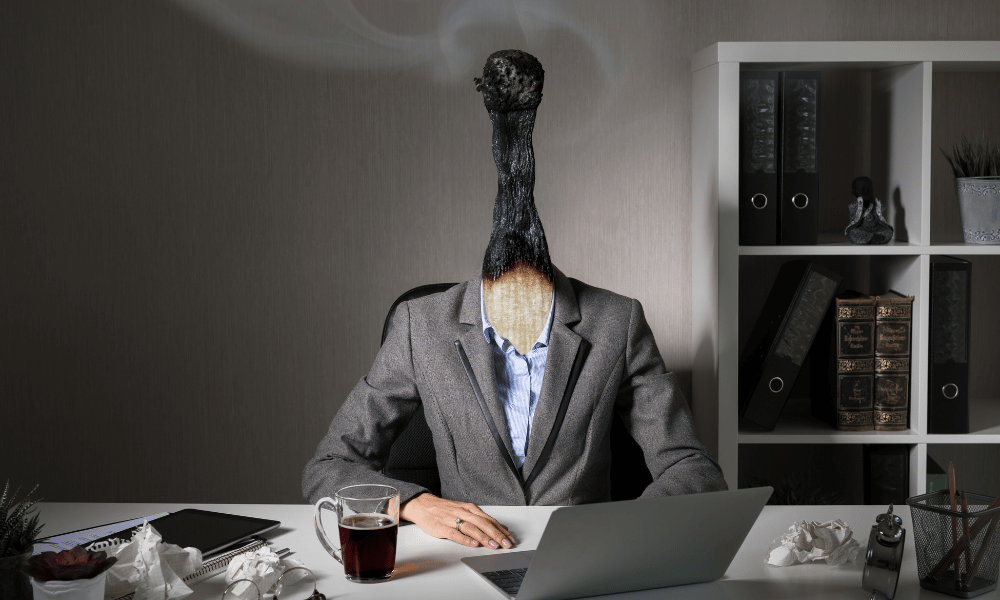
Workplace burnout is becoming a "baseline" experience for many employees as a new report found that jobs are negatively impacting workers' mental health.
Monster's latest report, which polled 1,000 employees, found that 46% are reporting burnout. Others are also experiencing the following symptoms of poor mental health:
- Anxiety or panic (39%)
- Trouble sleeping (37%)
- Headaches or physical pain (34%)
- Symptoms of depression (25%)
These negative experiences come as 57% of employees experience stress on a weekly or daily basis, as their job negatively impacts their mental health to different degrees.
"The workplace burnout statistics above, also displayed in the graphic, signal a shift: Stress and burnout are no longer tied to periodic busy periods," the report read.
According to the report, these ongoing conditions are linked to a variety of factors. They include:
- Increased workload or understaffing (39%)
- Poor management (33%)
- Struggle with work-life balance (30%)
- Workplace conflict or drama (28%)
- Stagnant pay (26%)
- Fear of layoffs or job insecurity (21%)
"If a role consistently creates stress due to unclear expectations or a lack of support, it may not be a reflection of your performance – it may be a reflection of the environment," the report read.
Suffering in silence
Despite widespread findings on mental health challenges, the report discovered that many employees aren't able to talk about them openly.
The majority of the respondents (70%) said they feel the pressure to appear okay in the workplace at least occasionally.
More than a third of the respondents (37%) feel they can't be honest about their mental health without negative consequences. These feelings are driven by:
- Being labeled "difficult" (41%)
- Fear of retaliation (24%)
- Impact on career growth (27%)
- Losing their job (27%)
"Too many workers are dealing with stress and burnout in silence and feeling like they can't say anything about it," said Monster's career expert Vicki Salemi, in a statement.
"If your job is consistently impacting your mental health, that's not something you just have to accept. Today's workforce is starting to recognise that finding the right role also means finding a healthier environment."
More accountability needed
Employees are also becoming more aware of gaps in how workplaces address mental health issues.
According to the report, 44% of employees don't believe their leaders are held accountable for toxic behaviour at work, such as micromanagement, playing favourites, or bullying and intimidation acts.
These findings underscore a growing expectation from jobseekers to address mental health challenges in the workplace.
"Supporting mental health isn't just about benefits – it's about how work is structured, how leaders behave, and how employees are supported day to day," the report said. "As the conversation around workplace mental health evolves, the next step is ensuring that change follows."