CO2 is in the air and it's behind the post-3pm slump
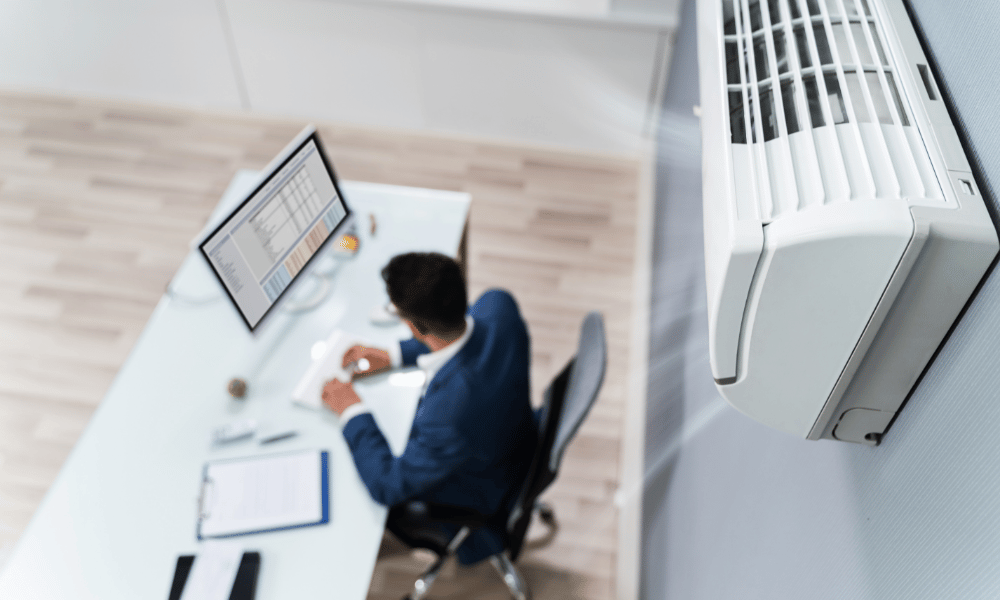
The air quality in shared meeting rooms and office spaces could be the reason behind employees' energy slump in the afternoons, according to a new report.
A reminder released by Logitech for Business ANZ blamed the accumulating carbon dioxide levels in enclosed spaces throughout the working day, which can rise beyond 1,000 parts per million (ppm) by mid-afternoon.
Ppm, or parts per million, is the measure used by indoor air quality professionals when it comes to carbon dioxide concentration.
Data from climate-tech firm Carbelim showed that recording between 1,000 and 1,500 ppm of carbon dioxide can already be classified as poor ventilation, resulting in reduced concentration.
Having carbon dioxide levels between 1,500 and 2,000 ppm can lead to a decline in decision-making, while levels over 2,000 ppm can lead to cognitive impairment.
In workplaces, Carbelim noted that many office environments, particularly crowded meeting rooms, can record between 1,200 and 1,500 ppm by the afternoon.
High carbon dioxide levels, when combined with volatile organic compounds from furniture and dry air from heating, ventilation, and air conditioning (HVAC) systems, can turn workplaces into fatigue incubators, according to Logitech for Business ANZ.
"Everyone's hit that 3pm slump before, but I'd argue that it's not laziness – it could just be the air we're all breathing," said Sean Byrne, head of Logitech for Business ANZ.
What can employers do?
Byrne said the impact of air quality can be overlooked because it can be hard to manage something that cannot be seen.
"But it really shouldn't be, as in-office environmental sensors are available that can track CO2 and other particles, taking the issue from something invisible to something fixable," he said.
Having the hardware that can monitor room conditions and give managers the information they need to adjust ventilation will be critical to avoiding the mid-afternoon productivity slump, according to Byrne.
He stressed that the key factor in combating the air quality issue is how easily data can be integrated into IT and facility monitoring dashboards.
"A sensor that sits quietly on the wall may be taken for granted, but it's actually a major productivity lever office managers can pull without upending everyone's working day," Byrne said.
"We need the right air if we're to think clearly, and avoid the post-3pm slump."