Most HR leaders would trust AI to interview job applicants
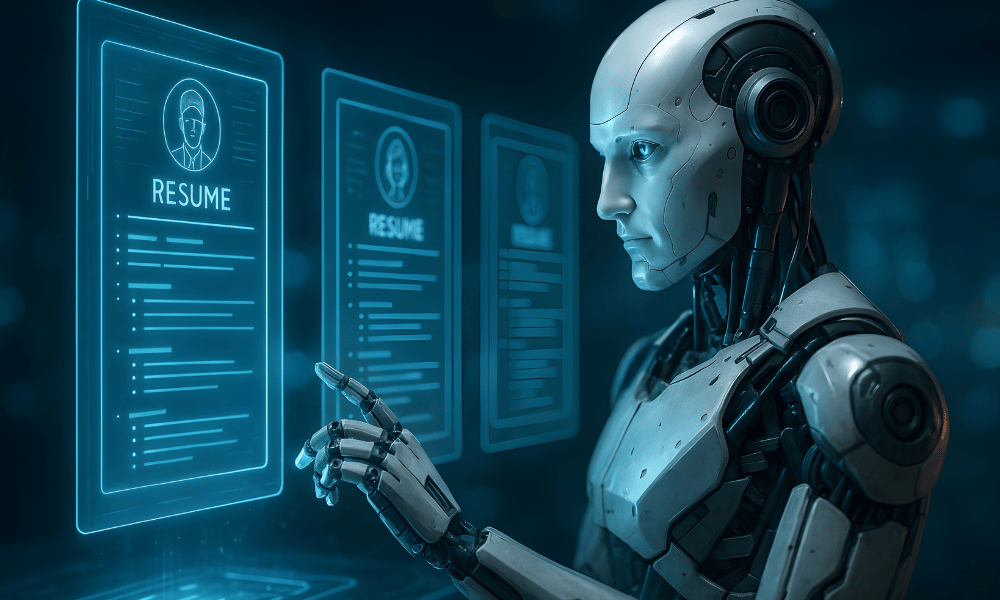
Artificial intelligence tools are gaining a bigger role in the recruitment process as a new BambooHR report found that HR professionals would trust the technology to interview a potential hire.
The report, which surveyed over 500 HR professionals, found that 67% of them would trust AI to conduct an interview on its own.
The finding offers a glimpse at the future of AI in the HR function, after research previously indicated that AI use remains limited to résumé screening, training, and assessments.
The growing acceptance to letting AI carry out interviews comes amid widespread use and confidence among HR leaders, according to the report.
Three in four HR professionals (76%) consider themselves confident, everyday AI users, compared to just 50% of employees.
The report also found that 92% of HR professionals are already actively piloting or planning AI agents across the HR lifecycle, from screening candidates to monitoring flight risk, and enforcing policies.
Nicole Csizar, Sr. director of HR services at BambooHR, acknowledged the benefits of utilising AI for HR tasks.
"The more we use AI in recruiting, the more human the interview can become," Csizar said. "AI can take a lot off an interviewer's plate: preparing questions, taking notes, organising information, all the things that distract you from really being present with the person you're talking to."
But the senior director urged caution in leaving AI in charge of interviews.
"AI shouldn't replace the interviewer, it should be used to make the interviewer better at the part we actually need humans for," she said.
Recruitment biases by AI
The warning also comes in the wake of biases by AI tools that are still being observed by HR leaders.
Eight in 10 HR professionals admitted that they found biases or problems in the LLMs supporting their work, with AI model bias and demographic bias being the most observed issues.
At least a third (36%) of HR professionals also said they have observed AI favouring résumés and cover letters that were drafted by the same model, and have noticed AI having a pattern of demographic bias (33%).
Biases by AI tools are a long-standing concern since the technology has been introduced in the HR function. In Australia, a 2024 poll found that HR leaders believe AI discrimination has already occurred against a variety of under-represented groups in the workplace.
A recent study by researchers from the University of Washington also recently found that human decision-makers often just "mirrored" biased AI decisions instead of correcting them.
Addressing biases in AI-assisted recruitment processes will require a review in order to successfully identify and mitigate them, according to the State of AI in Australian Human Resources report.
"Undertaking a review of any AI-enabled or automated HR technology both prior to its use and following a period of implementation is critical to supporting equity and diversity, and mitigating risks of bias and discrimination," the report read.
Kara Dennison, Resume.org's head of career advising, also previously underscored the importance of being transparent when using AI in hiring.
"This means clearly explaining where and how AI is used, whether it makes recommendations or rejections, the level of human oversight, and what data is collected. This proactive approach promotes fairness, prepares candidates, and demonstrates a commitment to ethical, effective hiring practices," Dennison previously said.