
Jump to winners | Jump to methodology
The HRD Global 100 2026 names 100 HR leaders across six markets who delivered faster change while protecting employee well-being
By Kim Champion
IN BRIEF
The Human Resources Director (HRD) Global 100 2026 recognizes 100 of the top HR executives and leaders in the world across the US, Canada, the UK, Australia, New Zealand, and Asia-Pacific.
Now in its seventh year, the list celebrates leaders who have navigated rapid change and shown exceptional dedication to their organizations and teams over the past year.
This year’s list spans 16 sectors, from aviation and banking to professional sport and beauty.
|
The full list HRD Global 100 2026 winnersAll 100 honourees, listed alphabetically by last name
Featured in this report |
An old proverb says that if you want to go fast, go alone, and if you want to go far, go together. The 100 HR leaders named to the HRD Global 100 2026 spent the past year doing both.
Their year unfolded under a double mandate:
Deloitte’s 2026 Global Human Capital Trends Survey of more than 9,000 leaders found that business leaders now count speed as their main competitive strategy, echoing the pressures HR leaders flagged when AI transformation topped HR priorities for 2026
Gallup’s State of the Global Workplace 2026 Report shows global employee engagement fell to its lowest level since 2020, with managers accounting for most of the decline
The people who advise HR leaders see the same squeeze. “HR is being reshaped by technology, changing workforce expectations and economic pressure,” says Sarah Donegan, co-founder of Melbourne-based HR recruitment specialist Samuels Donegan.
“Leaders are expected to drive transformation while controlling costs, closing capability gaps, managing workforce risk, and maintaining employee confidence,” she says. The firm’s 2026/27 HR Salary Guide, based on a survey of more than 1,100 HR and people professionals across Australia, found that 42 percent of those surveyed had taken on additional responsibilities without a corresponding pay increase.
For Aram Arslanian, president and CEO of Cadence Leadership + Communication based in Vancouver, BC, the pressure shows up first in how leaders talk to their teams. “Unfortunately, as uncertainty rises, communication suffers,” he says. “Leaders need to communicate clearly, manage their reactions, and have the conversations their teams need, even when there aren’t any clear answers yet.”
That tension runs through this year’s report, and each of the honourees answers the same question in their own way: How do HR leaders deliver faster change while protecting the trust, engagement, and capability that change depends on?
Key takeaway: HR leaders face a C-suite mandate for speed at the same moment the managers who deliver change are disengaging fastest, and the strongest engagement and AI returns show up where organizations invest in managers and human-centered work design.
Company boards want faster transformation, global engagement has fallen to its lowest level since 2020, workforce planning lags AI ambition, and labor markets in each region are adding pressures of their own.
“The challenge for HR leaders is no longer simply managing the workforce. It’s helping organizations navigate how work itself is changing,” Donegan says.
Business leaders are demanding faster change because they now see speed as their main source of competitive advantage, and they are counting on their workforce to deliver it.
Speed as strategy. Seven in 10 business leaders name being fast and nimble as their primary competitive strategy for the next three years, according to Deloitte’s 2026 Global Human Capital Trends Report, which surveyed more than 9,000 business and HR leaders in 89 countries.
Two drivers of success. Leaders surveyed by Deloitte rank speeding up how people and resources are organized to perform work and building a workforce that adapts to change quickly as their top two drivers of success.
The human edge. Deloitte finds the classic S curve of business growth is compressing, as AI and workforce transformation speed up the climb and bring the plateau sooner. It places the new competitive edge in human adaptivity, creativity, and judgment, which are harder to copy than technology.
The cost of a tech-first approach. In Deloitte’s 2025 survey of 100 US C-suite leaders at companies with more than 5,000 employees, 59 percent said their organizations take a technology-focused approach to AI. Those organizations were 1.6 times more likely to report that their AI investments were not exceeding expectations than organizations with a human-centric approach.
What it means for HR. Workforce design, decision rights, and culture now sit on the same agenda as software spending, a pattern visible as chief information officers become accidental talent managers amid AI transformation.
|
Speed and AI strategy Leaders want speed, but tech-first AI misses more oftenLeaders' top competitive strategy, and how their approach to AI relates to returns Tap the figures or a bar for more
|
Global employee engagement fell to 20 percent in 2025, its lowest level since 2020, and managers account for most of the decline, according to Gallup’s State of the Global Workplace 2026 Report, based on 263,810 respondents surveyed through 2025.
Gallup counts employees as engaged when they are highly involved in and enthusiastic about their work and workplace.
A second straight decline. Global engagement dropped for the second consecutive year to 20 percent in 2025.
The cost. Gallup puts the price of low engagement at about $10 trillion in lost productivity, or 9 percent of global GDP.
Managers drove the drop. Manager engagement fell to 22 percent in 2025 from 31 percent in 2022, including a five-point decline in the past year alone, Gallup found.
A smaller dip for individual contributors. Gallup noted engagement among individual contributors slipped one point to 19 percent.
A shrinking premium. Managers once enjoyed an “engagement premium” over the people they lead, according to Gallup. They are now increasingly only as engaged as their teams.
Well-being edged up. The share of thriving employees rose one point to 34 percent in 2025, the first increase in three years.
What the best-practice organizations achieve. Within best-practice organizations, 79 percent of managers are engaged, nearly four times the global average. Gallup concludes that organizations of every size can reach high levels of manager engagement.
“Organizations often approach retention by just looking at compensation, benefits, or new programs. These things matter, but the day-to-day experience of working with a manager has an enormous influence on whether someone wants to stay,” Arslanian says.
“Managers translate strategy into the employee experience, so they need to lead performance, communicate clearly, coach, prioritize, and manage well-being,” Donegan says.
What it means for HR. Managers carry transformation to the front line, and that layer is losing energy fastest.
Organizations are struggling because most still plan their workforce for the short term and leave AI adoption to individuals, without the manager support that turns personal gains into organizational ones.
Short-term planning. Only 11 percent of organizations take a strategic, long-term approach to workforce planning, according to McKinsey’s HR Monitor 2026 on the people function, which surveyed about 1,300 HR professionals and 5,500 employees in Europe, the US, and China.
Slow AI uptake in HR. McKinsey found operational use of AI in HR has risen by zero to six percentage points, depending on the domain, and most organizations still plan around short-term headcount.
Personal gains, limited transformation. Among US employees in organizations that have implemented AI, 65 percent say it has improved their productivity and efficiency, yet only eight percent strongly agree it has transformed how work gets done in their organization, according to Gallup’s April 2026 research on AI adoption and workforce change.
Flat US engagement. US employee engagement stayed at 31 percent in the first half of 2026, even as AI adoption accelerated, according to Gallup’s midyear 2026 update on engagement and AI adoption.
Manager support. Employees who strongly agree their manager actively supports their team’s AI use reported 48 percent engagement, compared with 30 percent for those who don’t strongly agree, Gallup found.
When the conditions align. Engagement reached 53 percent where frequent AI use, a clear integration plan, and active manager support came together, according to Gallup.
“As AI takes on more tasks, the human side of leadership becomes even more important,” Arslanian says. “Leaders still need to understand their people, recognize what’s happening within a team, and communicate decisions in a way that builds trust and understanding.” HR leaders, he adds, also “need to be clear on how AI is used and where human oversight is still needed.”
Capability is the other gap. “One of the biggest risks for organizations is assuming that the skills which made someone successful five years ago will be enough for the next five,” Donegan says. “Technology is changing the nature of work, and capability requirements are evolving faster than many traditional development pathways can keep up with.”
What it means for HR. Managers decide whether AI investment turns into organizational results.
|
AI adoption and engagement The manager multiplierHow manager support lines up with engagement among US employees, first half of 2026
|
Managing rapid change in HR takes a different form in each market. Canada faces a softening job market and tighter immigration targets, the US faces slow hiring and rising worker anxiety about AI, New Zealand has rewritten its employment law, Australia has extended new rights and safety duties to employers of every size, the UK is phasing in the Employment Rights Act 2025, and Singapore is raising its retirement and re-employment ages while preparing a new workplace discrimination law.
Jobs. Employment fell by 68,000 in September 2026, a second straight monthly decline after a loss of 42,000 in August, and unemployment rose to 6.5 percent, according to Statistics Canada’s September 2026 Labour Force Survey.
Immigration. Immigration, Refugees and Citizenship Canada used its 2026 to 2028 Immigration Levels Plan to set new temporary resident arrivals at 385,000 for 2026, falling to 370,000 in 2027 and 2028, while keeping permanent resident admissions steady at 380,000 a year, a squeeze HRD covered in its report on demographic changes set to shrink Canada’s workforce.
Jobs. Nonfarm payrolls rose by just 29,000 in September 2026 and unemployment edged up to 4.2 percent, according to the Bureau of Labor Statistics September 2026 jobs report.
AI anxiety. In the first quarter of 2026, 18 percent of US employees said it was very or somewhat likely their job would be eliminated within five years due to AI or automation, rising to 23 percent in organizations that have adopted AI, according to Gallup’s research on rising AI adoption and workforce changes.
Employment law. The Employment Relations Amendment Act 2026 came into force on Feb. 21, 2026, according to New Zealand’s Ministry of Business, Innovation and Employment. It introduced a gateway test for contractor status and removed the rule that placed new employees on collective agreement terms for their first 30 days.
Migration. Stats NZ’s population estimates for the June 2026 year show a net migration gain of 17,600, up from 10,300 a year earlier, as migrant departures fell 5 percent. For employers sponsoring overseas hires, the obligations are ongoing in both New Zealand and Australia, says Kate Dear of Queenstown Immigration & HR.
Right to disconnect. The right to disconnect reached small business employees on Aug. 26, 2025, a year after it began for larger employers, so it now covers national system employers of every size, according to the Fair Work Ombudsman.
Psychosocial safety. Under Safe Work Australia’s model work health and safety regulations, employers must identify psychosocial hazards and eliminate or minimize the risks they create.
Skills demand. “Australian employers are placing greater emphasis on AI and data literacy, while adaptability, commercial judgment, communication, and change leadership are becoming equally valuable,” Donegan says.
Day-one rights. Statutory sick pay became payable from the first day of absence and paternity leave and unpaid parental leave became day-one rights on April 6, 2026, according to the UK government’s announcement of the first Employment Rights Act reforms, with the new Fair Work Agency launching on April 7, 2026, to enforce employment rights.
Unfair dismissal. The qualifying period for ordinary unfair dismissal protection falls to six months from two years for dismissals from Jan. 1, 2027, when the cap on compensatory awards is also removed, under the UK government’s implementation timeline for the Employment Rights Act 2025.
Older workers. Singapore raised its minimum retirement age to 64 and its re-employment age to 69 on July 1, 2026, according to the Ministry of Manpower’s (MOM) guidance on retirement age, as part of a plan to reach 65 and 70 by 2030.
Workplace fairness. MOM aims to bring the Workplace Fairness Act, which sets statutory protections against workplace discrimination, into force by the end of 2027, a shift HRD covered when a lawyer explained Singapore’s Workplace Fairness Act.
Falling job-market optimism. Gallup’s State of the Global Workplace 2026 Report found job-market optimism fell 12 points in Australia and New Zealand and 10 points in the US and Canada in 2025.
|
Labour markets Four markets, four pressures on HR in 2026The figure shaping workforce planning in each featured honouree's market
|
Key takeaway: Australia and Canada account for more than half of the HRD Global 100 2026. Banking and financial services is the largest of 16 sectors, while 39 honourees are C-suite people executives.
|
Who made the HRD Global 100 2026 100 honourees by market, sector, and title level Markets 6
Asia-Pacific honourees are based in Hong Kong (4), Singapore (3), Malaysia (2), and the Philippines (1). Sectors 16
Show the 10 other sectorsReal estate and facilities services (5); education and research (5); hospitality, travel, and events (5); media, entertainment, and sport (5); transportation and aviation (4); energy, utilities, and resources (4); insurance (4); government and public sector (4); industrial and manufacturing (2); and diversified conglomerate (1). Title level 8
|
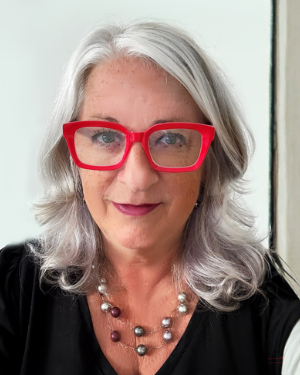
Key takeaway: Diana Godfrey has spent 31 years keeping Fidelity Canada’s people close to its leaders and clients as the company grew. She now frames AI as a people transformation that starts with the work, backed by the company’s AI Academy.
|
When Diana Godfrey joined Fidelity Canada’s HR team in 1995, the company was small and flat enough that employees had direct access to its leaders. She has spent the 31 years since making sure that access survived the company’s growth.
“People felt heard, they understood what was happening across the organization, and they could see a direct connection between their work and the client,” Godfrey says. “As Fidelity has grown significantly in size and reach, we’ve worked hard to preserve that mindset. I believe that has been an important part of our success.”
As senior vice president of human resources and corporate affairs, she backs company-wide town halls and business updates with her own routine of one-on-ones, skip-level meetings, roundtables, and department meetings, and she keeps an open door.
“Leaders need to remain close enough to the organization to understand what people are experiencing and close enough to the business to understand what needs to change,” she says.
That closeness shaped the hardest people decisions of the past year. Fidelity Canada’s executive team weighed where to invest, how to structure teams, and what capabilities the company needs for its next stage of growth. Godfrey says those choices go further than headcount, with the team asking where it can create opportunities for its people, which capabilities it can build internally, and how to keep employees learning.
“We don’t always agree immediately, and I think that is healthy,” she says. “The objective isn’t consensus for the sake of consensus. It is to have rigorous discussions, challenge one another, and ultimately make the decision we believe is right for Fidelity while continuing to treat people with respect throughout the process.”


The same respect runs through her team’s commitment to supporting the “whole person.” When one employee went through a significant personal change while taking on more responsibility, their manager worked closely with HR, colleagues stepped in, and the company offered flexibility. The employee’s career kept moving.
“What made me proud wasn’t any single HR program. It was how the organization responded,” Godfrey says. “When employees see that an organization stands behind them during difficult moments, it creates a level of trust that is very difficult to manufacture any other way.”
She brings the same thinking to AI. “AI is fundamentally a people transformation,” she says. Fidelity Canada encourages practical experimentation and learning, including through its AI Academy, to replace fear of the technology with curiosity.
“At the same time, responsible use is non-negotiable,” she says. “In financial services, trust is essential.”
The lesson she learned in 1995, that people stay engaged when they feel heard, informed, and connected to the client, still guides her. “Thirty-one years later, Fidelity is a very different organization, but that principle has remained remarkably consistent,” Godfrey says.
Where should HR leaders start when preparing employees for AI?
Don’t begin with fear, and don’t begin with the technology. Begin with the work. Understand how jobs are changing. Give employees permission to experiment responsibly. Invest heavily in learning. Establish clear guardrails. The bigger opportunity is to increase the capability of your people.
What does responsible AI use mean in financial services?
Employees need to understand not only what AI can do, but when it should be used, what information should never be entered into a tool, when an output needs to be challenged, and where human judgment must remain central. AI alone won’t make a company successful. But organizations that fail to learn how to use it effectively will increasingly put themselves at a disadvantage.
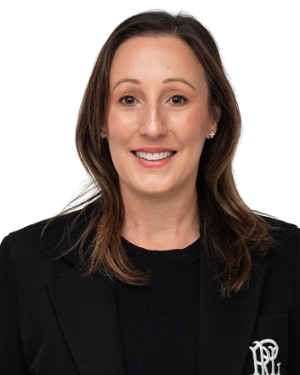
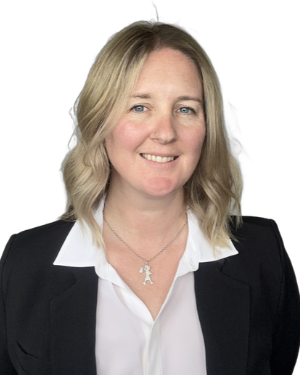
Key takeaway: Jessica Ciccozzi, a transformative people leader based in Adelaide, led workforce transition on one of the largest university mergers undertaken anywhere in the world and redesigned a finance-sector business from the executive team down, pairing individual consultation with decisive timelines.
|
Jessica Ciccozzi spent part of the past year helping design and build a new organization while the two institutions merging into it kept operating. As founder and managing director of East Executive, she led workforce transition efforts on one of the biggest higher-education consolidations in the world under heightened media scrutiny and union and government interest.
“The scale, complexity, and pace of change were extraordinary,” Ciccozzi says. “We were effectively designing and building a new organization while maintaining business continuity across two existing operations, often making critical decisions while the broader integration was still taking shape.”
The hardest calls involved people at the top. Leadership structures and appointments had to be settled quickly, and the decisions affected experienced executives who had built long careers at their institutions. The work meant navigating competing commercial priorities, immovable deadlines, complex industrial environments, and significant organizational uncertainty, while staying focused on operational performance and on making decisions with fairness, integrity, and respect.
“The greatest challenge was balancing the commercial and operational imperatives with the very real personal and professional impact on people,” she says. “For me, the experience reinforced that the true measure of leadership through transformation lies not only in achieving the organizational outcome, but in the judgment, courage, and integrity required to make consequential decisions at pace, lead through uncertainty, and maintain the confidence and trust of people while operating in complex, rapidly evolving, and largely untested environments.”
Her approach to that pressure is personal. Ciccozzi has lived through a poorly managed restructuring herself, and it shaped how she leads change. She engages people individually, explains the reasons for change, provides support, treats everyone with dignity, and then moves with purpose.
“Restructures can fundamentally affect people’s careers, livelihoods, and sense of identity, particularly where redundancy is involved. How you treat people through that process matters enormously,” she says. “Prolonged uncertainty, unnecessary delays, and drawn-out decision-making can be far more damaging than the difficult decisions themselves. People deserve clarity, even when the outcome is not what they had hoped for.”
That method carried into a full restructure of the executive team and wider business at a finance-sector employer, realigning around a new strategic position. Ciccozzi engaged executives individually first, seeking their views on what was working, where the challenges were, and what the organization needed to succeed. Those perspectives informed the future design.
“The approach proved highly effective, building trust, ownership, and leadership buy-in, and ultimately led to a successful transition to its new operating model,” she says.
In a defense industry redesign, the starting point was different. Performance problems were visible internally and in customer feedback, and leaders and teams agreed change was needed, though they were not necessarily aligned on what should change or how. “Individual consultation, followed by broader team engagement, moved people from a shared recognition of the problem to collective ownership of the solution,” Ciccozzi says.
After one recent major restructure, the board, CEO, and executive team gave her feedback on how the change was managed and the difference the new structure has made.
“The board can see a CEO who now has the capacity to focus more on longer-term strategy,” she says. “The CEO feels reinvigorated, with the space to work on the business rather than constantly in it.” The executive team, she adds, now has greater clarity, stronger peer relationships, and confidence in its collective capability.
“For me, that is what successful transformation looks like,” Ciccozzi says. “Respecting the people impacted by change, while creating an organization where leaders are empowered, capability is aligned, and the business is better positioned for the future.”
What’s one question every executive should ask before announcing a restructure?
“Are we clear on the imperative for change, prepared for what it will take to deliver, and honest about the potential impact on our people and the business?” Before announcing a restructure, executives need absolute clarity on the business problem they are seeking to address, the outcomes they want to achieve, and the process required to get there. Announcing a restructure is not simply communicating a decision. It is taking responsibility for the uncertainty that follows. Leaders owe their people a clear rationale, a credible process, and the confidence that difficult decisions will be approached with integrity, fairness, and respect.
How do you tell a leadership team its structure has to change?
For me, this starts with being clear about why the structure needs to change. Organizational redesign should be driven by a genuine business imperative, whether that be performance, strategy, growth, acquisition, divestment, market conditions, or the need to build capability for the future. In my experience, the conversation is most effective when leaders understand the drivers, commercial rationale, and are then genuinely engaged in shaping what comes next. Genuine consultation does not mean every decision is negotiable, but it does mean approaching the process with openness, transparency, and respect.
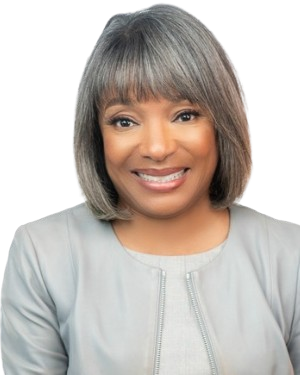
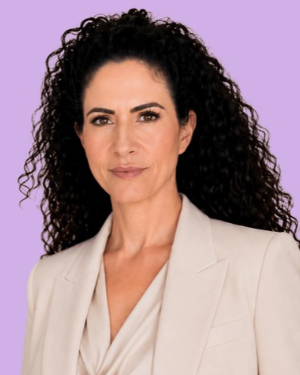
Key takeaway: DeRetta Rhodes leads people and culture for the Atlanta Braves, where she made staff wellness part of the club’s HR strategy after the pandemic and brings a championship mindset to how people learn, connect, and recover from setbacks.
|
DeRetta Rhodes used to think wellness belonged to someone else. Before the pandemic, the Atlanta Braves’ executive vice president and chief people and culture officer saw mindfulness and wellness as the job of the club’s healthcare partners.
“Before COVID, I always thought who was responsible for mindfulness and wellness was our healthcare partners, not me as an HR professional,” Rhodes says.
The pandemic changed her view. As wellness became one of the things staff needed most, Rhodes hired a specialist in healthcare, wellness, and compensation to lift that strategy across the organization.
This year, the Braves partnered with Cigna on a mindfulness app that lets staff check in on how they are doing each day. Rhodes uses it almost every day herself.
“Who would have thought that an app that asks you how your day is would make a difference?” she says. “We’re getting great feedback from our staff on using this particular app.”
The scale of the club makes that care harder to deliver. Rhodes oversees hiring, training, and employee experience for 450 full-time staff, according to a 2024 Society for Human Resource Management profile, and in a March 2026 Atlanta Journal-Constitution interview she described the club’s 2,600-strong game-day staff as the heart of what it does. She recently completed her eighth season with the Braves.
Her approach traces back to the start of her career, recruiting for PepsiCo’s restaurant division. She remains close to the person who hired her into HR, and the lesson from those years still guides her.
“The one lesson that I learned is try to learn as much as you possibly can in whatever you’re doing,” Rhodes says. “In every role that I get or have the opportunity to go into, I’m still learning.”
That habit carried her from chief human resources officer at the YMCA of Metro Atlanta to senior vice president of HR at the Braves, and through a role that keeps evolving. Her path also included Turner Broadcasting, where she says she learned the value of intellectual curiosity.
“It is about learning and constantly being open to what you can learn to make you better as a leader and also as an employee,” she says.
How do you lead a team through a season that doesn’t end the way you hoped?
I have a presentation I do about a championship mindset, and you have to be reminded that you can’t win every game. If I didn’t win this game, what do I need to think about for the next one? What reps do I need to do? How did I play on the field, and what do the play tapes show me about what I need to improve? We didn’t make it to the World Series, but we had a really great team. It’s only preparing you to be better the next time.
Where does your intellectual curiosity come from?
Intellectual curiosity was one of the things I took from my time at Turner Broadcasting. One of the taglines with CNN is to always have intellectual curiosity. When you have intellectual curiosity, you are seeking to learn more and more.
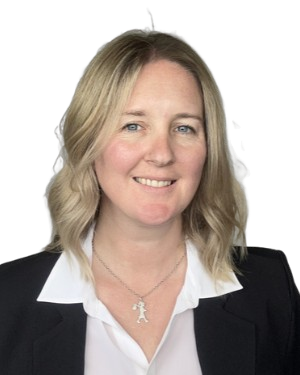
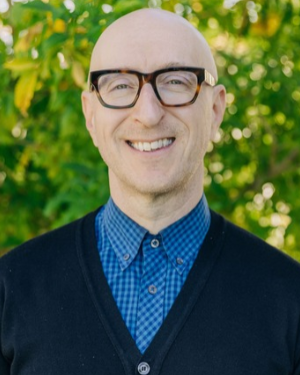
Key takeaway: Kate Dear led medical staffing group Medenterprises through B Corp certification and recertification as chief people and capability officer, and now runs her own practice offering fractional HR and licensed immigration advice to employers in New Zealand and Australia.
|
Kate Dear led Medenterprises through B Corp certification, a designation for businesses that meet verified standards of social and environmental performance, accountability, and transparency, as its chief people and capability officer, and she used the process to change how the business made decisions. The medical staffing group, headquartered in New Zealand’s Otago region, operates across Australia and New Zealand, and Dear’s work there earned her recognition on several HRD lists, including the 2025 Hot List of top HR executives in Australia and New Zealand and the 2025 Asia-Pacific’s top women in the HR industry.
“It sounds like a badge, but the real work was getting a 195-person, multi-country business to look honestly at how it treats its people, clients, and communities, and then evidence it,” Dear says. “That took months of cross-functional work, reviewing and adjusting policies, getting buy-in from leaders and our board.”
Medenterprises has been a certified B Corp since June 2023, according to B Lab’s B Corp directory listing for Medenterprises, and Dear led its recertification three years after the initial certification.
“What I’m proud of is that it changed how we made decisions afterwards, not just what was on the website,” she says.
Her second milestone reached employees directly. “The other big thing I’m proud of is introducing employer-subsidized private health insurance for employees across Australia and New Zealand,” she says. Staff told her the benefit let them seek treatment they had not been able to access before and how grateful they were for it.
Her remit at Medenterprises covered the company’s own staff. She would sometimes advise teams when immigration issues or HR queries came up for the doctors the business placed, and that experience now sits at the core of her own practice.
Dear runs Queenstown Immigration & HR based in Queenstown, working as a fractional chief people officer and a licensed immigration adviser for New Zealand and Australia. She brings more than 15 years of senior HR experience across local government and privately owned businesses and is a Chartered Member of the Human Resources Institute of New Zealand. The move from an in-house executive role was deliberate.
“Honestly, it was about designing a life, not just a career,” she says. “I wanted more time with my daughters while they’re still at an age where they want me around and more freedom to travel and work from wherever I am. In-house executive roles are rewarding, but they don’t leave much room for either.”
“Running my own practice gives me that flexibility,” she adds. It also lets her combine what she sees as her two greatest strengths: fractional HR for businesses that need senior people advice without a full-time hire and licensed immigration advice in New Zealand and Australia.
That pairing gives Dear a close view of how New Zealand employers hire from overseas. Stats NZ puts the country’s net migration gain at 17,600 in the year ended June 2026, up from 10,300 a year earlier, as fewer migrants left. For employers recruiting overseas talent, her first piece of advice is about planning.
“Work with an expert, treat immigration as part of workforce planning, not a last-minute form,” she says.
What decides whether overseas recruits stay?
Onboarding doesn’t stop at the job offer. People arrive needing housing, banking, schools, and a sense of belonging, and that’s usually what decides whether they stay. Set expectations honestly at offer stage, especially around pay, conditions, and pathways to residence. Mismatched expectations are the fastest way to lose good people.
What has surprised you about working as a fractional HR leader?
What has surprised me since is how much fractional work is available and how much businesses value senior advice in short, practical bursts rather than a full-time role. Most of that work can be done from anywhere, which suits both me and my clients.
Key takeaway: Over the next three to five years, HR leaders with the most influence will be the ones who back workforce decisions with evidence, build manager capability for constant change, and keep trust and fairness in view as AI takes on more decisions.
“I think we’ll see a much clearer distinction between HR leaders who manage the function and those who genuinely influence the direction of the business,” Donegan says.
Evidence over instinct. “Australian boards and executive teams are increasingly looking for evidence to support workforce decisions, rather than relying on intuition alone,” Donegan says. That puts workforce analytics, organizational design, and succession planning at the core of the senior HR job in her market.
A higher bar for senior hires. “Organizations recruiting senior HR leaders now emphasize commercial judgment, data confidence, change leadership, and the ability to influence at executive and board level,” Donegan says. “It’s no longer enough to be an exceptional HR practitioner.”
The gap between best-practice organizations and the global average on manager engagement is where HR’s next investment lands.
“HR leaders will need to play a strategic role in helping organizations manage change,” Arslanian says. “Technology will continue changing the work. HR’s value will be in helping organizations lead people through it well. A major focus will be building stronger leadership capabilities, such as helping leaders communicate through uncertainty, address conflict, make difficult decisions, and keep teams performing under pressure.”
Donegan says that planning has to start from the business, with organizations asking what they must be able to do in three years that they cannot do well today. “Capability planning needs to begin with business strategy,” she says.
Canada’s next immigration plan. The 2027 to 2029 Immigration Levels Plan was due by Nov. 1, 2026, under Section 94 of the Immigration and Refugee Protection Act, or within 30 sitting days after that date if Parliament was not sitting. It will confirm or revise the current 2027 targets of 370,000 new temporary resident arrivals and 380,000 permanent resident admissions and set the first targets for 2029, shaping the talent supply Canadian employers plan around.
New Zealand’s first full year under new employment rules. Employers will test the contractor gateway test and other changes in the Employment Relations Amendment Act 2026 in practice.
AI in people decisions. As AI takes a larger role in hiring and workforce decisions, HR will own the question of how those decisions stay fair.
That last point is where Donegan sees HR’s human role growing.
“As technology takes on more work and influences more decisions, HR leaders will play a critical role in ensuring organizations don’t lose sight of trust, fairness, culture, and the people behind those decisions,” she says.
Key takeaway: The featured HRD Global 100 2026 honourees move quickly without leaving their people behind, consulting before they redesign, building change into how decisions get made, and staying honest with people about how change will affect them.
The honourees work in different markets, sectors, and organizations, yet they share a way of leading change:
They consult, then move with purpose.
They build change into how decisions get made.
They stay close to the work.
They learn from every season.
This year’s honourees show that HR can deliver both when the people carrying the change are brought along with it.
That combination is what Donegan expects the profession to demand next.
“The HR leaders who will have the greatest impact over the next five years will be commercially credible, technologically confident, and deeply human,” she says.
What is the HRD Global 100 2026 list of top HR executives and leaders in the world?
The HRD Global 100 2026 is Human Resources Director’s annual list of 100 HR leaders across the US, Canada, the UK, Australia, New Zealand, and Asia-Pacific. Now in its seventh year, the list recognizes people leaders who have navigated rapid change and shown exceptional dedication to their organizations and teams over the past year, in industries ranging from aviation and banking to professional sport and beauty.
Who is on the HRD Global 100 2026 list?
The HRD Global 100 2026 recognizes 100 HR leaders across the US, Canada, the UK, Australia, New Zealand, and Asia-Pacific. Featured honourees include Diana Godfrey, senior vice president, human resources and corporate affairs, at Fidelity Canada in Toronto; Jessica Ciccozzi, founder and managing director of East Executive in Adelaide; DeRetta Rhodes, executive vice president and chief people and culture officer of the Atlanta Braves; and Kate Dear, fractional chief people officer and immigration adviser at Queenstown Immigration & HR in New Zealand.
Which countries and industries are represented in the HRD Global 100 2026?
Australia has the most honourees with 30, followed by Canada with 25, the US with 15, and 10 each from the UK, New Zealand, and Asia-Pacific. Honourees work in 16 sectors, led by banking and financial services with 16 honourees. Thirty-nine of the 100 have a chief-level people title, such as chief human resources officer and chief people officer.
What skills do HR teams need to develop in 2027?
Leadership and communication skills are rising alongside technical and digital capability. Aram Arslanian, president and CEO of Cadence Leadership + Communication, says organizations need to look further than technical skills. “Communication, emotional intelligence, adaptability, and sound judgment are essential capabilities,” he says. “Many highly skilled professionals haven’t had much or any communication or leadership training,” he adds, so people need practice giving feedback and handling disagreement.
How should HR leaders prepare employees for AI in 2026?
Diana Godfrey, senior vice president, human resources and corporate affairs at Fidelity Canada, says HR leaders should begin with the work rather than the technology: understand how jobs are changing, give employees permission to experiment responsibly, invest in learning, and set clear guardrails. Aram Arslanian, president and CEO of Cadence Leadership + Communication, says HR leaders also “need to be clear on how AI is used and where human oversight is still needed.”
How do managers affect AI adoption and employee engagement at work?
Managers largely determine whether AI adoption lifts engagement. Gallup’s 2026 midyear research found that US employees who strongly agree their manager actively supports their team’s AI use reported 48 percent engagement, compared with 30 percent for those who did not strongly agree. Engagement reached 53 percent when manager support, a clear integration plan, and frequent AI use came together.

The HRD Global 100 report shines a spotlight on outstanding professionals who are making a positive difference and helping drive change across the industry.
Now, in its seventh year, this formidable list of the biggest names in HR was put together by HRD, leveraging its unique position as a true global publication reaching six different markets – the US, Canada, Australia, New Zealand, Asia-Pacific, and the UK.
The HRD team collectively deals with hundreds, if not thousands, of HR professionals throughout the year for its daily newsletters, special reports and surveys, industry awards, and events. This range makes the HRD team well-placed to tackle the intimidating task of whittling down the industry’s high achievers to just 100.
The Global 100 2026 celebrates HR leaders who have shown exceptional dedication to their organizations and teams over the past year. Representing industries from aviation and banking to professional sport and beauty, these professionals have navigated rapid change, safeguarded employee well-being, and guided their executives through an evolving business landscape.
From pioneering talent strategists to transformative people leaders, this year’s honourees embody the passion, expertise, and vision that continue to elevate the HR profession worldwide.