New report reflects employers' skills-based approach to hiring

Employers in Singapore are willing to pay a premium for talent with AI skills, despite weaker hiring sentiments across the country, according to a new report.
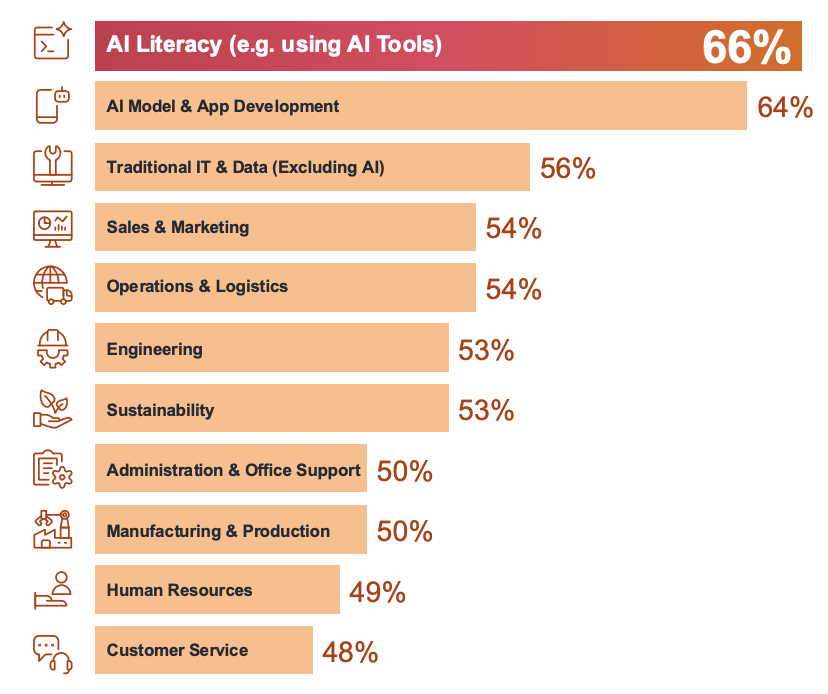
Findings from the latest ManpowerGroup report showed that 66% of employers are willing to pay premium for AI literacy skills, such as using AI tools.
Another 64% said they are willing to pay premium for candidates with AI model and app development skills.
Nearly half (49%), on the other hand, said they are willing to pay premium for employees with human resources skills.
Linda Teo, country manager of ManpowerGroup Singapore, said their findings show how deliberate employers are in directing their talent investment.
"Organisations are placing greater emphasis on building capability in areas that support transformation and execution, particularly AI-related skills alongside core human strengths such as problem-solving, collaboration, and leadership," Teo said in a statement.
"This reinforces the importance of a human-first, digital-always approach — centering workforce strategy on people, while leveraging technology to amplify human capability."
Lower hiring sentiments
The demand for AI-skilled talent comes despite lower hiring sentiments in Singapore, according to the findings.
The country's Net Employment Outlook was down to 13% for the third quarter of 2026.
This means that while 35% of employers are expecting to increase their headcount between July and September, some 22% are anticipating some staff reductions.
Another 41% said they plan to keep their staffing levels unchanged, with 27% saying they are waiting to see how the economy changes before making hiring decisions.
"Employers in Singapore are taking a more cautious approach to hiring this quarter, with many choosing to hold steady on headcount until there is greater clarity on geopolitical conditions," Teo said.
Singapore is facing a proposed 12.5% tariff from the United States after the US Trade Representative (USTR) found in an investigation that the city-state failed to adopt and effectively enforce a ban on the import of goods produced with forced labour.
The proposed tariff follows the reciprocal tariffs imposed by US President Donald Trump in 2025, which were struck down by the US Supreme Court in February.
Teo said employers' caution until getting clarity on geopolitical conditions does not mean they are standing still.
"Instead, hiring decisions are becoming more selective and deliberate, with investment increasingly directed toward skills that deliver the greatest impact," she said.
"The continued willingness to pay a premium for AI and critical thinking capabilities reflects a skills-based approach to hiring, as organisations focus on strengthening productivity, efficiency, and long-term competitiveness even as overall hiring sentiment softens."