He blamed the platform - but a statement he signed weeks later told a very different story
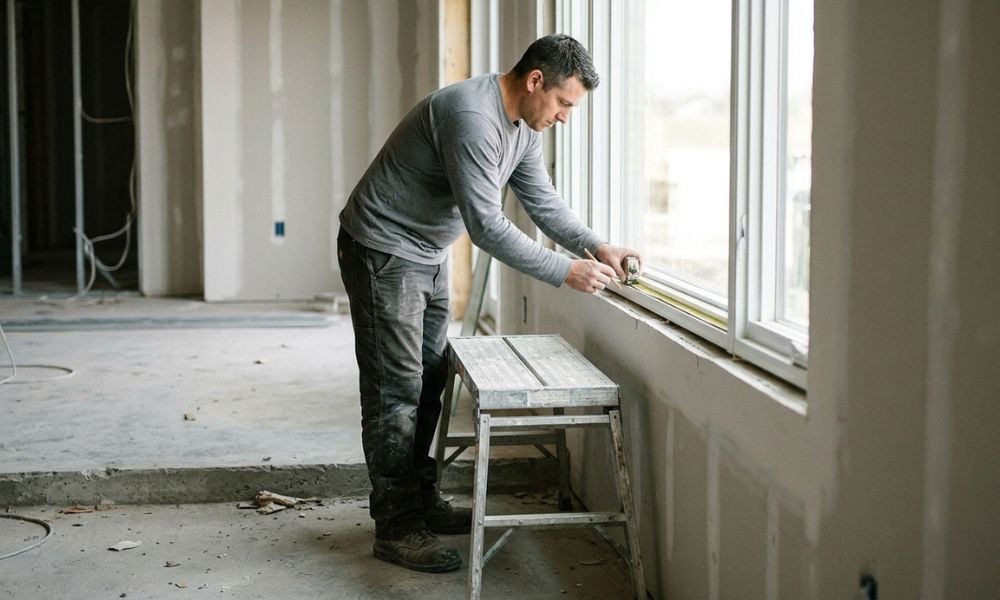
A Hong Kong window installer's workplace injury claim has collapsed after a court found his testimony riddled with contradictions - and undercut by his own signed statement.
The worker sued his employer, JS Aluminium Window Group Limited, for injuries sustained in a fall from a foldable platform at a construction site in Sheung Shui on December 12, 2018. It was his fifth day on the job.
The Hong Kong District Court dismissed the claim in a judgment handed down on October 20, 2026.
The signed statement that changed everything
At the heart of the case was a document the worker signed on February 1, 2019 - roughly seven weeks after the fall. In it, he confirmed that he "inadvertently mis-stepped when descending a working ladder" from a height of about 0.75 metres.
Years later, when he filed suit, his account shifted. He claimed the platform shook as he stepped onto it during descent, causing him to lose balance and fall. The platform, he said, lacked guardrails and was not sufficiently stable.
The court found the two accounts inconsistent.
The worker initially denied signing the statement in his court filings, then reversed course at trial, saying he could not remember whether he had signed it. His explanation - that he had confused it with a separate incident involving a photograph he had refused to sign - struck the court as illogical.
An account that kept shifting
The credibility problems ran deeper than the signed statement.
In the original court filing, the worker said his duties involved lifting, carrying, and installing windows. He made no mention of marking walls. That detail surfaced for the first time in a later filing. Under cross-examination, he then disclosed - again for the first time - that his supervisor had demonstrated a wall-marking technique to him on one occasion before the fall. He attributed the late disclosure to a memory lapse, conceding he was "merely reconstructing events as questioned."
Then there was the question of what exactly happened on the platform.
In his written witness statement, the worker said the platform shook after he stepped onto the first step. Under cross-examination, he reversed this, saying the shaking began before his foot had even touched the step. When confronted with the contradiction, he blamed his lawyers, claiming he had explained the sequence "approximately three times" but they "simply could not understand."
The court was unpersuaded. No legally trained person, the judgment noted, could conceivably fail to appreciate that basic difference.
The silence that spoke loudest
Perhaps the most damaging element was what the worker did not say in the weeks and months after the fall. Despite claiming he knew at the time that the platform's shaking caused his injury, he raised no complaint about the equipment at four key points: immediately after the fall to his supervisor and a colleague on site, hours later at the hospital, in WhatsApp messages with the company's administrative manager that same afternoon, and across 23 monthly pay-collection visits spanning nearly two years.
His only explanation was that he was in pain and no one had asked. The court found this strained "all credulity."
Medical records from the day of the fall were consistent with the signed statement. A doctor recorded that the worker had "slipped and fell when walking down the ladder at ~1m height." No mention of shaking or equipment problems appeared anywhere in the medical history.
Even if the platform shook
The court went further, finding that even if the worker's version of events were accepted, the employer would still not have been liable.
A one-metre-high platform without guardrails was not, on its own, an unsafe system of work, the court held. The worker was a senior installer with prior experience on similar equipment. He had gone up the platform twice and come down once before the fall without noticing any instability. He chose to climb it again without checking whether it was steady or waiting for his supervisor to return and hold it.
A colleague who stepped onto a platform at the same site after the fall described finding it immediately unstable - though the court noted it remained unclear whether this was the same platform. Either way, the contrast with the worker's own account of trouble-free use up to the moment of the fall was telling.
Had the claim succeeded, the court said it would have reduced any damages by 20% for the worker's own failure to take basic precautions - such as checking the platform's stability before climbing it.
The damages that were already paid
In a final twist, the court noted that even a successful claim would have been wiped out by money already received. Hypothetical damages came to HK$389,040. The worker had already collected HK$600,000 to settle a separate statutory compensation claim - more than the full amount he could have recovered at trial.
For HR teams managing workplace injury claims across the region, the case is a sharp reminder that what an employee says - and signs - in the days and weeks after an incident can carry far more weight than testimony delivered years later in a courtroom.