Office politics found to be a driver of disengagement

Just half of Gen Z employees in Singapore said they were engaged at work, according to a new report, with office politics blamed for disengagement at work.
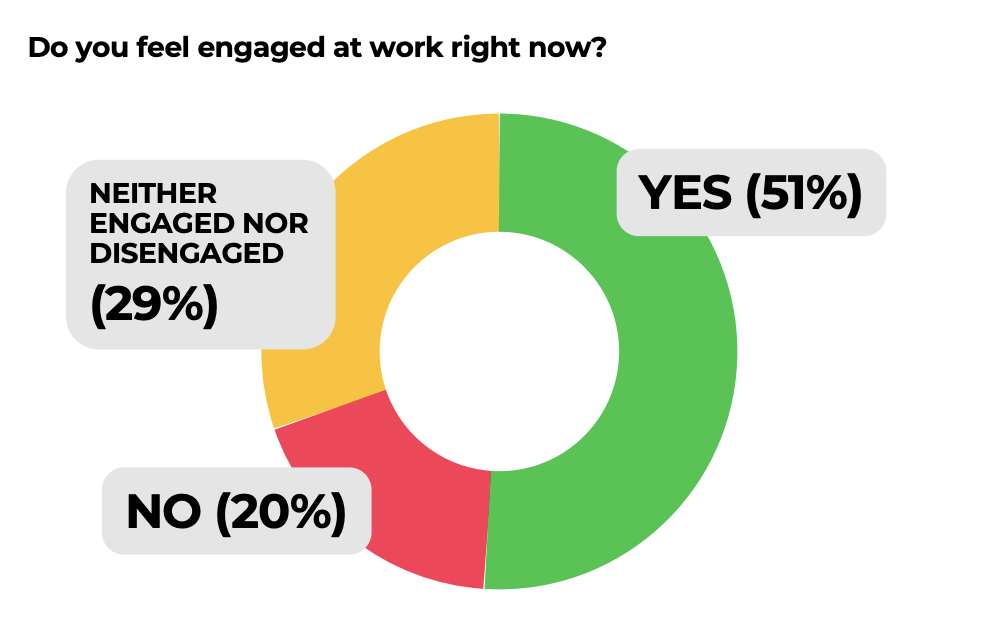
Findings from the 2026 Kahoot! Gen Z Report revealed that only 51% of employees felt engaged at work, while 20% said they were not engaged.
Another 29% said they were neither engaged nor disengaged, which the report said was a "middle" group whose connection to work "is neutral and potentially fragile."
"The engagement challenge amongst Gen Z is not mass disengagement, but rather emotional detachment," the report read.
Without active engagement, these employees lack the enthusiasm and emotional commitment that are associated with higher performance, learning, and retention.
"This uneven state of engagement across the younger members of the workforce could potentially hamper organisations' ability to be both innovative and consistently productive," the report read.
According to the findings, office politics emerged as a strong factor that's driving disengagement among Gen Z employees.
More than a quarter of Gen Z employees said success that's dependent on politics over merit (27%) and senior-driven decision-making (26%) were the most unfamiliar and surprising aspects of work for them.
These factors are just behind the expected fast pace of work and task completion, which emerged as the biggest culture shock for Gen Z staff.
"Adjusting to the cadence of work tasks typically involves an agreed onboarding period where new joiners can get up to speed," the report read.
"However, office politics can immediately have a significant and long-lasting impact, creating a toxic company culture that leaves new employees demoralised and disengaged."
Converting neutrality to engagement
Converting employees' neutrality into engagement will require more "intentional" levers at work, according to the report.
"Engagement strategies must address connection and meaning early, rather than leaving it to chance and assume it will develop organically over time," the report read.
More than half of Gen Z employees (56%) said supportive team relationships are a strong driver of belonging at work. This is followed by:
- Learning and growth opportunities (48%)
- Recognition for contributions (45%)
- Transparent communication from leadership (41%)
- Being included in decision-making (35%)
"Employees are less influenced by structured groups or social events, emphasising that everyday interpersonal and professional relationships are key drivers of motivation and retention," the report read.
"Efforts to strengthen belonging should prioritise team dynamics, recognition systems, and manager capability over one-off cultural initiatives or social infrastructure alone."
Meanwhile, 47% of Gen Z employees also agreed that they are more likely to engage with content presented as a game, challenge, or a friendly competition.
"Gen Z workers' positivity towards gamified content shows that it could be a particularly effective approach for creating engaging learning experiences for younger professionals," the report read.
"Experiment with tools that are modern and intuitive, as Gen Z workers expect, but choose platforms specifically designed for interactivity and engagement."