Employees are moving away from linear career paths and exploring new ways to work

The world of work has changed massively over the past few years, with employees exploring different career paths that traditionally weren't popular before.
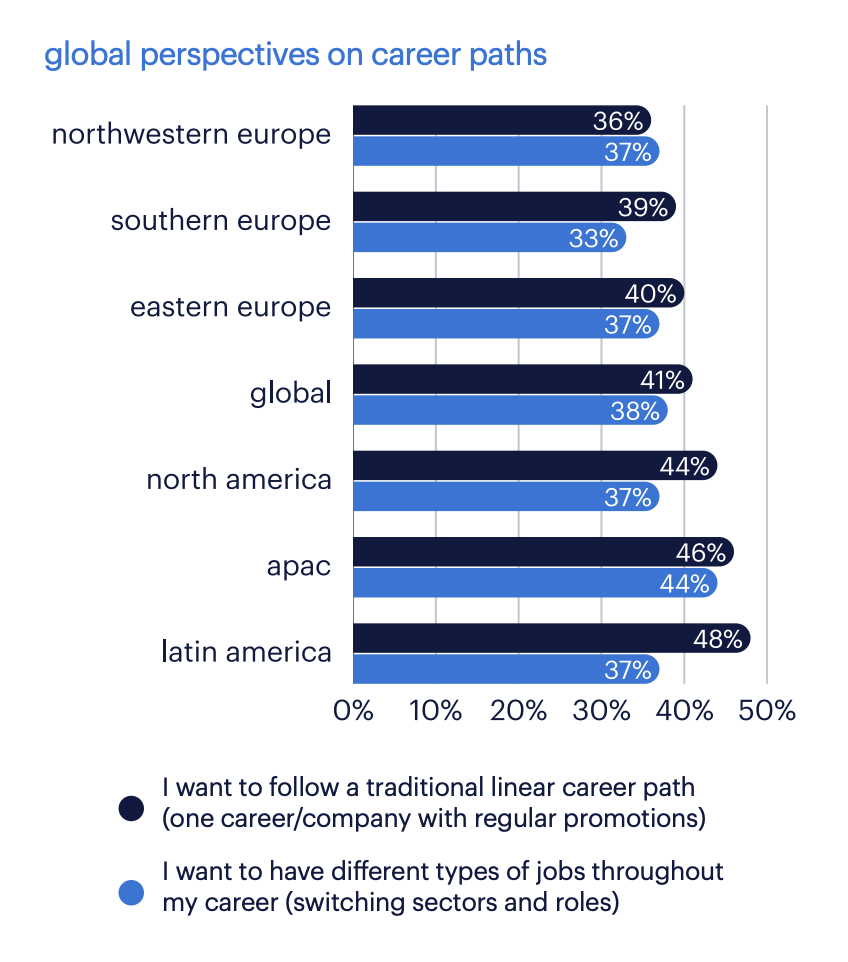
Data from Randstad's 2026 Workmonitor Report revealed that only 41% of talent want to follow the traditional career path.
Another 38% said they don't want a linear career, preferring instead to experience different jobs across a variety of sectors.
"Given the uncertainty many talent feel, there are mixed preferences for the ideal career path," the report read.
"Some clearly see the traditional linear career ladder and a full-time job as a reassuring guide, while others prefer less predictable, more diverse portfolio careers."
'Portfolio careers'
Portfolio careers refer to the practice of engaging in multiple work activities simultaneously, rather than the traditional and normalised approach of committing to a single, full-time job, according to organisational psychologist Robert Annis.
"This approach is usually typified by combining multiple engagements freelance projects, part-time jobs, consulting roles, and entrepreneurial ventures," Annis said on LinkedIn.
Randstad's report indicated that building "portfolio careers" is employees' way of mitigating risk while they step away from the traditional linear career ladder.
"Talent have become more cautious navigating their careers, but still want to chart their own course and not abandon what matter to them," the report read.
Other signs that the traditional linear career path has changed include the rise of job-hopping, contract work, and career breaks, according to Webolutions, a digital marketing agency.
It attributed the change to the rise of remote work, tech advancements, the rise of the gig economy, as well as the erosion of loyalty in the world of work.
Adapting to this change
This shift in how employees define their success will have a major impact on organisations that have long relied on traditional career paths to attract and retain talent.
This change influences how employees will commit to full-time jobs in the future. It can also impact their perception of leadership roles, introducing a challenge for succession planning for HR leaders.
But Randstad's report noted that 72% of organisations agreed that the traditional linear career path is "outdated."
Offering a wide range of pathways will allow employers to stand out when they're competing for talent, according to its report.
"Defining these paths jointly will better match talent ambitions and build greater trust between employees and workers," it read.
Webolutions added that embracing flexibility and non-linear career models will help them adapt to the changing reality of work. This means:
- Encouraging lateral moves and cross-functional experiences within the organisation
- Creating opportunities for employees to explore different roles and departments
- Valuing diverse experiences and non-traditional backgrounds when hiring and promoting
"By meeting the needs of modern employees, you'll increase the likelihood they'll remain at your company longer," the report read.
It will also allow the organisation to have a workforce with a diverse set of skills, and talents with high potential for leadership roles regardless of roles or job titles.
"We're seeing unprecedented shifts in the way workers navigate their careers, and there's still significant uncertainty regarding where this trend will lead us. But these moments of transition shouldn't be feared or resisted," Webolutions said on its website.
"Rather, they provide you with an opportunity for reflection and transformation that can help you evolve with the times. Adopting a mindset that prioritises adaptability in the face of newer, less traditional career paths will allow your business to remain a leader in your industry and thrive for years to come."