A viral TikTok turned one recruiter's pet peeve into a surprisingly divisive debate over interview etiquette
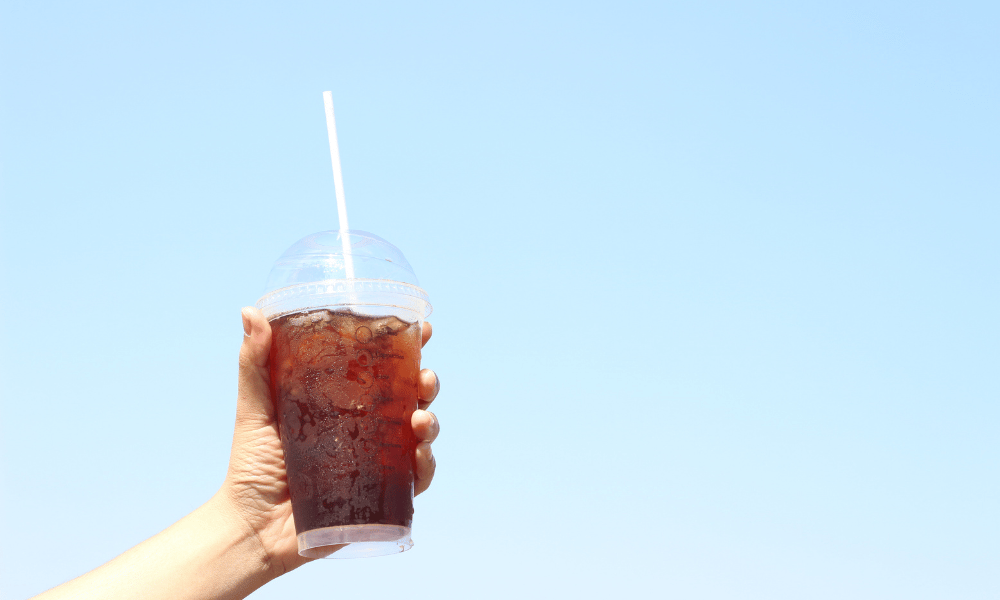
Apparently, even your iced coffee can make a first impression.
A TikTok from Florida-based corporate recruiter Caitlin Wehniainen, who works primarily with Fortune 500 clients, has kicked off a surprisingly intense debate over whether candidates should bring an iced coffee or latte into a job interview. In the video, posted last week, Wehniainen warns Gen Z candidates that showing up with a giant iced drink can make an interview look like just another stop on a busy day's errands.
"It looks like you went to Target, then you went to Starbucks, now you're stopping by your interview, then you're onto the next thing," Wehniainen said. "It looks a little too casual to me."
The clip has racked up hundreds of thousands of views, with reaction quickly splitting between people who see her point and those wondering how a cup of coffee became an interview dealbreaker.
The debate has since spread to other social media sites, raising a bigger question about what candidates are expected to look like and act like in an interview. For some recruiters, an iced coffee crosses a line. For others, it's barely worth noticing.
Does the cup itself actually matter?
For Debra Boggs, it does. The founder and CEO of D&S Executive Career Management in Portland, Maine, was surprised to find just how divided people were by the iced coffee question, but she knows where she stands.
"I don't know if it's being an elder millennial or what, but I am anti-iced coffee in interviews," Boggs said.
Her concern is the distraction a giant iced drink can create during a conversation that's supposed to focus on the candidate.
"I just think coming in with those giant iced coffees, they're sweating all over the desk, in giant plastic cups, and everyone shakes them," Boggs said. "No humans can hold it without shaking it around. I just don't feel like it's a good look for a first impression."
A hot coffee in a travel mug, she said, would barely register by comparison.
But for Leslie Henkin, talent acquisition lead at BLEND360 in Middle River, Maryland, the cup wouldn't factor into her decision at all. She probably wouldn't bring an iced coffee into her own interview, she said, but she wouldn't think twice about a candidate who did.
"I probably wouldn't walk into my own interview carrying an iced coffee. That's just my personal preference," Henkin said. "But if I were the interviewer and someone brought something with them, I wouldn't disqualify them in my mind. I'd be much more interested in whether they're prepared, engaged, able to communicate, and if they're actually qualified for the job."
She recalled a candidate who once walked in carrying a gallon jug of water. Henkin said it became a memorable talking point rather than a red flag.
"It made him stand out in my opinion," she said. "He was qualified for the job. And it does not bother me at all."
Is this really about Gen Z at all?
Boggs doesn't see the iced coffee backlash as a Gen Z issue. She points to New England, where iced coffee is basically a year-round staple.
"In New England, Dunkin' Donuts and iced coffee are a huge cultural thing here," Boggs said. "Everyone drinks iced coffee all year round. It's not really a generational thing in New England."
Henkin also sees more to the conversation than Gen Z. She thinks age plays a role, but doesn't think the reaction can be pinned on one generation.
"I think there is this definite generational component to the conversation, but I wouldn't make this personally a Gen Z thing," Henkin said. "Every generation has challenged certain workplace norms, and we're just watching those conversations play out publicly now because of social media."
"That doesn't mean professionalism is disappearing," she added. "It may just mean our definition of it is evolving."
For younger candidates, though, Boggs pointed to a job market she called worse than it's been in a decade, a characterization that tracks with data showing entry-level hiring is more competitive than it's been in years. Separately, some employers are already hesitant to hire recent graduates over exactly this kind of interview behavior. In that environment, she believes candidates have less room for anything that could make an employer hesitate.
"When you have deep competition for very few jobs, these little things matter," Boggs said. "If you need a job, you don't get to make the rules right now. You get to make the rules later in your career, but right now companies make the rules."
Is it time to rethink what professionalism means?
The National Association of Colleges and Employers defines professionalism partly around recognizing that work environments differ and adapting to what each one requires. That leaves some room for personal judgment, including how candidates present themselves in an interview.
Presentation still matters, of course. What hiring managers find most annoying in job candidates includes things like showing up late, avoiding eye contact, or eating and drinking during a conversation. Those behaviours can make it harder to stay engaged with the person across the table.
Henkin sees a version of the same thing in virtual interviews, where the details candidates have to think about are a little different.
"Today in my world, all of our interviews have been virtual the last few years," Henkin said. "We have our virtual iced coffees: camera and background, what they're wearing, are they making eye contact, is a dog barking, is their technology working."
The debate didn't stop at coffee, either. Boggs said commenters on her LinkedIn post had already moved on to another interview question: whether it's acceptable to order a rack of ribs during an interview lunch.
Her answer? Absolutely not.
Still, the conversation keeps coming back to the same question: what should recruiters actually be weighing when they evaluate a candidate?
For Henkin, the coffee cup is only part of a much bigger conversation.
"It's not really about the coffee," Henkin said. "It's a bigger conversation about how professionalism is perceived these days."
"We're all human," she added. "We have to give everyone a chance and focus on what really matters."