Lincoln Financial data shows the utilization gap is a communication problem, not a coverage one
Most US employees have mental health benefits. Most of them never use those benefits. New research from Lincoln Financial and the Integrated Benefits Institute puts the gap in plain numbers: more than 75 percent of workers have access to mental health coverage, yet fewer than 45 percent use it, and most non-users say they simply did not feel they needed it.
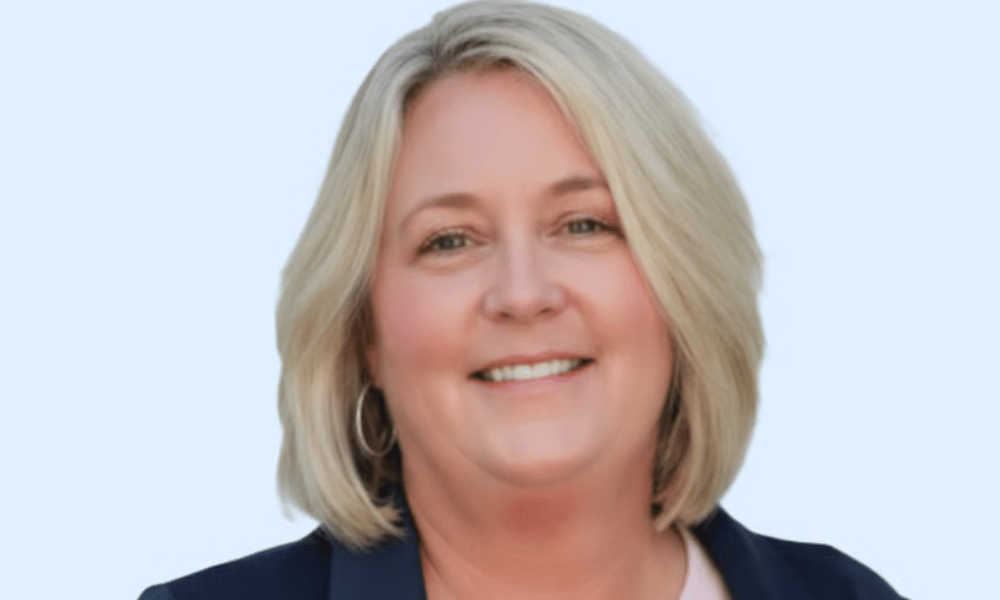
Kerry Brooks, SVP, Group Protection Product, Workplace Solutions Marketing and Customer Experience at Lincoln Financial in Radnor, Pennsylvania, says that last finding is the problem. Workers who do not know what their mental health benefits cover, or who have never been told how to access them, are not going to seek care when they need it. The result is delayed treatment, higher costs downstream, and an employee population paying for a benefit it has never been taught to use.
"Access to mental health benefits is increasingly less of a barrier," Brooks told Insurance Business Benefits. "The role now is designing year-round, multichannel awareness campaigns, not limiting communication to open enrollment."
What the awareness gap actually costs
Mental health conditions are among the leading drivers of absenteeism, presenteeism, and disability claims in the US workforce. An employee who does not know their Employee Assistance Program (EAP) exists, or who has never been told what it covers, is more likely to delay care and miss work when a crisis hits.
Every benefit that goes unused because employees did not know it existed is money the organization spent and got nothing back from. The gap is not primarily a benefits design problem. It is a communication problem, fixable without changing the plan. That tension is compounded by a wider trend: employer spending on mental health resources fell roughly 7 percent year over year in 2025, even as demand climbed, according to the NFP 2026 US Benefits Trend Report.
Why one message does not reach five generations
"Five generations are currently in the workforce, each consuming information differently," Brooks said. "A single communication approach will not reach all employees effectively."
Gen Z and millennials tend to respond to app-based outreach and email. Gen X and baby boomers are more likely to engage with print materials, postcards, and in-person sessions. Gen Z has grown up treating behavioral health as a normal topic of conversation. Many older workers entered the workforce in environments where it was rarely acknowledged professionally. HR teams that overlook that divide risk building communications that resonate with one group while missing another entirely.
The practical starting point, Brooks said, is analyzing current benefits utilization against workforce demographics to identify where the gaps are largest. That analysis is available through existing plan reporting.
The manager gap
Among workers aged 18 to 29, just 34 percent reported receiving strong supervisor support around mental health, according to the Lincoln and IBI research. That points to a structural weakness in how most organizations approach the problem.
Managers need to know what benefits are available and need practical, non-clinical language to raise mental health as a natural part of team conversations, not as a crisis intervention, but as a routine check-in.
"Managers are a key lever in creating psychological safety," Brooks said.
The signals to notice are behavioral rather than explicit. A team member who has gone quiet on calls, withdrawn from collaboration, or whose output has shifted over two or three weeks is showing early signs that a check-in is warranted. A manager with a simple, non-clinical script pointing an employee toward the EAP or a behavioral health line without labeling or stigmatizing can catch those situations before they escalate into absences or claims.
This does not require a new benefit or a new vendor. It requires training materials, a short scripted guide, and a commitment to making mental health a standing topic in manager development programs. The Society for Human Resource Management (SHRM) ranks employee wellbeing programs among the highest-priority benefit investments for US employers in 2026, and most organizations already have the infrastructure to deliver it through existing manager training cycles and onboarding.
Employers should also confirm their baseline compliance with the DOL's Mental Health Parity and Addiction Equity Act requirements, which mandate that mental health benefits be no more restrictive than medical benefits. Parity compliance sits at the center of how brokers are advising employer clients on mental health benefit design heading into 2027 renewal cycles.
What year-round activation looks like
Communication frequency first. Open enrollment messaging is not a substitute for a year-round cadence of short, targeted communications tied to moments when stress runs highest: Mental Health Awareness Month in May, return-to-work periods after the holidays, performance review cycles.
Channel mix second. Email alone does not reach everyone. A combination of digital, print, and in-person touchpoints calibrated to the workforce demographic profile increases the probability that a message lands when an employee actually needs it.
Manager activation third. HR cannot personally reach every employee. Managers can. Equipping them to surface and normalize mental health conversations is what turns a communication strategy into something that changes behavior.
"Leverage utilization data to find where specific employee populations need the most guidance," Brooks said. "That's where the communication strategy should start."