Alera Group's Nicole Negvesky on reversing benefits fatigue through smarter employee education
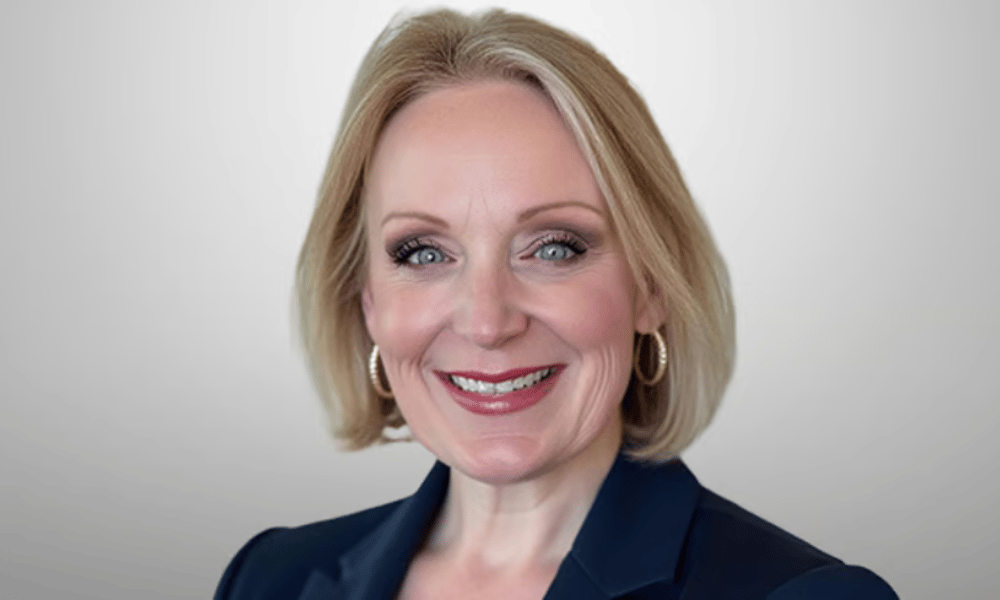
US employers have spent years stacking supplemental coverage onto already crowded benefits packages. The strategy, intended to close affordability gaps and win on talent, is working against itself.
Nicole Negvesky, Executive Vice President of Employee Benefits at Alera Group in Chicago, says the central problem in employee benefits right now is not what employers are offering. It is whether employees understand what they have. Without serious investment in benefits literacy, the extra spend employers are absorbing to protect workers from rising costs delivers nothing.
"Cost pressures are off the charts coming from all angles," Negvesky told Insurance Business Benefits, drawing on Alera Group's 2026 healthcare and employee benchmarking report. "And we're not seeing employers pass that on to employees right now. They're seeing moderate increases in their paychecks, but they are probably seeing more benefit coverages added to bridge some of the gaps that are created."
The numbers back that up. Accident coverage jumped from 30 percent of employers offering it in 2024 to 41 percent in 2025, according to Alera's benchmarking data. That is a single supplemental product added in one year, across more than a third of employer plans, on top of menus employees were already struggling to navigate.
The complexity problem HR has created
At many mid-to-large employers, workers are now choosing between as many as four medical plan options, multiple dental tiers, and an array of voluntary coverages. Each product was designed to fill a specific gap. Together, they have created a selection experience that many employees simply opt out of. Research from Prudential Financial found that 89 percent of employers believe their benefits package shows they care about employees, but only 66 percent of workers agree, a 23-point gap that points less to plan design and more to a communication breakdown.
"We've added such complexity that I don't know if we're supporting it well enough on the back end with education to really help the employee make a truly informed decision," Negvesky said. "Historically, we've seen very low utilization of supplemental plans. We've got to figure out a way, if we're spending money on these benefits, to make sure employees understand them."
Why open enrollment is no longer enough
Most HR teams still operate on a single annual touchpoint: a presentation, a guide in an inbox, an enrollment window. That model was built for simpler plans. A March 2026 survey by the Employee Benefit Research Institute (EBRI) and Lincoln Financial found that administrative complexity and gaps in employee education, not disinterest or cost, are the main barriers between a voluntary benefit and actual usage.
"It can't be one time," Negvesky said. "It has to be continual education, concise, clear, and frequent. People need to hear something eight or nine times before they commit it to memory. If we're just teeing that up at open enrollment time, we're doing them a disservice."
Format matters as much as frequency. An hour-long open enrollment presentation produces diminishing returns. A two-minute video explaining one specific benefit, what it covers, when to use it, how to file a claim, is more likely to stick. Short-form content works across a workforce where up to five generations are in the building at once. Negvesky noted that storytelling travels across demographic lines when other formats do not, making it one of the few tools that works without building separate campaigns for each generation.
The KFF 2025 Employer Health Benefits Survey and the Department of Labor's Employee Benefits Security Administration (EBSA) pharmacy cost data are both worth pulling when building the internal case for stronger benefits education investment.
Cut first, then add
The advice employers hear least often is also, according to Negvesky, the most important: stop adding.
After years of expanding plan menus, many employees have reached benefits fatigue. They are not engaged with an overwhelming menu. They have disengaged from it entirely.
"We swung the pendulum. We said we're going to offer a hundred things and keep throwing things at employees until somebody says this feels good," she said. "And we find out we've created a lot of fatigue. People throw their hands up and say, I don't know where to go, so I'm just not going to do it."
Her prescription: audit utilization on every program and point solution already in place, retire what the data shows is not being used, and only then evaluate whether anything genuinely needs to be added for a specific employee population. Research from Univest Financial's Kristen Dougherty illustrates how a quarterly, multi-format communication calendar can close the benefits education gap employers consistently underestimate.
The same logic applies to GLP-1 coverage. Negvesky expects more employers to pull the drugs for weight-loss use, preserving coverage for their proven clinical role in treating type 2 diabetes, on the basis that return on investment has not materialized and the abandonment rate is high. Employees start the medication, cannot sustain the out-of-pocket cost, stop, and regain the weight.
"Nobody's coming out with a true ROI on it yet," she said. "And that's why we're seeing employers pull GLP-1s as a weight-loss tool right now, because there's still too much to be seen."
Alera's benchmarking data adds one more pressure point: pharmacy copay tiers have held flat despite large increases in underlying drug costs, so employers are absorbing the full incremental expense. That is not a sustainable position.
"I think maybe the next generation of value creation is really in helping employees understand what they have so that they can be a better consumer," Negvesky said. "And then that's going to drive better value in the overall program to both the employer and the employee."