Employers, however, expect hiring to pick up in 2026
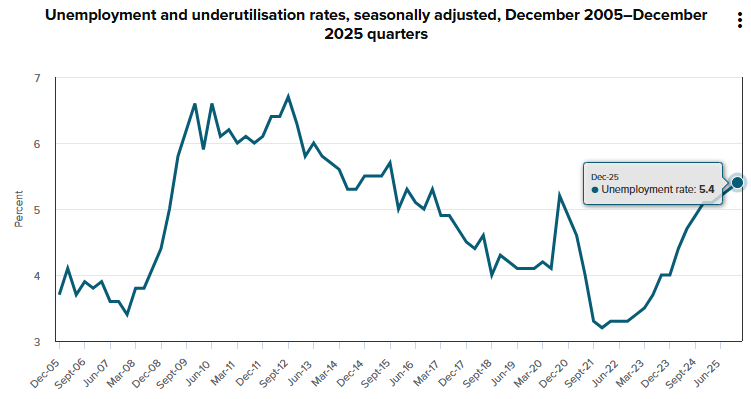
New Zealand's unemployment rate climbed to 5.4% in the December 2025 quarter to hit its highest level in more than a decade, according to the latest data from Stats NZ.
It revealed that there were 165,000 unemployed people in the December quarter, an increase of 5,000 people from the previous quarter.
"The unemployment rate was 5.4% in the December 2025 quarter, the highest since the September 2015 quarter, when it was 5.7%," said Jason Attewell, macroeconomic spokesperson at Stats NZ, in a statement.
Despite the rise in unemployment, Attewell said the quarter saw "higher levels of engagement in the labour market."
The employment rate increased to 66.7%, with 15,000 people landing jobs in the last three months of 2025.
Finance Minister Nicola Willis said this positive growth, combined with rising business and consumer confidence, points to a growing economy.
"Obviously, we would prefer the [unemployment] rate to be lower still but the underlying details are positive and economists are expecting the unemployment rate to fall this year as the economy recovers," Willis said in a statement.
Hiring to pick up in 2026
Meanwhile, the Employers and Manufacturers Association (EMA) said the rise in unemployment was disappointing but not unexpected.
"We had hoped it would bottom out at 5.3%, even though some projections have it going to 5.5% by later this year," said Alan McDonald, head of advocacy at the EMA, in a statement.
But McDonald also noted that the past months have seen confidence, forward orders, and activity firm up. The BNZ-BusinessNZ Performance of Manufacturing Index reached a three-year high of 56.1 in December, while the Performance of Services Index is at 51.5.
These indices show signs of momentum that typically flow into hiring following a lag, according to the EMA.
"Employers will wait to see those positives reflected in their own pipelines, and then they will resource up. Today's increase in unemployment, while disappointing, is not inconsistent with that pattern of late-cycle labour market adjustment," McDonald said.
He stressed that unemployment "always lags the real economy" and expressed confidence that hiring will pick up this year.
"Today's numbers aren't good news for those affected - but they're not the end of the story," he said.
"The message from the wider data is that demand is rebuilding, and when firms have confidence in their forward orders, they'll start hiring."