Hundreds head across the ditch after ‘aggressive’ recruitment drive
Australia’s booming jobs market is forcing employers to look for news ways to recruit staff - and some sectors are finding New Zealand a fertile hunting ground.
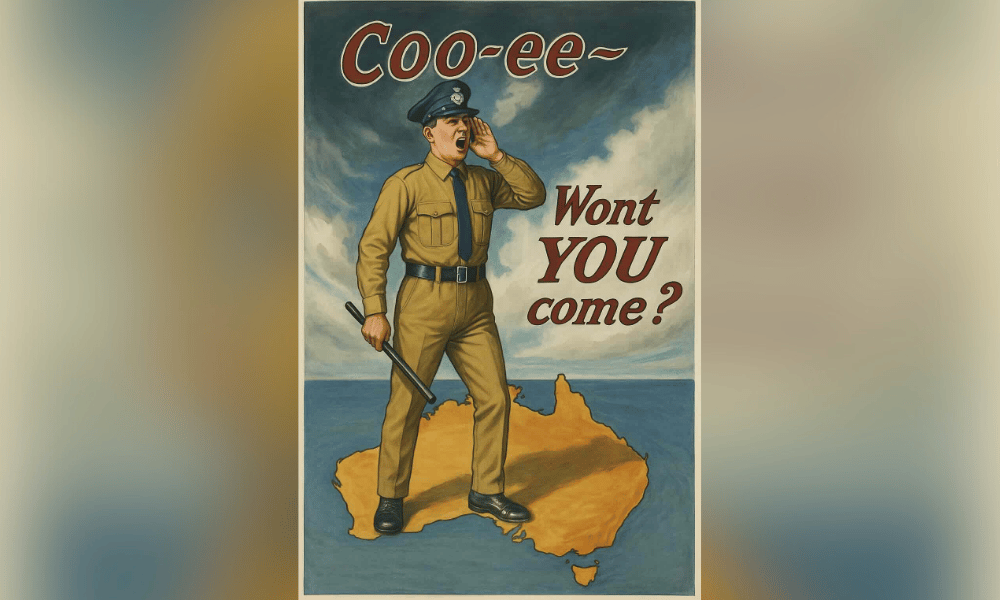
Australian police forces are accelerating their recruitment efforts in New Zealand, drawing hundreds of experienced officers across the Tasman and heightening workforce pressures for HR leaders already facing shortages in critical public-sector roles.
The Northern Territory Police Force has returned to New Zealand once again, holding interviews in multiple centres and advertising six-figure remuneration packages, subsidised housing and rapid hiring pathways. New Zealand Police say this latest round reflects a trend of increasingly assertive campaigns. Commissioner Richard Chambers told 1News: “Those Australian campaigns in our country have become more aggressive.”
Chambers said he recently raised the matter with his Australian counterparts. “I said, ‘look, can you explain this? Why do you come to New Zealand to recruit my colleagues?’ And his response to that was, ‘because you produce great police officers’. Well, I can’t argue with that. And I said, ‘well, I just wish you’d put a little more effort into growing your own maybe over there’.”
Six-figure salaries and housing draw applicants
Northern Territory Police Acting Superintendent Serge Bouma told RNZ visits to New Zealand have become far more frequent. “We’ve been ramping up our recruitment, probably post Covid significantly. So we have been going to other other states, and New Zealand a number of cases. I think this is probably the fourth time in the last two or so years.”
Bouma said the NT had “employed 87 experienced police officers, not just from New Zealand” since early 2023, with “somewhere between 50 and 60” of those hires being New Zealanders. He described the recruitment sessions as candid: “It’s a warts and all sort of discussion.”
One of the strongest incentives is subsidised accommodation. Bouma said, “One of the big, big ticket items that we offer to every single sworn police officer is housing, housing support.” Officers who choose not to take a department-provided house “will supplement your income at I think currently, it’s just shy of $32,000 a year over and above your normal income as a tax allowance.”
On pay, he said: “A new constable would be on about $140,000 Australian,” with additional allowances and overtime available. Despite the generosity of the package, Bouma said financial motives alone were not encouraged. “If your motivation is purely the money, then find something else where you can have lots of money. Maybe put money on the stock market.”
Chambers acknowledged the gap in remuneration. “The money that they can earn in Australia is more than here in New Zealand. I accept that. That’s often the lure for many.”
Queensland recruiting at record levels
The Northern Territory is not alone in targeting New Zealand officers. Queensland Police’s campaign, launched in 2023, drew more than 300 applications from Kiwi officers in the past year. Its pitch included a starting salary of about $110,000, relocation payments and allowances.
Queensland’s retraining programme, Police Abridged Competency Education (PACE), has fast-tracked conversions of overseas-trained officers. By late 2024, at least 69 New Zealanders were expected to graduate, with another 138 candidates already in the pipeline. Sergeant Lisa Duncan, who retrains recruits, told RNZ that officers arriving in Queensland are recognised for their experience: “When they come over [whether] they’ve got three years experience versus 10 years experience, they will be remunerated for that.”
New South Wales Police has also launched New Zealand-focused recruitment campaigns, adding more competition for talent.
Northern Territory packages outweigh NZ remuneration
Recent recruitment rounds have drawn nearly 40 New Zealand officers to the Northern Territory alone. RNZ reported salaries of up to A$125,000, with overtime shifts worth A$1,000 each. First-year constables in the NT earn A$111,000, compared with NZ$83,000 for New Zealand officers in training, and receive housing allowances exceeding A$31,000 annually.
Bouma told Morning Report: “I think money is a main motivator,” though he emphasised adventure was also a draw. He said many New Zealand applicants “want to look after their family and do something different,” and some saw it as a way to strengthen their retirement position before returning home.
Assistant Commissioner Tusha Penny said New Zealand cannot compete financially. “The reality is we can’t compete if they are after money alone.” She said the Bay of Plenty district commander had told her that 98 per cent of recent departures were driven by financial reasons.
Penny noted the force may begin a national campaign to speak with New Zealand officers who have left. “We can’t compete with the finance, but what we can do in talking to our officers who are interested in coming home — it’s that, it’s home.”
HR implications across New Zealand’s public service
For HR managers, the recruitment tug-of-war exposes a widening gap in workforce competitiveness and highlights several emerging risks:
- Persistent poaching of mid-career staff from frontline public services
- Salary compression and retention difficulties in high-skill roles
- Increased training burden as more experienced officers depart
- Rising attrition in geographically constrained labour pools
- Challenges maintaining service levels where vacancies remain open
- Underlying shortages that cannot be offset through domestic recruitment alone
Minister Mark Mitchell said Australia’s difficulties are driving the cross-border campaigns. “The Australians have got big problems with their recruiting, that’s why they’ve come here.” New Zealand is currently around 500 officers short, while Australia’s shortage is more than four times higher.
New Zealand Police are ramping up recruitment, with Chambers saying that “by the time Christmas arrives, we will have recruited and graduated nearly 800 new constables.” But with multiple Australian jurisdictions now actively targeting New Zealand’s workforce, HR managers face the prospect of ongoing competition for talent well into 2026.