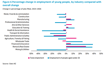
AI is reshaping hiring pipelines beyond entry-level roles

Young New Zealanders are facing a narrowing path into the workforce, as automation and a crowded graduate market push youth unemployment to its highest levels in recent years, according to a University of Auckland academic.
The unemployment rate among 15- to 24-year-olds in New Zealand currently stands at about 15% – roughly three times that of the wider working-age population – with junior office and administrative roles increasingly disappearing from the labour market, Rod McNaughton, a professor of entrepreneurship at the University of Auckland explained.
McNaughton said the decline of entry-level roles carries consequences well beyond the jobs themselves, warning that these positions have historically served as critical on-ramps into professional life.
“These on-ramps to the workforce have also taught tomorrow’s leaders how organisations work, how judgment develops, and how capability is built through practice,” he wrote. “Take them away, and the problem facing the economy becomes much more serious than unemployment.”
Entry-level roles decline across key sectors
A global survey of 5,500 organisations conducted last year by US-based market research firm International Data Corporation (IDC) found that 91% reported artificial intelligence (AI) had already changed or displaced job roles. Among New Zealand-based employers surveyed, more than half said AI was driving significant job displacement, with many slowing or stopping entry-level hiring altogether. Nearly nine in 10 also expected further slowdown in such roles within three years.
McNaughton noted, however, that AI is not acting alone. A growing number of young people completing tertiary education has increased competition in the labour market at the same time that available roles are contracting. As a result, academic qualifications alone are no longer sufficient for candidates to stand out, he said.
“Employers are increasingly looking for practical skills and real-world experience, rather than just degrees,” he wrote.
This creates what McNaughton described as a chicken-and-egg problem: without entry-level roles, young workers have fewer avenues through which to gain the experience that employers now demand.
More than three-quarters of New Zealand respondents in the IDC survey cited fewer opportunities for on-the-job learning as a major concern. A similar proportion flagged low awareness of AI-related roles as a key hiring challenge.
McNaughton called on universities to expand work-integrated learning and entrepreneurship education to help fill the gap left by declining entry-level hiring. He cautioned, however, that tertiary institutions cannot resolve the issue alone.
“The deeper problem is not just whether young people can find jobs,” he wrote. “It is whether the labour market still offers them a way in.”
According to Stats NZ, the unemployment rate among 15–24-year-olds rose to 15.2% in the September 2025 quarter, up from 13.1% a year earlier.
The NEET rate (youth not in employment, education, or training) climbed to 13.8%, up 1.4 percentage points annually.
Women aged 20–24 recorded some of the highest NEET rates, at 18.6%, with about one in three engaged in caregiving.