Advertised pay in New Zealand continues to lag behind Australia's offers

Annual advertised salary growth in New Zealand recorded its fastest increase in February since late 2024, but many roles continue to fall short of the pay offered by Australian employers.
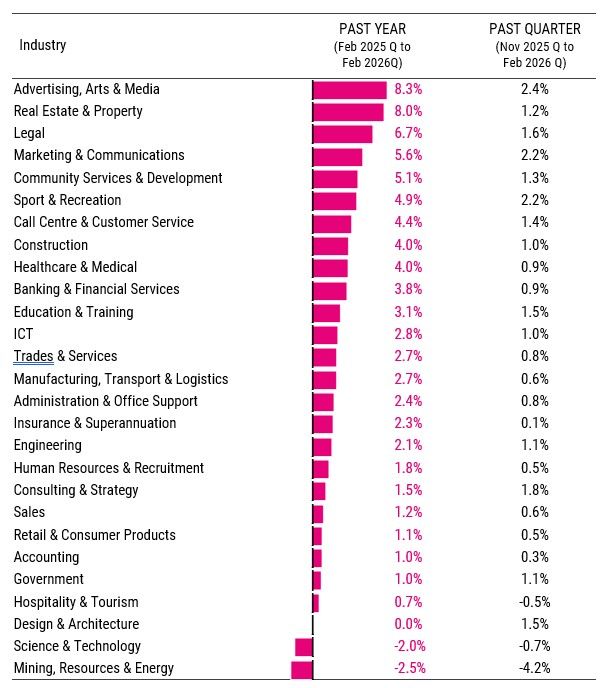
Data from SEEK NZ's latest report found that annual advertised salary growth rose three per cent year-on-year and 0.9% in the three months between November 2025 and February 2026.
"Annual average advertised salary growth is the fastest it has been since late 2024," said Rob Clark, SEEK NZ country manager.
Canterbury logged the fastest annual salary growth at 3.5% y/y, while the North Island (outside of Auckland and Wellington) saw the fastest quarterly growth at one per cent.
Most industries also continued to experience annual advertised salary growth, with only Science & Technology (-2.0%) and Mining, Resources & Energy (-2.5%) reporting decreases.
For the Human Resources and Recruitment industry, the report showed advertised salaries grew annually by 1.8% and quarterly by 0.5%.
"The broad growth points towards a more positive labour market this year," Clark said.
Still behind Australia
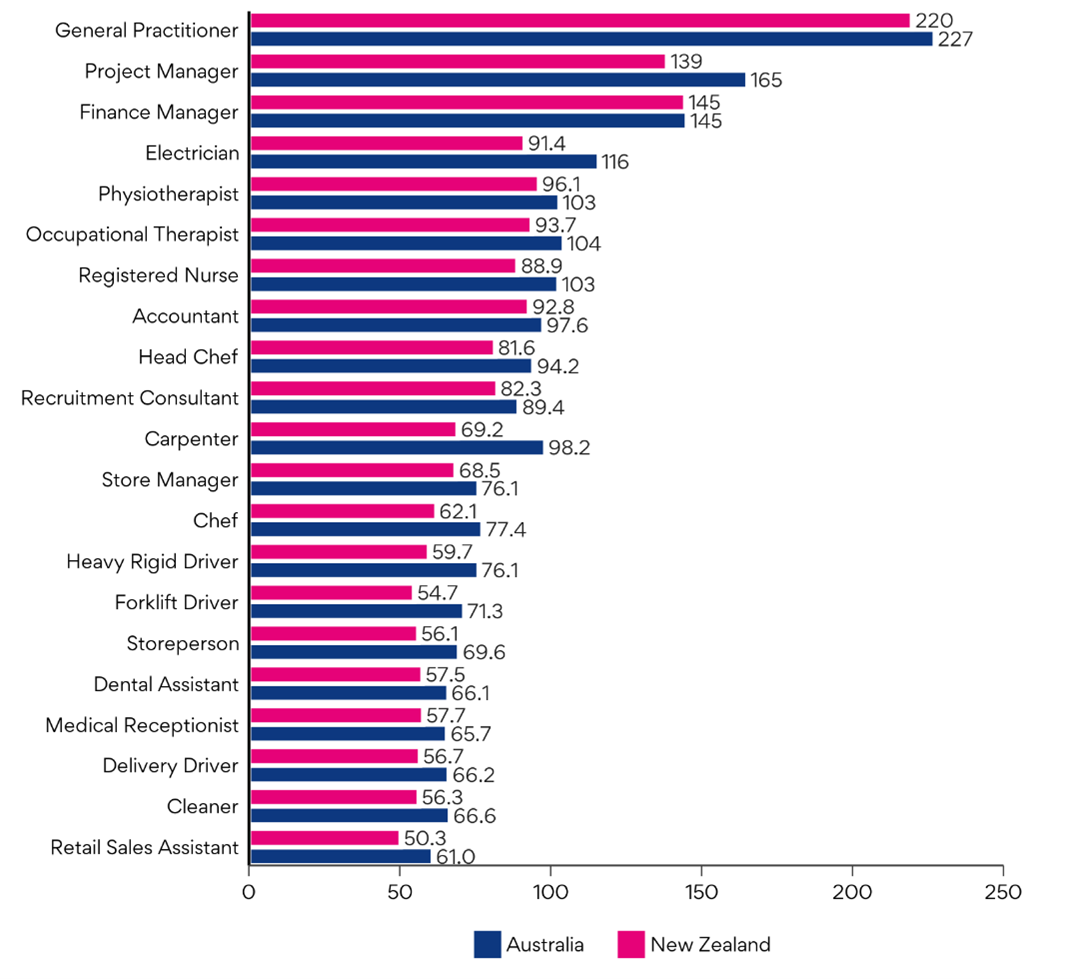
Despite the rapid rise in advertised pay, the report found that salaries for many roles in New Zealand still lag behind those offered for comparable positions in Australia.
One of the biggest gaps is found in the carpenter role, where advertised salaries are 30% lower in New Zealand.
Even recruitment consultant roles are paid more highly in Australia (89.4) than in New Zealand (82.3), according to SEEK's findings.
It also comes amid concerns of brain drain in the country, with Stats NZ continuing to record Kiwis leaving New Zealand for Australia.
Stats NZ's latest international migration report revealed a provisional net migration loss of 29,100 people to Australia in the June 2025 year, just slightly lower than the average of 30,000 a year from 2004 to 2013.
This net migration loss was made up of 18,900 migrant arrivals from Australia to New Zealand, and 48,000 migrant departures from New Zealand to Australia.