AI is most used in HR, cybersecurity functions despite emerging concerns

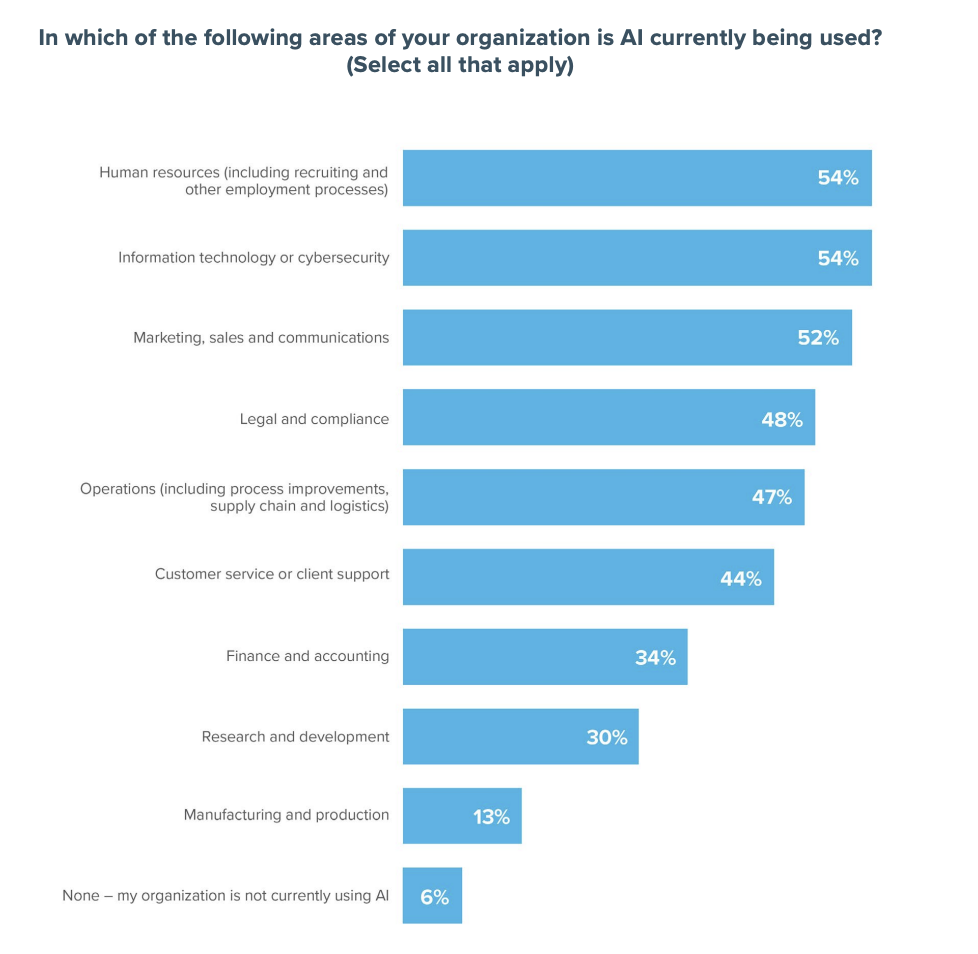
More than half of organisations deploying artificial intelligence (AI) tools are applying the technology in their human resources function, as AI adoption becomes "cross-functional" despite emerging litigation concerns.
This is according to Littler's 14th Annual Employer Survey, which revealed that AI is now the leading area where employers expect impacts from policy changes.
The report found that 84% of its respondents expect business impacts from policy or regulatory changes relating to AI use in the workplace over the next 12 months.
It comes as the report observed widespread adoption of AI in workplaces, with 54% of employers saying the technology is being used in their HR and information technology or cybersecurity functions.
More than half (52%) of the respondents also said they use AI in their marketing, sales, and communications functions, while another 48% said AI is used for legal and compliance areas.
"This cross-functional adoption suggests organisations increasingly see AI as a business imperative despite the complex and evolving compliance landscape," the report read.
AI-related litigation concerns
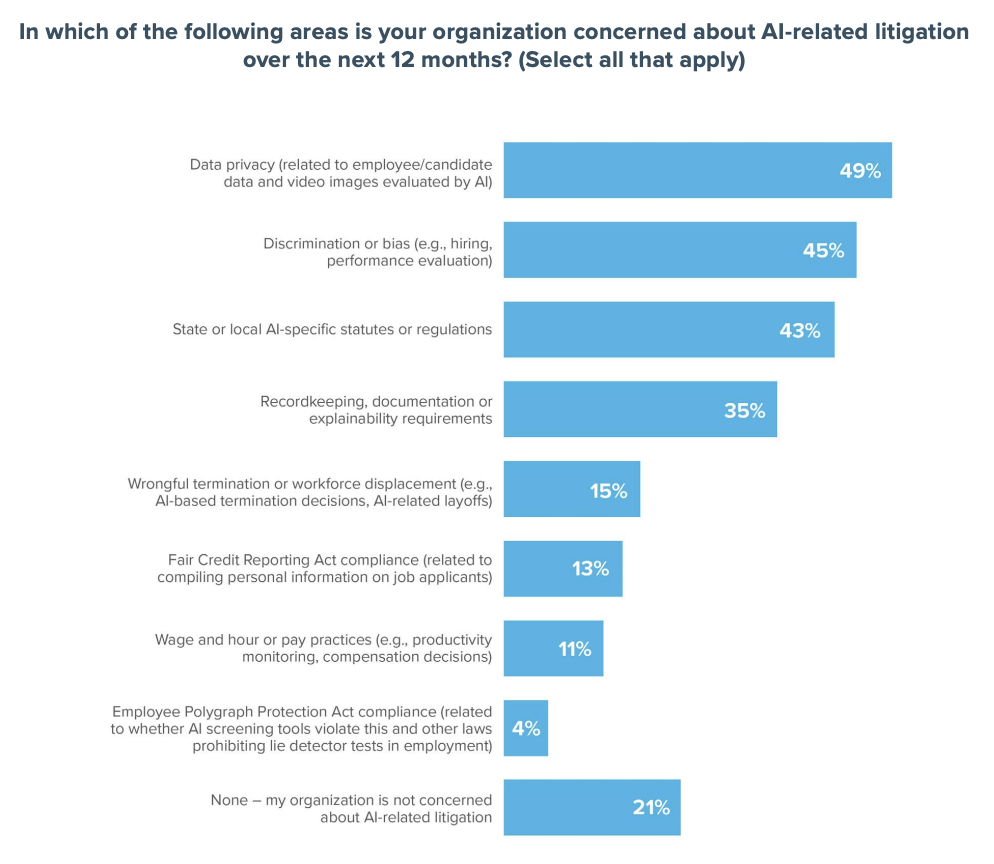
The "cross-functional adoption" comes despite 79% of respondents saying they are concerned about AI-related litigation.
In particular, employers are concerned about data privacy relating to employee or candidate data, as well as AI-evaluated video images.
Employers are also concerned about AI-related discrimination or biases in hiring or performance evaluation, as well as state or local AI-specific statutes or regulations.
Some 15% of employers said they are also worried about litigation related to wrongful termination or workforce displacement, particularly on AI-based termination decisions and layoffs.
It comes as 11% of employers in the report said they have reduced their workforce because of increased AI use at work. Another four per cent said workforce cuts are in the process, while 22% said these reductions are being considered.
The report warned that wrongful termination could "likely become a headache for employers" as labour unions increasingly focus on AI as a factor in bargaining negotiations.
Formal policy involving AI use
In the wake of these concerns on AI-related litigations, 68% of employers said they have introduced formal policy governing AI use in the workplace.
More than half of the respondents also said they have implemented a formal review or approval process for AI tools (55%), as well as restrictions on what information may be entered into AI tools (54%).
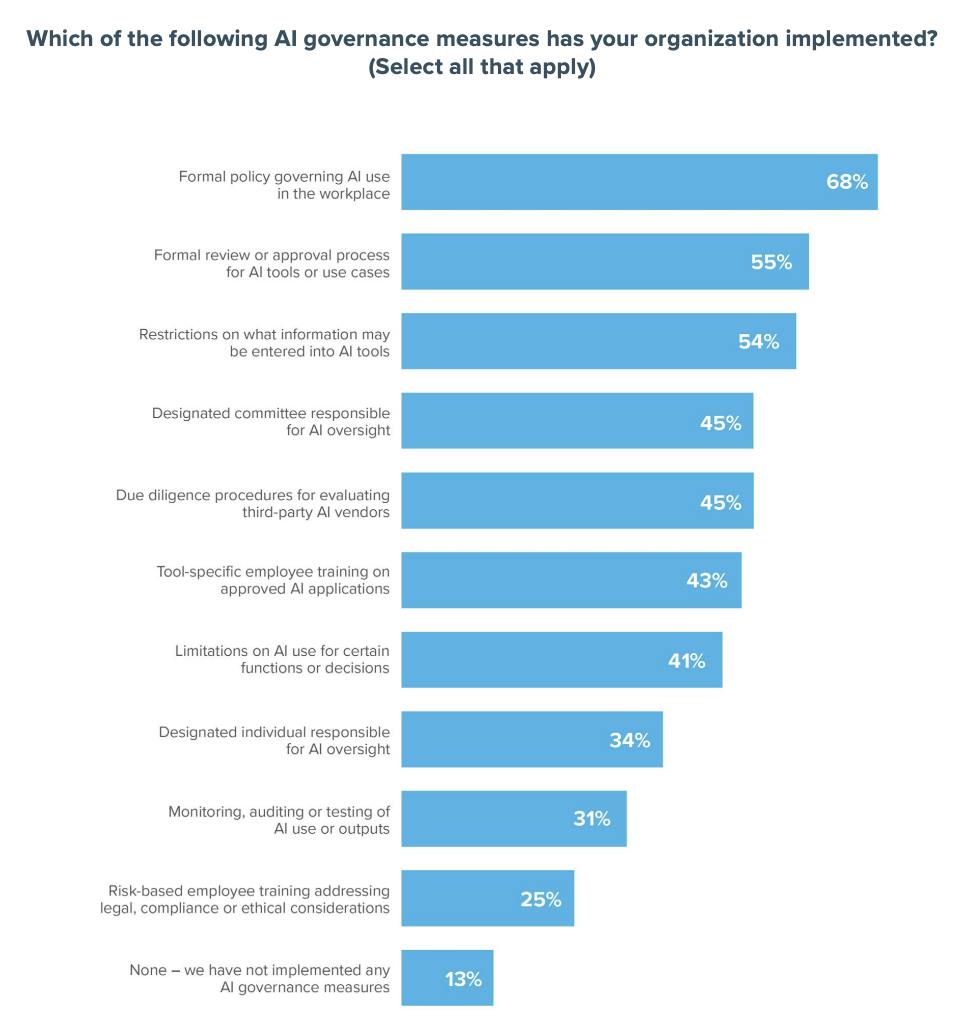
It is "encouraging" that employers are implementing formal policies governing AI use, according to the report, but it underscored that there is still "substantial room for improvement."
"AI adoption is moving quickly, but governance is still playing catch-up. That mismatch could leave employers vulnerable to significant risk, especially given the complexity around compliance," said Niloy Ray, co-chair of Littler's AI and Technology Practice Group, in a statement.
"Between an increasingly active patchwork of state laws and unresolved liability questions in light of new federal policy proposals, employers will likely remain on the hook for how these tools are used. AI policies should reflect how the tools are actually used by their workforces, and implementing meaningful training helps lessen the risk that AI integration will deepen litigation exposure."