How many cups of coffee can fuel performance before it becomes a health issue?

For many professionals, the work day begins not with the first email but with the first cup of coffee.
The beverage has become part of the language of work: early calls with overseas teams, marathon interviewing rounds, and tight project deadlines.
"Office coffee keeps employees fuelled and ready for the day by offering a quick boost that helps with focus and productivity," an article from CoffeeDasher reads.
Its statistics report that 65% of workers drink coffee at work or in the office, with the average employee consuming three cups a day.
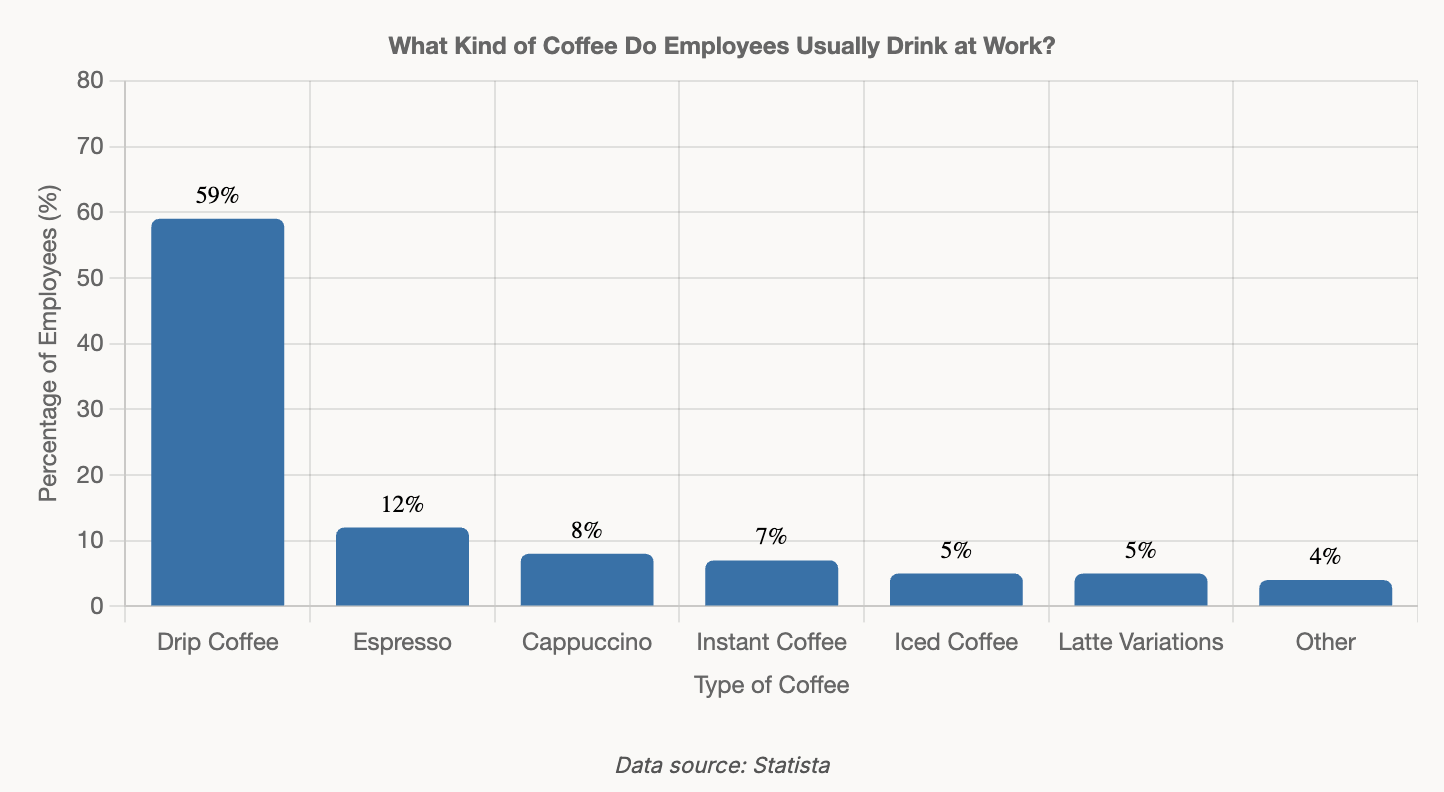
Yet as organisations move wellbeing and sustainable performance up the agenda, an important question emerges: how much coffee is too much to start the day?
Coffee's upside: more than just a wake‑up
Over the past decade, coffee's public image has softened. Rather than being treated as a vice, it is increasingly viewed as a drink with potential health benefits when consumed in moderation.
Stephen Devries, MD, a preventive cardiologist and the executive director at Gaples Institute, has described coffee and tea as "true feel-good stories in nutrition."
"Both coffee and tea are linked to a host of health benefits, including reduced risk of cardiovascular disease, lower risk of type 2 diabetes, and improved longevity," Devries said as quoted in an American Medical Association (AMA) article.
Johns Hopkins Medicine has also highlighted findings that both regular and decaf coffee appear to help protect the liver. Coffee drinkers are more likely to have liver enzyme levels in a healthy range than those who do not drink coffee.
This growing body of research matters because it supports a more nuanced conversation on coffee. Instead of coffee being framed as an individual weakness, it can be treated as one element of a broader wellbeing strategy.
When coffee becomes too much of a good thing
The more difficult question is how much coffee is actually reasonable, particularly for those who rely on the drink to get going in the morning and then keep topping up during a busy day.
According to guidance cited by UT Southwestern, the US Food and Drug Administration suggests that healthy adults generally cap caffeine intake at about 400 milligrams per day.
That level is echoed by heart‑health advice, which notes that for the average healthy person, staying at or below 400 milligrams daily (or about four eight-ounce cups of coffee) is a sensible upper boundary.
But if moderate coffee intake has potential benefits, why worry about that extra shot to get through a back‑to‑back morning?
The key issue is that caffeine is a potent stimulant, and its effects are not purely positive. At higher doses, the same substance that sharpens focus can fuel anxiety, poor sleep, and cardiovascular strain.
Cardiologist Nerissa Fernandes explains that caffeine can raise blood pressure and heart rate.
"I ask patients not to drink caffeine about 60 minutes prior to their appointment, especially if I'm monitoring or treating them for high blood pressure," Fernandes said in the AMA article.
As for a 2019 study that claimed even 25 cups of coffee a day might be safe, UT Southwestern directly addressed a widely publicised study on this point.
Wanpen Vongpatanasin, MD, Programme Director, Hypertension Fellowship Programme at UT Southwestern, said it's not a habit that patients should assume is safe.
In a commentary, Vongpatanasin pointed out that the study did not fully account for broader lifestyle differences between heavy and light coffee drinkers.
"Everyone processes caffeine differently, and when we've had too much, many people experience side effects such as headaches, sleeplessness, digestive issues, and blood pressure spikes," the director said. "Personally, I can't drink more than three cups of coffee a day without getting heartburn and a stomachache."
Why timing is as important as tallying cups
Even if total daily intake is moderate, when coffee is consumed can also make a significant difference to health and performance.
Coverage of the National Heart, Lung, and Blood Institute (NHLBI) on a large coffee‑timing study suggests that a morning‑centred pattern may be linked to better outcomes than spreading coffee right through the day.
This echoes long‑standing advice from sleep specialists: caffeine late in the afternoon and evening can delay sleep onset and fragment rest, even for people who believe they "sleep fine" after a late coffee.
Pulling these threads together, the answer for most healthy adults looks something like this: one to two standard cups of coffee in the morning, as part of a total daily intake below about four small cups, is unlikely to be harmful and may well align with the benefits documented by studies.
The red flags are less about a single number and more about a pattern: regularly relying on very large or very strong coffees to feel functional, pushing caffeine use into the late afternoon or evening, and using it as a substitute for sleep, rest, and healthier coping strategies.
From a workplace perspective, a simple rule of thumb emerges for standard daytime schedules: If coffee is going to be used to kickstart the day, it is better consumed in the first half of the morning. Intake should then taper off by early afternoon to protect sleep and overnight recovery.
"Especially if it's consumed later in the day, like late afternoon, it can lead to insomnia and sleeping issues," Fernandes said.
"Some people who use it more chronically might not be as sensitive to those effects, but we tell people to avoid using it later in the afternoon. Try to stick with it earlier in the day if you're going to drink it."