Workday's new General Manager ASEAN sat down with HRD to discuss the future of work
Managing people, money, and agents can be difficult enough for any team – no less so with technology transforming at such a rapid pace.
As AI and automation reshape business operations – HR leaders are no longer just managing people, but governing digital workers, too.
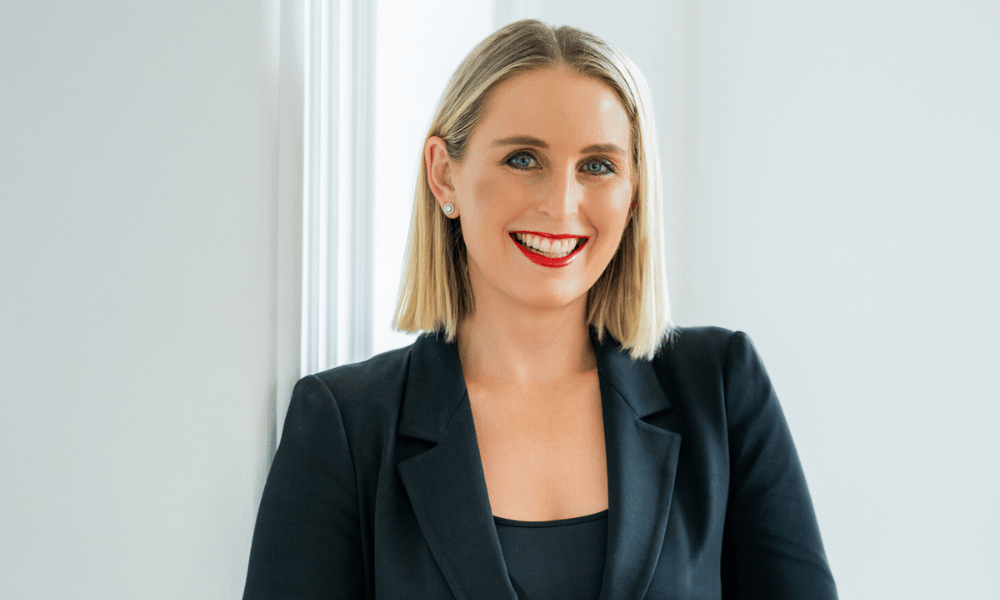
Speaking exclusively to HRD, Jess O’Reilly, Workday’s new General Manager across the ASEAN region, said the shift towards AI-assisted HR had moved far beyond hype.
“We’re past the point of implementation. We’re in the stage where we’re learning how far we can push this technology – and how to ensure we keep people at the forefront of that. The trial’s over.”
Growing efficiency and competitiveness
Appointed to the role earlier this year, O’Reilly’s responsibilities include growing client and partner relationships – focusing on how the implementation of AI can help drive growth, efficiency, and increase competitiveness.
“Organisations…are transforming their approach to workforce management with impressive agility. Workday has been leading workforce transformation and the integration of enterprise AI for well over a decade, with the vision to elevate humans, supercharge work and bring businesses forever forward,” she said in April.
But why does this matter? For O’Reilly, she has a unique perspective to forecast changes that really matter to businesses.
“The best CHROs are the ones who ask: what’s coming next—and how do I get ahead of it? They’re forecasting change, not just reacting to it. That’s how you future-proof a workforce.”
Merging the human with the digital
One key transformation workforces can expect to see, O’Reilly noted, is the growing remit expected of people managers.
“We’ve entered a world where human talent and digital talent exist side by side,” she said. “CHROs are wanting to own this – to help govern agents so they can work alongside people.”
“Technology should never lead on its own - humans must be in front.”
This is backed up by Workday’s own digital roadmap – which includes tools to support and govern digital workers. They do this by tracking access, security, and even how well agents supported employees in real time.
“We’re seeing CHROs step up and say: if I’m onboarding an agent, it needs to follow the same guardrails as any employee. It needs rules, visibility, and an offboarding plan,” O’Reilly explained.
She added: “This is about governance—but also about performance. We want to know: does this agent make a human more effective? That’s the next layer of value CHROs are chasing.”
Automation without overload
It’s no secret that AI can be overwhelming to understand, adopt, and use – but O’Reilly says there needs to be a focus on avoiding offering “a million agents” to choose from.
“Workday has focused on use cases that matter—recruitment, payroll, performance. It’s about taking the ‘doing work’ off people, so HR teams can focus on human impact You can’t do that if you’re battling with lots of different interfaces, systems, and agents,” she emphasised.
She continued: “This isn’t about adding more tech for the sake of it. It’s about showing up where customers needed us—consistently and clearly.”
For HR leaders, this meant freeing up time to concentrate on strategic initiatives—while letting intelligent systems handle repetitive tasks.
Simplifying for the better
O’Reilly warned against rolling out AI features for the sake of novelty, pointing instead to business-driven decisions.
“Our advice to HR leaders is: don’t chase the shiny object. It’s so easy to use something like AI for the sake of it. Look at what your business actually needs to move faster or reduce risk—and ask how AI can help you do that.”
She added that smart people leaders were using AI to reduce time-to-hire, eliminate manual tasks, and create more meaningful candidate engagement—not replace recruiters.
“What function needs to be more human than HR? We’re using AI to make room for the real work: conversations, coaching, culture building,” she said.
Workforce transformation isn’t just about adopting technology—it’s about leading with intent. The best HR leaders use AI to simplify work, not complicate it, blending human insight with digital support. In the future of work, CHROs won’t just lead people—they’ll lead systems.