Ai Group is calling for policy reforms to remove barriers to employer training investment

Employers across Australia are investing in workforce training at record levels, but the national employer association is warning that policy barriers continue to constrain participation and investment in workplace skilling.
New research from the Australian Industry Group's Centre for Education and Training drew on 2024 data from the Household Income and Labour Dynamics in Australia (HILDA) Survey to show that work-related training in Australia is above its long-term average, pushing back against claims of a structural decline in employer-led learning.
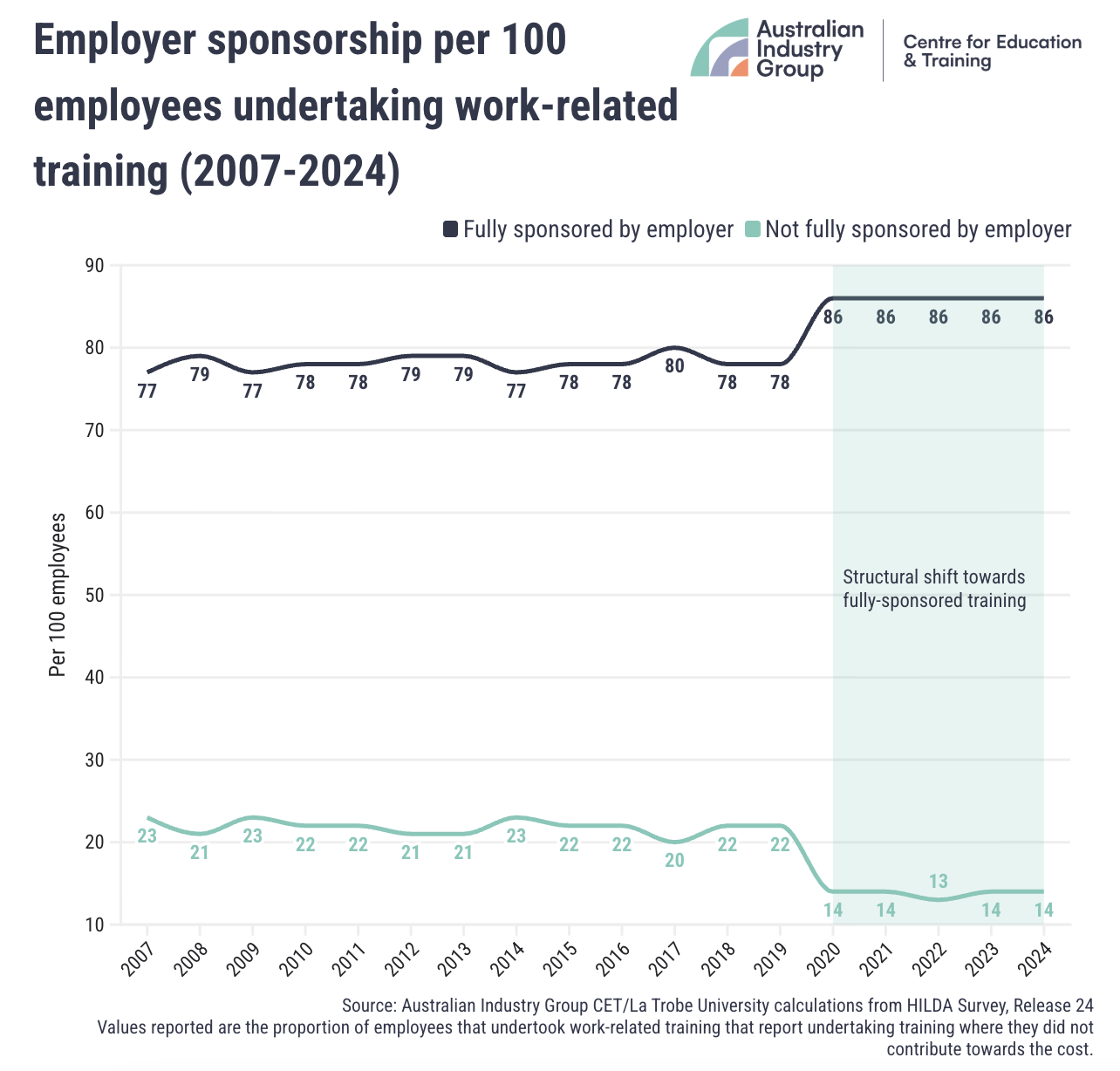
The report found that in 2024, 86% of employees undertaking work-related training reported it was fully sponsored by their employer, representing a clear and sustained increase on pre-pandemic levels.
About nine in 10 workers also reported completing the training during paid work hours.
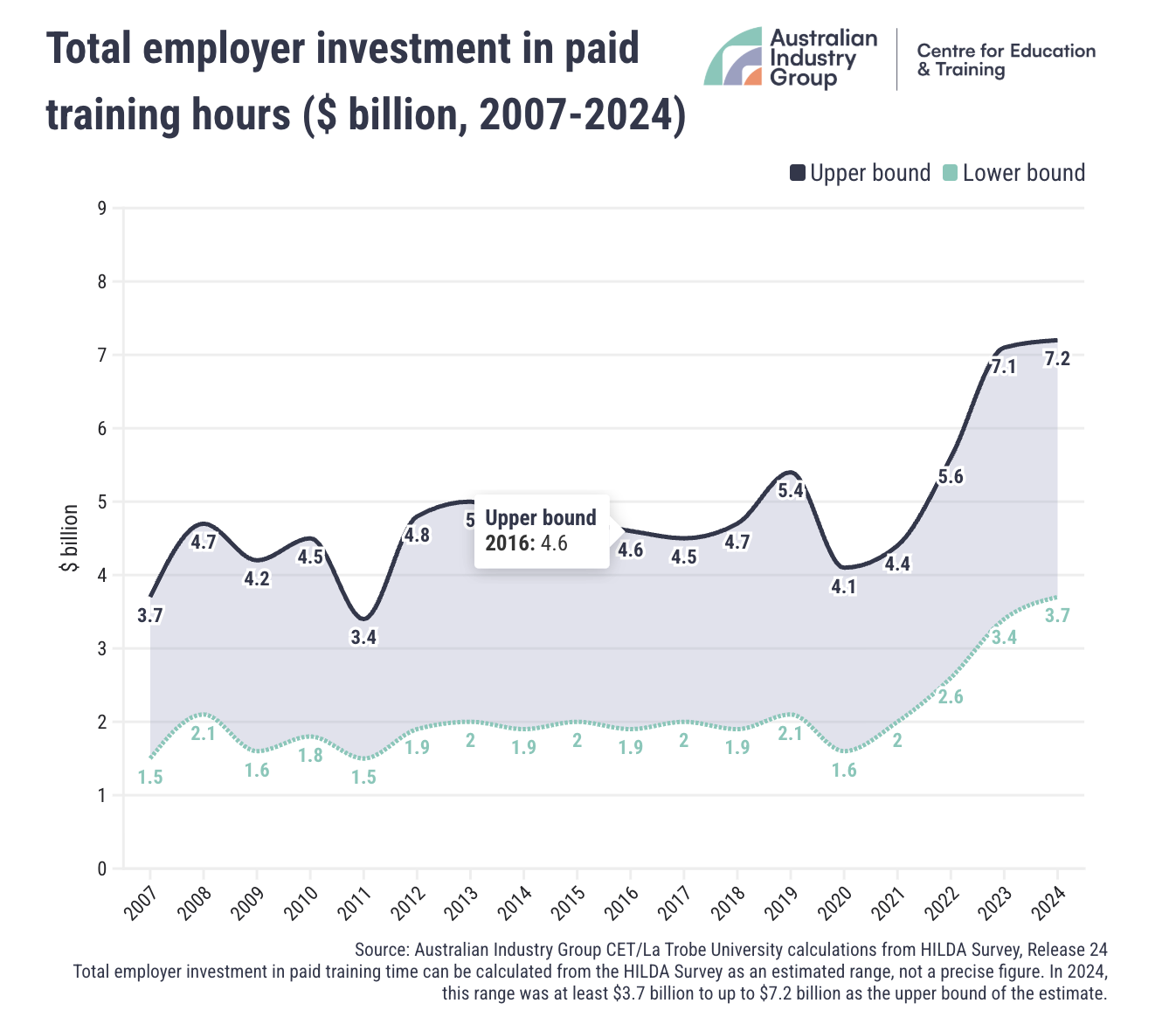
Employer investment in paid training time reached a record high in 2024, with Ai Group estimating it at a minimum of $3.7 billion and potentially exceeding $7.2 billion. Once the cost of training delivery is factored in, the group says the total employer investment would be significantly higher.
"New data shows that work-related training in Australia remains strong, but we need to remove the handbrakes to participation and investment in this essential form of workforce skilling," said Innes Willox, Chief Executive of Australian Industry Group.
Is work-related training really declining?
The report also addresses earlier commentary that suggested work-related training was in decline.
Ai Group's Centre argues the 2022 figures reflected a pandemic-induced low rather than a long-term structural trend. In both 2023 and 2024, there were approximately eight hours of work-related training for every 1,000 hours worked, the highest ratio in close to a decade.
The structural shift towards employer-sponsored training has been widespread across the labour market.
Comparing pre-pandemic averages with post-pandemic averages, every cohort across age, gender, income, and occupation showed an increase in the likelihood of undertaking fully employer-sponsored training.
Four reforms needed
Despite the strong investment figures, Willox said the policy environment was failing to keep pace with employer effort.
"Over the last decade the focus on workplace training in policy and funding settings has diminished," Willox said.
"A range of current policy settings also constrain investment by employers and individuals in work-related training. These handbrakes need to be removed."
Ai Group is calling for four reforms to remove the "handbrakes" when it comes to work-related training. They include:
- A comprehensive national strategy for lifelong learning
- A review of federal and state policy settings constraining investment, including Fringe Benefits Tax liabilities on employers and low uptake of self-education tax deductions
- Increased government investment in vocational education and training with a workplace delivery focus
- Improved availability of foundation skills training in workplace contexts.
The group also renewed its call for the Australian Government to act on a 2025 Productivity Commission recommendation to pilot co-funded training vouchers and advisory supports for small and medium enterprises.
"Disappointingly, this recommendation has not been progressed. It should be implemented with priority and appropriate resourcing to commence better connecting education and training with the workplace in Australia," Willox said.
"Employers are stepping up to try and resolve the critical skills shortages we face, so governments at all levels need to support them with the right policy approach that enables rather than constrains them to do so," he added.