HR leaders at Sydney's Spaceful Workplace Summit tackled AI adoption, hybrid work and performance culture head-on
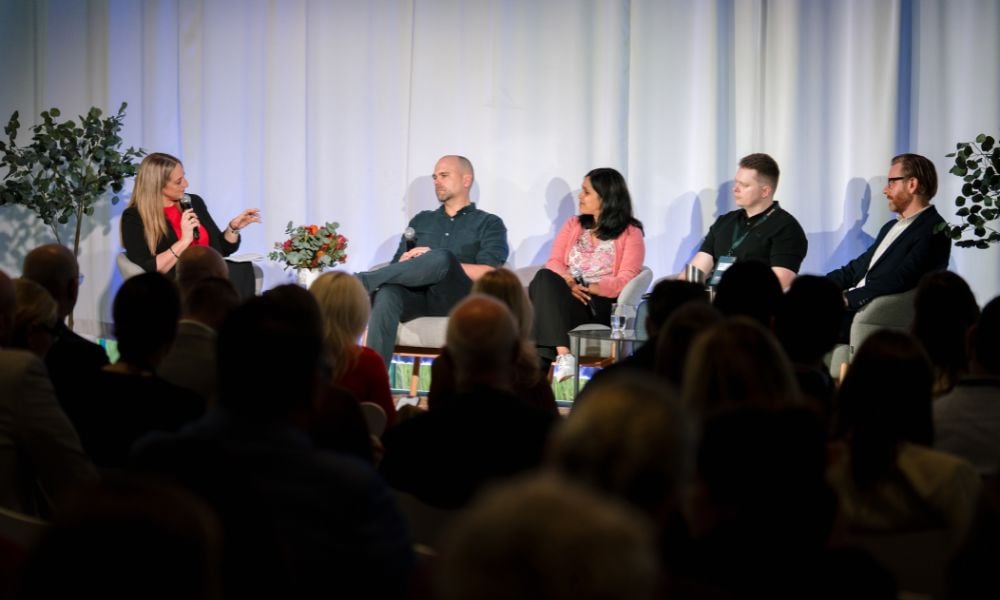
Some of the most pressing challenges facing Australian workplaces took the spotlight at the Spaceful Workplace Summit 2026 in Sydney on 17 June, as a panel of senior leaders examined what it takes to build high-performing organisations in an era of hybrid work, rising AI adoption, and shifting employee expectations.
The discussion brought together Shruti Ganeriwala, CHRO at Unilever; Lachlan Jenson, workplace specialist at Netflix; Dawid Naude, founder of Pathfindr; and James Bleakman, workplace strategy director at Spaceful.
When performance, care are the same thing
Ganeriwala set the tone by pushing back on one of the most entrenched assumptions in HR: that performance and employee wellbeing occupy opposite ends of a spectrum, with accountability on one side and care on the other.
At Unilever, she said, the organisation has been deliberately changing the narrative to "performance is care."
That means driving accountability, upskilling leaders to have "courageous and honest conversations," and ensuring the right HR levers are in place around reward and performance management.
She identified building a high-performance culture, alongside leadership development, as the two dominant priorities for her function in the face of mounting cost pressures and ambiguity.
AI adoption starts at the top
Naude brought a practitioner's perspective to the AI conversation, drawing on implementations across some of Australia's largest organisations.
His argument was that most leaders are approaching adoption the wrong way, where they treat AI as a "productivity tool" rather than an "intelligence tool," focused on doing the same things faster rather than making fundamentally better decisions.
The organisations seeing the greatest impact share one common thread: their leadership teams are active, capable users of the technology, not passive overseers of a delegated initiative.
Where AI is handed off to a technology team to manage on everyone else's behalf, results are consistently limited. Where leaders use it themselves to interrogate assumptions, stress-test strategies, and surface overlooked risks, the effect spreads across the organisation.
He was also pointed about structure, stressing that there should be no standalone "AI strategy."
AI is an input into business strategy, he argued, owned by each function according to its own goals and not managed centrally as a technology project.
Filling an office without RTO
Jenson discussed Netflix's experience of maintaining strong office utilisation without a return-to-office mandate.
Rather than directing employees to come in, Netflix has focused on designing spaces and programming that make attendance worthwhile, built around ongoing feedback, cross-functional collaboration, and a culture where high performance and honesty are expected regardless of physical location.
Ganeriwala described Unilever's own evolution on hybrid work, which arrived at a similar destination by a different route.
Giving employees full flexibility to choose their own days quickly revealed a practical flaw: people were commuting in only to spend the day on calls with colleagues who had stayed home.
The solution was structured coordination by anchoring a single "all-in" day on Tuesdays and guiding teams towards shared days for the rest of the week.
The result, she noted, has been strong enough that the organisation now faces space scarcity rather than empty offices.
Bleakman observed that the broader narrative around office attendance is continuing to shift.
The post-COVID emphasis on collaboration as the primary reason to come in is giving way to something more nuanced, where employees have spent years refining their home working environments, and the office now needs to earn its place by offering focused space, mentoring, developmental interactions, and the kind of "spontaneous" connection that remote work cannot easily replicate.
Designing offices for age of voice-driven AI
The panel's closing discussion turned to a question few in the industry are yet asking: as AI becomes more naturally used through voice, what does that mean for the open-plan offices most organisations currently occupy?
Naude described it as a genuine and underappreciated tension. Bleakman pointed to early signals that the industry is beginning to respond, with furniture manufacturers developing AI-integrated private pods, and a growing appetite among clients for "library"-style quiet zones where employees can work without disrupting those around them.
Both agreed the more fundamental issue is cultural. Organisations that will navigate this period well are those with cultures built on trust and adaptability, where reconfiguring a space or changing a policy is treated as normal progress rather than evidence of failure.