When the machine overlords arrive, it won't be John Connor who saves the day. In fact, it won't just one person. It will be a team. The HR team
That might sound flippant, but in boardrooms across Australia, that prediction is already becoming a reality. As AI reshapes industries at an overwhelming pace, organisations are beginning to confront a critical reality: the workforce isn’t just a bystander in this transformation. It’s the front line.
According to research from ManageEngine, AI adoption across Australia and New Zealand has reached 93 per cent. Nearly every organisation surveyed is now using AI in some form, whether to improve efficiency, enhance productivity, or cut costs. But the same study revealed a concerning gap: even as enthusiasm for AI grows, so too does unease about what it means for people.
More than half (57 per cent) of professionals in our survey said they feel anxious about deploying and integrating AI, and 59 per cent report frequent stress just trying to keep up with the changes in AI. This tension isn’t about fear of robots or AI taking over the world; it’s about humans struggling to keep up with the pace of change. When you think about it, the proliferation of AI tools has taken over in a matter of a couple of years, so the concern is certainly understandable.
But it’s also about skills. Or more precisely, the lack of them.
A massive 97 per cent of survey respondents acknowledged they face some form of AI-related skills gap, from understanding integrations and machine learning to simply knowing how to use AI responsibly. That gap is quickly becoming the biggest barrier between AI’s promise and its real-world potential.
To their credit, organisations are responding; Seventy-five per cent of companies have rolled out initiatives aimed at easing the burden, such as AI training, upskilling programs, and clearer internal communication. But HR leaders know that strategy on paper doesn’t always translate to confidence on the ground.
The challenge now is not to simply manage AI adoption. It’s to prepare people to thrive while using it .
AI isn’t replacing the workforce. Rather, it’s changing the definition of what the workforce needs to be. Every technological revolution has created demand for new skills, but what’s different this time is the speed and scale. The shelf-life of a skill is shrinking.
What once lasted a decade now becomes outdated in a few years, or even months.
That’s why investing in human capability, not just digital tools will be the defining factor in whether AI becomes a competitive advantage or a cultural flashpoint. Companies that treat AI purely as a technology project risk widening the skills gap, burning out their employees, and damaging trust. Those that approach it with empathy and humans at the forefront will turn AI into a catalyst for growth, innovation, and long-term cultural strength.
There are also ethical issues that can’t be ignored, but a significant number (75 per cent) of surveyed ICT professionals and leaders recognise and are confident that their organisations' mandates and policies ensure the ethical use of AI. This is not resistance to AI, however, it is a call for responsibility. When employees see leadership balancing innovation with integrity, anxiety gives way to engagement.
For HR and business leaders, this is the defining leadership challenge of the AI era. It requires a shift from reactive to proactive workforce development. Building continuous learning cultures, creating space for experimentation, and aligning AI strategy with human purpose.
It also demands humility. Not every executive has the answers, and that’s okay. What matters is creating a room for learning and having an employee-centric mindset when implementing AI in the workplace.
Because ultimately, the story of AI isn’t one of machines versus humans. It’s one of machines with humans as humans lead the charge.
When history looks back on this moment, the companies that succeed won’t be those that implemented AI the fastest. They’ll be the ones that understood the true depths of AI: technology can enhance capability, but only humans can sustain it.
So yes, the machines are coming; they’re already here. But the real battle won’t be won by a lone human tech hero, but by HR leaders who can unite people and technology with purpose.
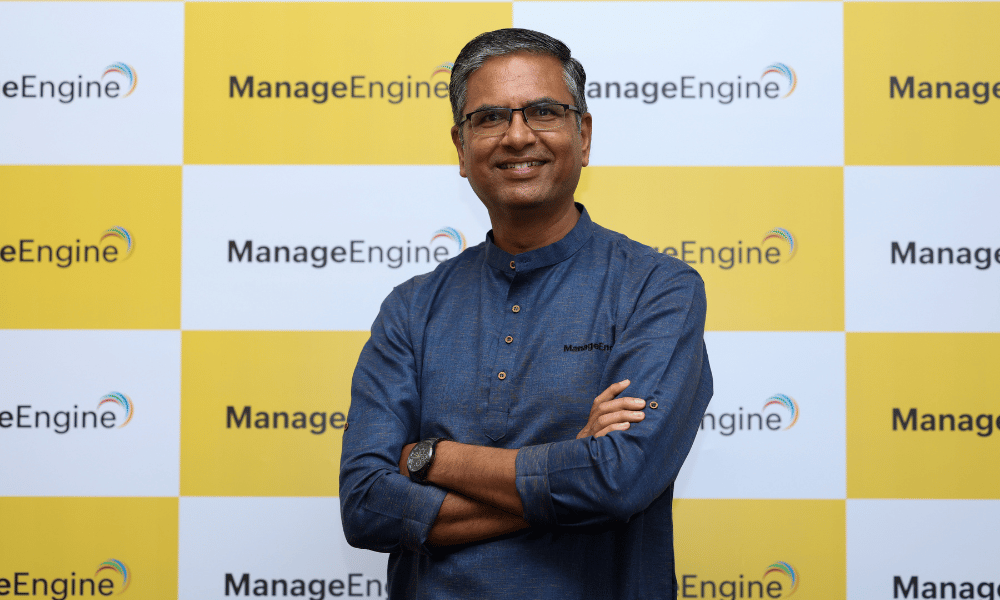
Rajesh Ganesan is the CEO at ManageEngine