The global debate about AI and jobs has reached a critical inflection point. For those managing Australia's workforce, the window to act is narrowing faster than most realise
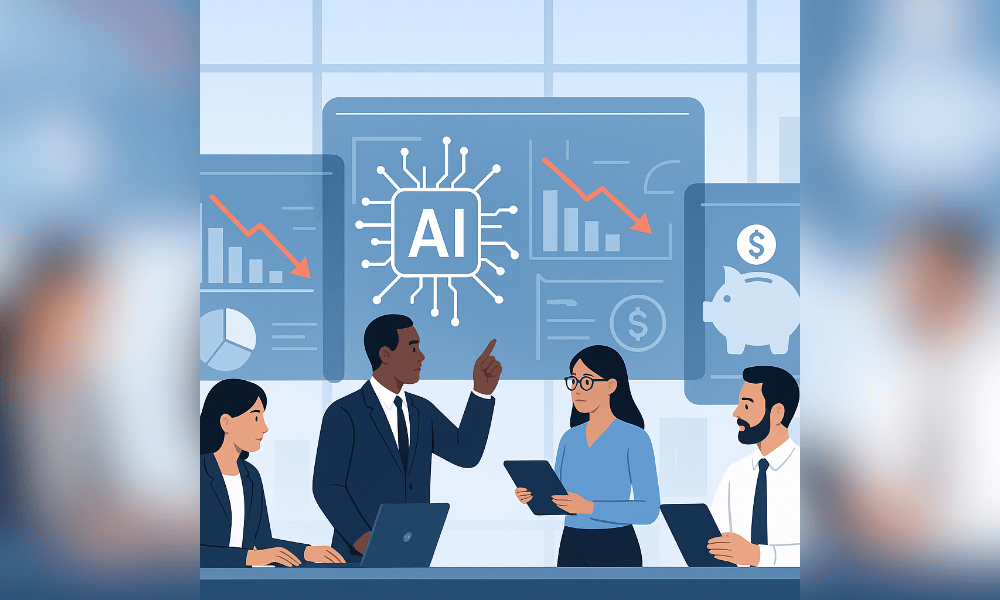
There is a particular kind of credibility that comes from standing at the intersection of government, finance, and frontier technology simultaneously. Rishi Sunak occupies that position. The former British Prime Minister – a Stanford-educated financier who served as Chancellor during one of the most economically volatile periods in modern British history, and who now advises both Microsoft and Anthropic has used that vantage point to issue what amounts to a serious alarm.
Writing this weekend in The Sunday Times, Sunak argued that Western politics is "unprepared for the pace and scale of the change that is coming" from artificial intelligence. He described a labour market already being reshaped beneath the surface of official statistics, and called for urgent action on skills, education, and tax policy before the consequences become irreversible.
The article was addressed to London. Its urgency belongs equally in Sydney, Melbourne, Brisbane, and Perth.
What is already happening beneath the headline numbers
The challenge with AI's impact on employment is that official statistics lag reality by design. Sunak makes exactly this point, noting that in fast-moving situations, conventional data is nearly useless for policymakers. The same is true for HR leaders trying to understand what is happening to their talent pipelines right now.
What the leading indicators show is sobering. Research by Stanford economist Erik Brynjolfsson documents a 16% decline in hiring for entry-level roles in the most AI-exposed professions in the United States. That is not a projection. It is already measured. Entry-level hiring at the 15 largest tech firms fell 25% between 2023 and 2024 alone, according to SignalFire. A Harvard University study tracking 62 million workers across 285,000 firms found junior positions actively shrinking at companies integrating AI, with researchers describing the process as an erosion of the bottom rungs of career ladders.
In knowledge-work disciplines — law, accounting, financial analysis, marketing, human resources itself — entry-level postings have collapsed in ways that do not yet show up as unemployment, because the roles are simply not being created. Companies are running on attrition. When a junior analyst leaves, the position is absorbed by AI tools. No redundancy. No headline. No data point in the official record.
Australia is not immune to these dynamics. The country's professional services sector, its large financial institutions, its rapidly growing technology industry, and its public sector are all deploying the same tools reshaping labour markets in the United States and United Kingdom. The lag between what is happening in those markets and what will be visible here is measured in months, not years.
The hollowing out of early careers is a structural problem, not a cyclical one
Perhaps the most important insight in Sunak's analysis — and the one most directly relevant to Australian talent strategy — is that what is happening to entry-level work is not a temporary tightening. It is a structural reorganisation of how organisations build capability.
The traditional architecture of professional development rested on a straightforward exchange. Junior workers performed high-volume, lower-complexity tasks — research, drafting, data processing, scheduling, analysis — in exchange for mentorship, exposure, and the gradual accumulation of judgment. That exchange is breaking down. The tasks that formed the bottom of every career ladder are precisely the tasks that large language models and AI agents perform cheaply, instantly, and without requiring onboarding, superannuation contributions, or annual leave.
The consequence is not simply that fewer graduates get hired. It is that the cohort currently entering the workforce will develop their careers with less foundational experience, fewer opportunities to build judgment through repetition, and a compressed timeline between university and senior expectation. That has implications that will reverberate through Australian organisations for a decade or more — in leadership pipelines, in institutional knowledge, and in the capacity to mentor the generation that follows.
For heads of people and culture, talent acquisition directors, and chief human resources officers, this is not an abstract concern. It is a concrete challenge to the operating model of how their organisations grow capability over time.
The skills gap is wider than most Australian organisations realise
Sunak describes AI literacy as the contemporary equivalent of a driving licence. It is a deliberately everyday analogy, and it is the right one. The question is no longer whether employees will need to work alongside AI tools. It is whether your organisation is seriously building that capability, or assuming it will arrive organically.
The evidence suggests most organisations are behind. According to Stanford's 2025 AI Index, 78% of organisations globally are already using AI in at least one significant part of their operations — up from 55% in a single year. Yet only around 43% of workers in developed economies report regularly using AI tools at work, and roughly 40% describe themselves as actively disengaged from AI adoption.
Australia has its own specific version of this challenge. The country's productivity performance has been a persistent concern, with the Productivity Commission and successive governments identifying skills and technology adoption as central to closing the gap with peer economies. The risk that Australian organisations adopt AI more slowly, or deploy it less effectively, than competitors in the United States, United Kingdom, and increasingly Southeast Asia, is not hypothetical. It is embedded in structural patterns that predate the current wave of AI development.
The practical implication for Australian HR leaders is straightforward, if uncomfortable. Upskilling cannot be treated as a communications exercise or a learning management system refresh. It requires genuine redesign of how roles are structured, how performance is measured, and how career progression is defined in a world where the ratio of human to AI contribution within any given role is shifting continuously.
How Australia's payroll taxes compare internationally — and why it matters now
Sunak's argument about tax asymmetry — that employers are taxed on human workers but not on AI agents performing equivalent functions — has a specific and underappreciated resonance in Australia, where the tax treatment of employment is among the most complex and costly in the developed world.
Australian employers face a layered set of employment costs that have no equivalent when deploying AI tools. The superannuation guarantee, currently at 12% of ordinary time represents a substantial and compulsory contribution that applies to every employee but to no AI system. Payroll tax, levied by state and territory governments at rates ranging from up to 4.95% in Queensland to 5.45% in New South Wales for employers above the relevant threshold, adds further cost with no AI equivalent. Workers compensation insurance, mandatory for all employees, adds another layer.
The contrast with peer economies is instructive. In the United Kingdom — the market Sunak writes from — employer National Insurance contributions sit at 13.8% of earnings above a threshold, a figure that has driven significant political controversy and that Sunak argues should be reduced to incentivise human hiring over AI deployment. In the United States, employers pay 6.2% in Social Security tax up to the wage cap, plus 1.45% Medicare, totalling 7.65% on top of wages before state-level additions. Canada's employer contributions to the Canada Pension Plan and Employment Insurance add approximately 7-9% to employment costs depending on province and salary level.
On a pure employment-cost comparison, Australia sits at the higher end of the developed world. When superannuation is included alongside payroll tax and workers compensation, total employment on-costs for an Australian employer can represent 20% or more above base salary for many roles — before a single dollar of training, equipment, or management overhead is counted.
Against that backdrop, the economics of AI substitution are particularly acute in Australia. An AI agent that performs the analytical or processing work of a junior employee costs a fraction of the employment total, attracts no superannuation obligation, generates no payroll tax liability, requires no workers compensation insurance, and creates no unfair dismissal exposure. The financial incentive to substitute is, if anything, stronger in Australia than in the markets where the current debate is loudest.
This is not an argument against superannuation or against the employment protections that Australian workers have built over generations. It is an argument that Australian policymakers and HR leaders need to be clear-eyed about the structural incentive they are operating within — and that the case for offsetting measures, whether through incentives for human hiring, investment allowances for workforce training, or transparency requirements around AI-driven headcount reduction, deserves serious consideration in the Australian policy context.
Retraining is not a program. It is a strategic commitment.
Sunak is explicit that the old model of education — in which formal schooling ends at 18 or 21 and work begins permanently thereafter — is no longer fit for purpose. The pace at which AI is reshaping role requirements means that a qualification earned five years ago may already be partially obsolete for the work that role now demands.
Australia's vocational education and training system, and the federal government's ongoing investment in skills through bodies such as Jobs and Skills Australia, provides infrastructure that many comparable economies lack. The challenge is speed and relevance. The occupational categories being reshaped by AI are moving faster than curriculum development cycles, faster than accreditation processes, and faster than the planning horizons of most public training investment.
For senior HR practitioners, this creates both a gap and an opportunity. The gap is that public infrastructure will not move quickly enough to solve the skills challenge at the pace AI demands. The opportunity is that organisations willing to invest seriously in continuous learning — building internal capability in AI fluency, critical thinking, relationship management, and the judgment skills that augment rather than compete with automation — will differentiate themselves in talent attraction and retention in ways that matter.
The organisations most likely to thrive are not those that eliminate the most roles fastest. They are those that redesign work most thoughtfully — retaining the human contribution where it genuinely creates value, automating where it genuinely improves quality and efficiency, and investing in the transition between those two states with seriousness and care.
The regulatory environment is moving, and faster than many HR teams realise
Australian HR leaders operate in a jurisdiction where workplace relations law is complex, employee protections are comparatively strong, and the Fair Work framework creates specific obligations around consultation, genuine redundancy, and the management of workforce change. The interaction between those obligations and AI-driven workforce reduction is an area of emerging legal risk that has not yet generated the volume of case law or regulatory guidance that its importance warrants.
The Australian Human Rights Commission has been active on questions of AI and discrimination, particularly in hiring contexts. The Privacy Act reforms under consideration create new obligations relevant to the use of automated decision-making in employment. And the general protections provisions of the Fair Work Act create exposure for employers who manage workforce reduction in ways that can be characterised as adverse action, even where the underlying driver is technological change rather than individual conduct.
Organisations that are deploying AI tools in recruitment screening, performance management, or workforce planning — and that have not conducted a rigorous review of whether those tools create discriminatory outcomes, and whether the governance around them is legally defensible — are carrying risk that will only grow as the regulatory framework develops.
What Australian HR leaders should do before the end of this financial year
The argument Sunak makes is ultimately about timing. The organisations and governments that act while the transformation is still in its early stages have choices that will close rapidly as the pace of change accelerates. The same logic applies at the level of individual enterprises.
For Australian HR leaders, the most important moves are practical and proximate. Conducting an honest audit of which roles in your organisation are most exposed to AI substitution — not in the abstract, but in the specific tasks those roles perform — is the necessary starting point for any serious workforce strategy. Redesigning early-career programs to develop judgment, relationship capability, and AI fluency rather than assuming that graduate programs will fill themselves is urgent. Making the internal case for training investment as a strategic necessity rather than a discretionary cost requires the same rigour and commercial framing that any capital expenditure proposal demands.
And engaging with the policy conversation — through AHRI, through industry bodies, through direct participation in consultations on AI governance and workplace regulation — matters more than it might seem. The regulatory framework that will govern AI use in Australian workplaces is being written now, and the organisations that contribute HR expertise to that process will help shape outcomes that affect the entire profession.
Sunak's central question deserves to be asked in every Australian boardroom and every people and culture leadership team: will AI be used to automate work away from people, or to augment what people can do? The honest answer is that it will be both — and that the ratio between those two outcomes is not technologically determined. It is a choice, made by leaders, one workforce decision at a time.
Australian HR has never carried greater responsibility for getting that choice right.