Four percent of businesses have stood down staff amid the current economic environment

The challenging economic environment stemming from the conflict in the Middle East has prompted some employers to review their staffing levels, according to a new survey.
The poll, released by the Australian Chamber of Commerce and Industry (ACCI), found that 30% of employers across the country are reviewing staffing levels because of the current economic environment.
Another 15% have reduced hours, while four per cent said they have stood down or laid off employees.
The poll drew its findings from almost 2,300 businesses who responded to the survey across the chambers network in Victoria, New South Wales, Queensland, Western Australia, and South Australia.
It showed how businesses are being affected by the current fuel supply crisis stemming from the ongoing conflict in the Middle East, and how they are navigating the current environment.
Impact of Middle East conflict
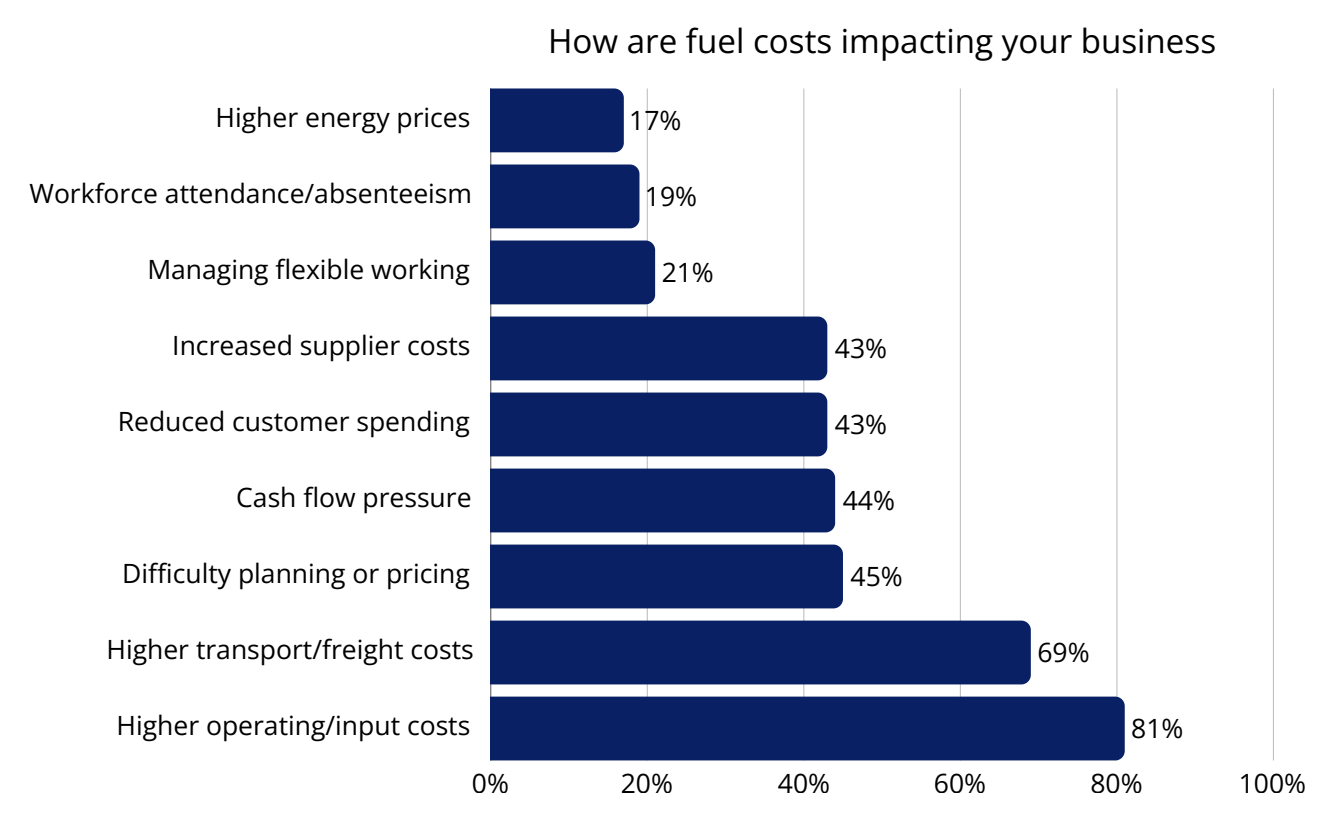
According to the poll, the majority of employers are experiencing higher operating costs (81%) and higher transport or freight costs (69%).
Around one in five employers said they have challenges with managing staff, such as introducing flexible working arrangements (21%) and absenteeism (19%).
"The global price shocks from the conflict in the Middle East have had direct and serious impacts on businesses in Australia," said ACCI chief executive officer Andrew McKellar in a statement.
"Businesses will remain on edge until there is a clear and lasting end to the conflict. Even if hostilities pause, disruptions to oil supply will have lasting consequences in many industries."
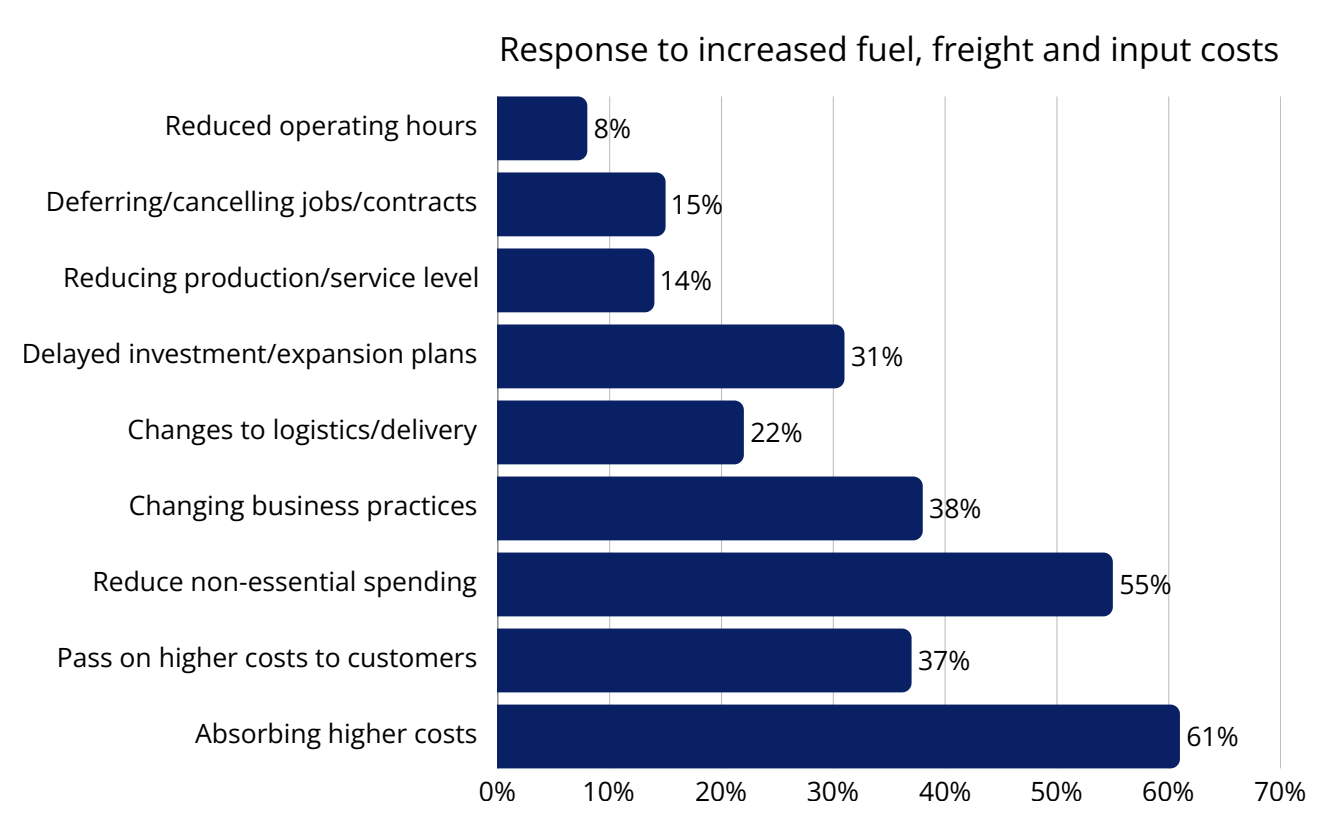
More than half of employers said they are absorbing higher costs (61%) and reducing non-essential spending (55%) in response to increased fuel, freight, and input costs.
More than a third added that they are changing business practices (38%) and passing on the higher costs to customers (37%).
Government support requested
The conflict in the Middle East began after the US and Israel launched strikes in Iran, killing the country's supreme leader, on 28 February.
A ceasefire between the involved parties began on 7 April, but while it offered great relief, McKellar noted that the situation remains fragile and employers are already asking for support.
More than a third of businesses in Australia (37%) said they want support from the government in the form of fuel price relief.
Another 19% said they want transport/freight support measures, while 17% are asking for direct financial assistance.
"If the conflict resumes and conditions deteriorate significantly, the federal government will need to consider cashflow support to ensure businesses can continue operating," McKellar said.