He was lured to a meeting to discuss his future role. He left it redundant
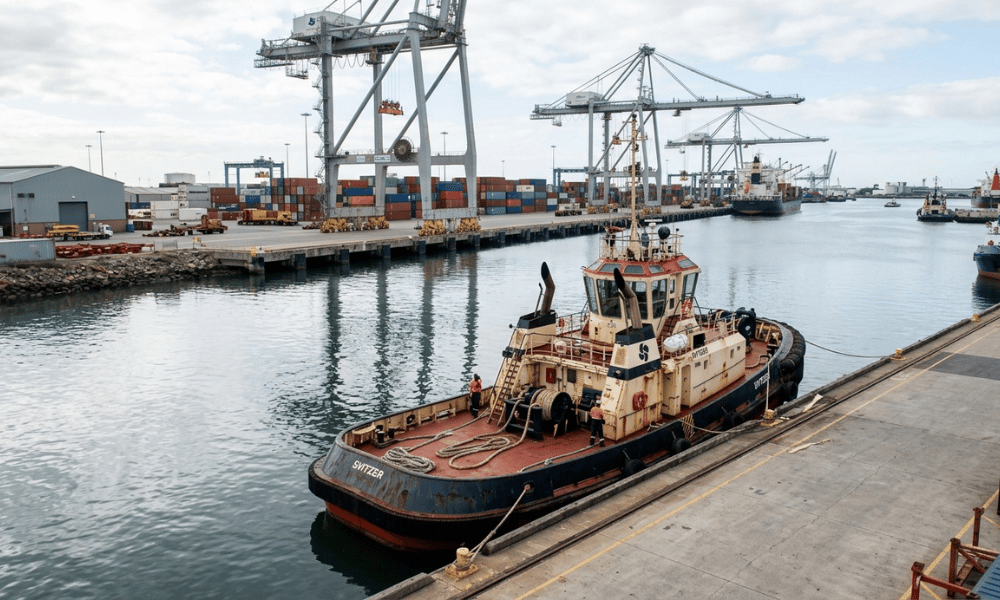
Svitzer's "snap decision" to sack a senior port manager has cost the maritime giant a Federal Court penalty and a compensation bill stretching years into the future.
The worker had spent nearly six years at Svitzer Australia, most recently as Ports and Operations Manager at the company's Newcastle Port. By early 2023, the company was deep into a restructure of the port's management. At every stage, the plans had included a senior role for him.
Then, in May 2023, things moved fast.
The worker had been offered a new position - Operations and Strategic Projects Manager - as part of the restructure. He pushed back on the terms. His pay grade would drop, his bonus would shrink from 15% to 10%, and the scope of the work was narrower than what he had been doing. He wrote a counter-proposal, as the company had invited him to do.
What happened next is what the Federal Court, in its earlier liability judgment, called a "snap decision which reversed months of careful planning." A senior executive received an email about the pushback and decided, effectively overnight, that there would be no role for him at all. The court found her view was, in substance, that the worker was not grateful enough.
A new restructure materialised - the only iteration in the entire process that contained no senior management position for the worker. He was called to a meeting in the early hours of May 24, 2023, on the promise of a discussion about his counter-proposal and the new role. Instead, he was told he was redundant.
The court found this meeting was a lure. No notice had been given.
How it got to court
In its December 2025 liability judgment (Gavin v Svitzer Australia Pty Ltd [2025] FCA 1623), the Federal Court declared that Svitzer had dismissed the worker because he exercised a workplace right - pushing back on the terms of a restructured role - in breach of section 340 of the Fair Work Act 2009 (Cth), which prohibits adverse action against workers who exercise such rights. The restructure that erased any role for him was also found to be adverse action.
The relief judgment, handed down on October 23, 2026, dealt with what should follow.
Reinstatement was off the table
The worker wanted his old job back, or something equivalent - same duties, same pay, same location. But the court accepted that the position simply no longer existed. The Newcastle Port had been reorganised, the current port manager held a different role at a lower pay grade, and the strategic projects that would have formed part of the offered position had either been completed or abandoned.
To re-create a role matching the worker's seniority and pay would impose a significant burden on Svitzer, the court found - echoing the reasoning in the Qantas ground-handling case, where hundreds of roles could not practicably be restored after a business function was wound up.
Declining reinstatement was, the court noted, "a matter of regret," given it runs counter to the protective purpose of the Fair Work Act.
So it came down to money
The court found that, but for the snap decision, the worker and his general manager would most likely have continued negotiating and reached a deal. The general manager had said internally that he and the worker were not "too far apart." Other senior figures - the managing director and the general manager's predecessor - valued the worker highly. One manager's response to the rejected offer had been "back to the drawing board," looking for a way to keep both the worker and a colleague returning to the Newcastle Port.
In short, the court found the worker would have stayed.
He had taken a role at Thales in August 2023 to mitigate his losses, but the work was narrower, less senior, and lower-paid. Then, in July 2026, he was made redundant from that position too. He is now 49, unemployed, and the court considered it unlikely he would find a comparable role.
The court ordered past economic loss covering the gap between what the worker earned at Thales and what he would have earned at Svitzer (noted as approximately $155,683 as at March 2026, with a rough estimate of roughly a further $28,000 to the date of judgment), plus his full Svitzer salary for the period of unemployment before joining Thales and again after the Thales redundancy. A credit of $64,500 for notice and redundancy payments already made was applied. Accrued leave of $40,240.66 was not credited - the court held that money was owed regardless.
Future economic loss was ordered on the basis of his Svitzer salary, bonus, and superannuation, with CPI increases and a 3% discount, running to May 31, 2028 - five years after his dismissal. Medical expenses of $1,300 were also awarded.
Exact figures were left for the parties to calculate under the court's framework, with liberty to relist for directions.
"The work of a moment"
On general damages, the court awarded $15,000. The worker had sought $50,000, arguing the dismissal was high-handed and insulting. Svitzer argued there was no basis for such an award at all.
The court agreed the dismissal had "elements of high-handedness." Months of careful consultation and planning had been swept aside because one executive took the view that the worker was not grateful enough. The court had already found, in its liability judgment, that several of the executive's explanations for the decision were not credible. No real thought was put into supporting the worker through what was "undoubtedly a shocking and upsetting experience."
Still, the contravention arose from one decision, not sustained conduct. The $15,000 reflected the hurt and embarrassment caused, calibrated to that reality.
The penalty: reckless, not accidental
A civil penalty of $20,000 was imposed - roughly one quarter of the $82,500 maximum. The court treated the two contraventions (the dismissal and the restructure) as arising from the same set of actions and applied a single penalty.
In reaching that figure, the court weighed the involvement of senior management, the recklessness of the decision, the serious impact on the worker, Svitzer's size and resources, and what it described as a lack of remorse and systemic or cultural change. The executive who made the call was a lawyer with HR expertise. Her decision was, the court found, "workshopped around a number of people in different teams," including the managing director, and nobody pushed back - except one general manager, who was "at least taken aback."
Svitzer pointed out that the executive and the managing director had since left the company, and cited improvements in its compliance processes. The court was not persuaded that this removed the need for deterrence.
The penalty was ordered paid to the worker.
Svitzer Australia is part of the A.P. Moller-Maersk group and is the largest private employer of Australian seafarers, with more than 1,000 employees and operations across 28 ports.
For HR teams managing restructures, this case puts it plainly: the process matters as much as the outcome. Months of defensible, careful planning were undone by a single impulsive decision - and the court traced the entire liability, and the compensation bill, back to that moment.
The liability finding was made in December 2025. The relief judgment was handed down on October 23, 2026. The parties have been directed to provide draft orders reflecting the court's calculations within 14 days.