Latest data sparks renewed calls for payday super to take effect next year

Millions of Australians have missed out on $5.7 billion in super entitlements in 2022–23, renewing calls for payday super to take effect next year.
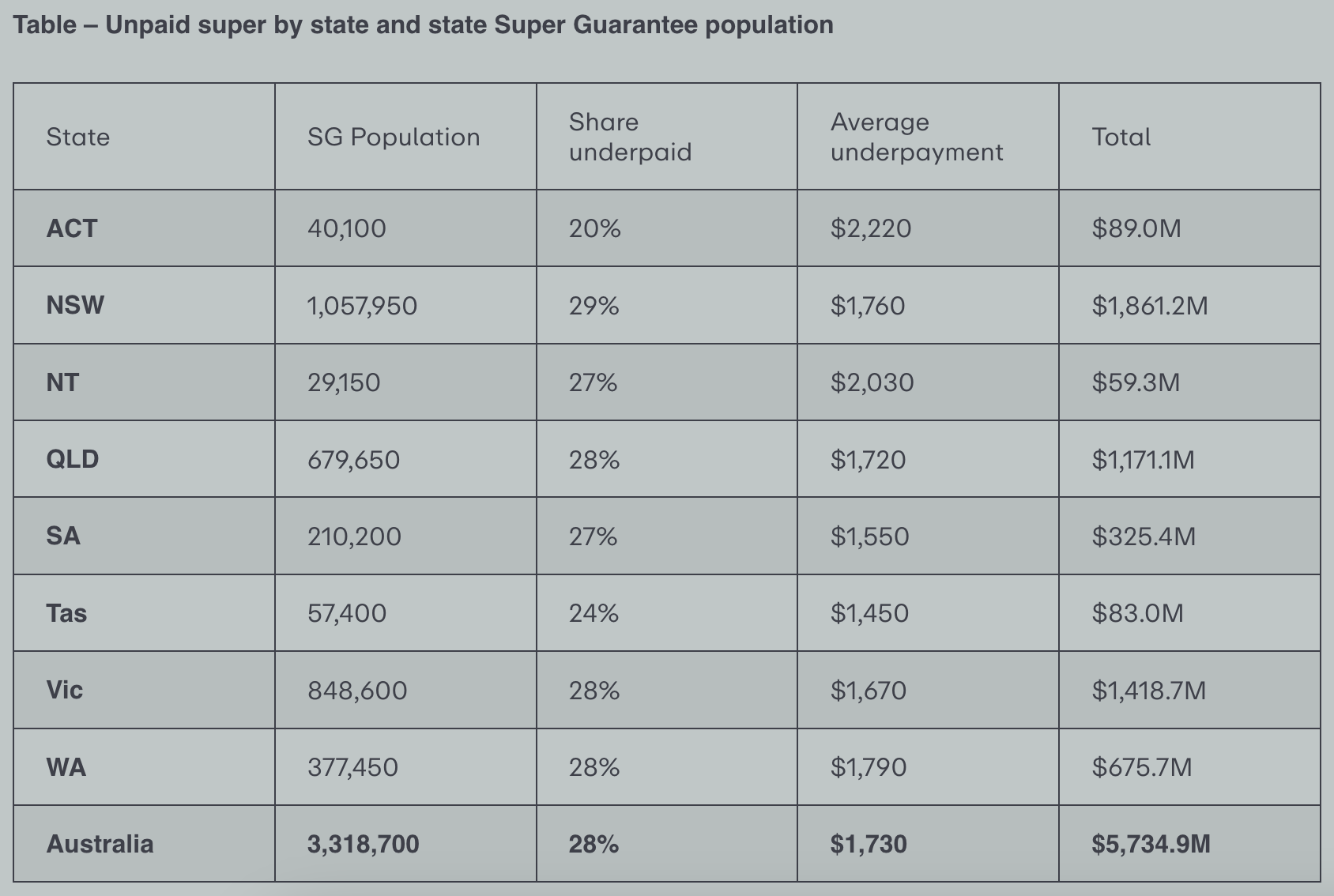
The Super Members Council (SMC) analysed the most recent data from the Australian Taxation Office (ATO) to find that 3.3 million Australians missed out on $5.7 billion in unpaid super.
On average, an affected worker missed out on $1,730 in super in 2022–23.
According to the SMC, unpaid super has risen by $600 million since the previous year, bringing the total amount Australians have missed out on to more than $47 billion over the past decade.
Need for payday super
The analysis comes as the Federal government proposes a plan to require employers to pay super on payday starting in July 2026 in a bid to address the problem of unpaid super.
The SMC said the government and Parliament should get on with passing payday super legislation in the first 100 days of the new Parliament to help 3.3 million Australians with unpaid super receive payment on time and in full.
"The message from Australians to all Parliamentarians is loud and clear on passing payday super laws: just get on with it," said SMC Deputy CEO Georgia Brumby in a statement.
"Each week these laws are delayed, Australians are made $110 million poorer in retirement which means less money to pay the bills after a lifetime of hard work."
Passing payday super will not only stamp out unpaid super, but will also put nearly $8,000 more in the average Australian's pocket at retirement because of more frequent payments and compounding, according to the SMC deputy chief.
The SMC's submission on the payday super exposure draft legislation includes extending the payment processing deadline from seven calendar days to seven business days.
It also recommended a phased approach to ATO enforcement in the early stages to give comfort to employers who are trying to do the right thing.
"The sooner this legislation is introduced and passed, the more time and certainty it will give businesses and the super payment system to prepare – so all workers can get paid their super on time and in full," Brumby said.