Two allowances, two different answers - and $91K a year hung in the balance
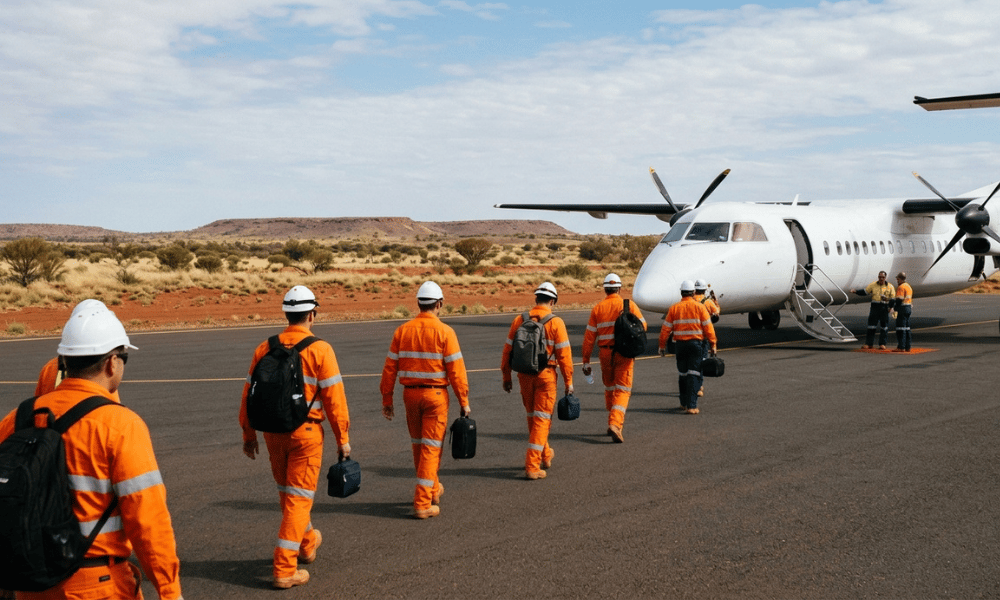
Chevron got it half right.
The Federal Court of Australia ruled on October 13 that the energy giant lawfully withheld one allowance from striking workers - but contravened the Fair Work Act by docking another.
The dispute traces back to September 2023, when employees represented by the Australian Workers' Union took protected industrial action at Chevron's oil and gas operations across northwest Western Australia. The work stoppages ran from September 8 to 21, during a period of enterprise bargaining between the company and the union.
Chevron's workforce at those remote sites - fly-in, fly-out employees on rotating rosters - received two allowances on top of their base salary under the company's Rotational Benefits Policy. The first, a Field Loading Allowance, compensated workers for the hardships of remote postings: the isolation, the gruelling travel, the accommodation conditions, the safety regime. Onshore workers received $76,000 a year; offshore workers, $91,000.
The second was a Transport Allowance of $148.68 per month, paid to help cover the cost of getting from home to designated assembly points - in most cases, Perth Domestic Airport or Onslow Town Centre - before Chevron flew them out to site.
When the strikes hit, Chevron made proportionate deductions from both allowances for each day of industrial action. The union said that was unlawful - a breach of section 323 of the Fair Work Act, which requires employers to pay workers in full for amounts owed in connection with the performance of work.
Chevron's defence rested on section 470 of the same Act. That provision stops employers from paying employees for periods of protected industrial action. The company argued section 470 barred it from paying either allowance during the stoppage.
The question came down to a line drawn by the High Court in an earlier case: section 470 catches payments connected to the performance of work during the strike period, but not entitlements that simply flow from the employment relationship existing.
Two allowances, two different answers.
For the Field Loading Allowance, the court found the connection was clear. Chevron's own policy described it as "compensation for current and future aspects of work performed at remote locations." It substantially overlapped with an Industry Allowance in the Hydrocarbons Industry (Upstream) Award 2020 - a payment unambiguously tied to hours worked. The whole package of contractual arrangements, read alongside the policy, pointed to a direct link between the entitlement to the allowance and the obligation to work rostered shifts.
The union argued the Field Loading Allowance was really about status - a lump sum for being a rotational worker, not a payment tied to any particular shift. The court was not persuaded. Whether the allowance was expressed as an annual figure rather than an hourly rate was, as the court put it, beside the point. What mattered was whether entitlement depended on working allocated shifts. It did.
The Transport Allowance told a different story.
That payment reimbursed employees for costs already incurred - getting themselves from home to the airport, fit for duty and ready to fly out. By the time industrial action began, employees had already made those travel arrangements, spent the money, and completed the journey. The entitlement had already arisen before the strikes started. There was no link between the Transport Allowance and the performance of work during the stoppage itself.
The court found Chevron contravened section 323 of the Fair Work Act by deducting the Transport Allowance. That breach was treated as a single contravention.
Compensation, penalties, and costs are still to come. The court has ordered the parties to propose a timetable for those next steps.
For HR teams managing allowances during industrial action, the decision draws a practical line: allowances tied to the performance of work at a particular time and place can be withheld under section 470, but reimbursement-style payments where the worker has already met the obligation sit outside the provision's reach. How you classify your allowances matters - and getting it wrong means a Fair Work Act breach.
The decision addressed liability only. Orders on compensation and civil penalties will follow after further hearings.