NSW Police Force accepts all recommendations to address lapses found in scathing review of its workplace culture
A review of the workplace culture at the New South Wales Police Force (NSWPF) has revealed "unacceptable levels" of bullying and discrimination, as well as barriers to speaking up within the organisation.
The review, released on Thursday, was established in 2024 by former NSW Police Force Commissioner Karen Webb and was carried out by former Victorian Equal Opportunity and Human Rights Commissioner Kristen Hilton.
Among its findings are concerns regarding workplace behaviour and confidence in reporting, as well as a need to improve flexibility and modern workforce practice.
"It is clear that bullying, incivility, discrimination, and victimisation are occurring at unacceptable levels within NSWPF and present a systemic risk," the review read.
NSW Police Force Commissioner Mal Lanyon said the review represented an important and timely snapshot of the organisation, which would be used to drive ongoing improvement.
"There is no place for harmful behaviours within our organisation. Equally we must provide an environment where people feel safe to come forward," Lanyon said.
Harmful behaviour at NSWPF
The review looked into the frequency of harmful conduct in NSWPF by a voluntary and confidential workforce survey, People Matter Employee Survey (PMES) data, internal complaint figures, written submissions, and interviews with over 500 current and former employees.
Its findings revealed that nearly one in three respondents had experienced bullying in the last five years, while another 25% experienced discrimination.
"Employees who spoke to us about bullying described a pattern of behaviours that left them feeling scared, belittled, or humiliated," the report read.
"Some reported having critical information deliberately withheld making it harder to perform their duties. Others spoke of being the subject of rumour, gossip, or exclusion."
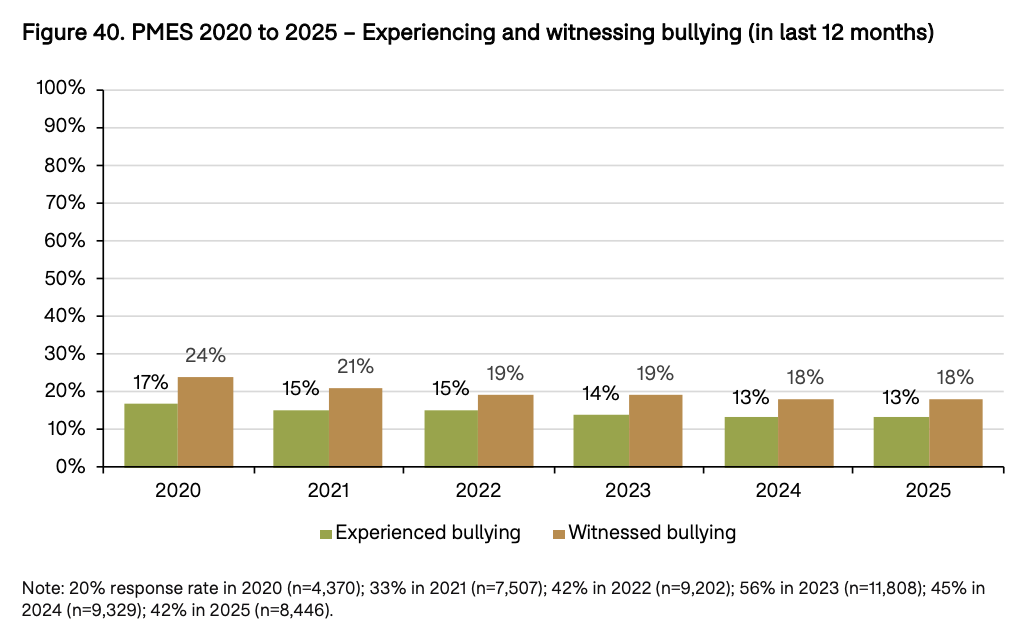
When it comes to discrimination, some of the behaviours reported by the respondents include not being considered for professional training (61.7%), unfair allocation of tasks (54.7%), unfair rostering (41.8%), and not receiving a promotion (30.4%) as well as job benefits (30.4%).
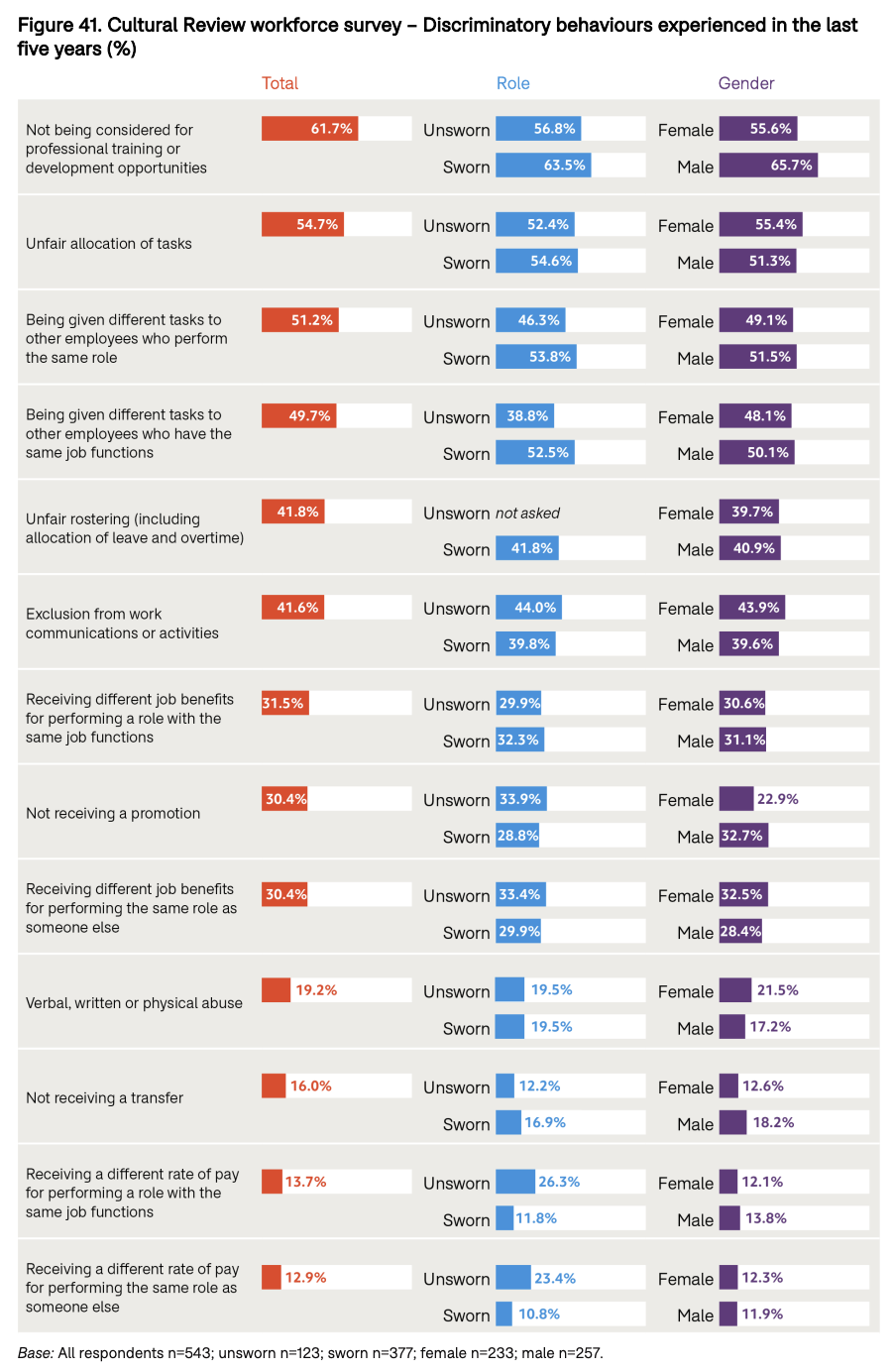
Respondents also reported experiences of verbal abuse and/or threats (18%), victimisation (15%), as well as barriers to speaking up when they experienced or witnessed alleged unsafe behaviours.
The report found that the most common response to harmful workplace behaviour was avoiding the perpetrator (47%) or considering leaving the organisation (45%).
Only 19% of people spoke to the person or people involved, while only 13% made a formal report.
"Barriers to reporting included people thinking nothing would be done, a perceived lack of support and confidentiality in the process, and a fear that their career would be jeopardised," the report read.
More workplace challenges at police force
Additionally, the findings revealed an "absence" of diverse perspectives and backgrounds across the NSWPF's executive and senior leadership teams, with women, First Nations people, and people from culturally and linguistically diverse backgrounds underrepresented.
There was also inconsistency among leadership when it came to supporting teams, with concerns raised about factions and favouritism, and on role-modelling of flexible work.
"While NSWPF's flexible work policies are comprehensive, their practical application is reportedly inconsistent and often cumbersome," the report said.
Cultural attitudes also emerged as a barrier to flexibility, including the assumption that efficiency requires 12-hour shifts and full-time availability.
"NSWPF's reliance on long shifts - among the longest in Australian policing - combined with rigid rostering arrangements and outdated first response agreements, was frequently linked by interview participants to fatigue, burnout, and work-life conflict," the report read.
"Employees described leaving the organisation regain control over their lives, highlighting that inflexibility is not only a workforce issue, but a direct contributor to attrition and diminished wellbeing."
NSWPF accepts recommendations
The report made 29 recommendations across seven key themes, which the police force said they accepted. The themes of these recommendations include:
- Trusted leadership
- Attraction, recruitment and the Academy
- Talent development and career progression
- Flexibility in a modern organisation
- Addressing harmful behaviours
- Support and care
- Modern systems
"As Commissioner, I'm committed to ensuring our organisation implements the recommendations made by Ms Hilton in the Review to ensure that we continue to improve," Lanyon said.
"We will continue to listen, assess progress, and adjust our approach where needed."
Lanyon added that some key initiatives are already underway to address some of the recommendations made in the report. These initiatives include:
- A review of the promotions process
- The development of a leadership framework
- A review of the recruitment process
- A focus on harmful behaviours through a two-year programme designed to educate and stop these behaviours happening
- A continued investment in mental health and critical incident support
Meanwhile, Hilton said the report underscored the need for the NSWPF to "futureproof" its organisation through reforms.
"The acceptance of all the recommendations shows a commitment to building a healthier, more inclusive and more transparent organisation," she said.
Minister for Police and Counter-terrorism Yasmin Catley added that she is "pleased" that the police force accepted all recommendations in the report.
"This is an opportunity to strengthen police culture and conditions for the thousands of officers who serve our state," the minister said.