Why novated lease adoption skews male and how better design can close the $12,500 benefits gap

Employees expect inclusive and equitable benefits programs as a baseline, not a bonus. Yet one of Australia's most financially significant employee benefits is still being delivered through a model built for a different era, and the people paying the price are more likely to be women.
Based on Australian Bureau of Statistics earnings data and Workplace Gender Equality Agency reporting, the national gender pay gap in full-time earnings remains just over 20%, equating to a difference of roughly $23,000 per year between median male and female earnings. For most organisations, that disparity reflects occupational mix, seniority distribution and structural factors that take years to shift.
But there is another layer to this story, one that rarely surfaces in remuneration committee discussions: the way employee benefits can unintentionally compound the pay gap. Novated leasing technology company Auto-UX has identified a striking illustration of how good intentions and poor design can pull in opposite directions.
More importantly, it has a fix for the problem.
The benefit most men use
Novated leasing is one of the most financially significant perks available to Australian employees. By allowing workers to pay for a vehicle using pre-tax income, it can generate an average after-tax benefit of approximately $8,500 per year, depending on income and vehicle choice. That is not a trivial sum. At a salary of $82,000, the projected 2026 median for women, an $8,500 after-tax benefit is equivalent to roughly $12,500 in gross salary terms.
The problem is who is actually using it. Current market estimates suggest novated leases are held predominantly by men, with women accounting for around 35% of holders compared to 65% for men. When a high-value benefit skews toward higher earners who are more likely to be male, the arithmetic turns uncomfortable. The original $23,000 median pay gap can effectively expand to around $35,500 once the benefit advantage is factored in.
This is not a matter of women being paid less within the novated lease programme itself. The issue is participation. And participation, it turns out, is a design problem.
Built for one kind of buyer
Most novated lease programmes were not designed with exclusion in mind. But many were built around the conventions of traditional automotive sales, which assume a particular kind of buyer: someone comfortable making financial decisions quickly, prepared to interpret tax optimisation figures at face value, and willing to enter a sales conversation early in the process.
A typical digital journey might look like this: enter your salary, here is your tax saving, speak to a consultant. It is a structure that suits a specific decision-making style - one that, according to behavioural research, more commonly aligns with male purchasing patterns.
Behavioural research suggests men and women often approach complex purchasing decisions differently. Studies in consumer psychology and behavioural economics show that women tend to engage in more comprehensive comparative research and place greater emphasis on risk evaluation, while men are more likely to focus on key attributes and move more quickly.
Neither approach is superior. But when a benefit programme is calibrated for one style, it will naturally convert more of that cohort. The result, as Greg Parkes, CEO of Auto-UX, put it, is not a capability gap.
"What we are dealing with is a design gap," said Parkes. "The traditional novated lease experience was built around a high-pressure sales model that does not serve a large proportion of the workforce well, and that proportion skews female."
Redesigning the experience: A digital-first approach
Auto-UX's response to this problem is Auto-Pilot, which it describes as the world's first fully digital, end-to-end novated lease platform built for self-service autonomy and inclusive learning.
Its features are intended to reduce friction for all employees, including those with English as a second language, those new to financial packaging, and those who simply prefer digital autonomy. But its design philosophy aligns closely with what research suggests many female employees value when evaluating complex financial decisions.
"The shift we are making is from a sales-led mindset to a confidence-led mindset," Parkes explained. "Rather than pushing someone toward a conversation before they are ready, we give them the tools to understand how it works, what their options are, and what happens if their circumstances change."
The platform's features include:
- Vehicle Search, which allows employees to filter by practical criteria including ANCAP safety rating, boot volume, number of seats and running costs, rather than assuming they arrive with a vehicle already in mind.
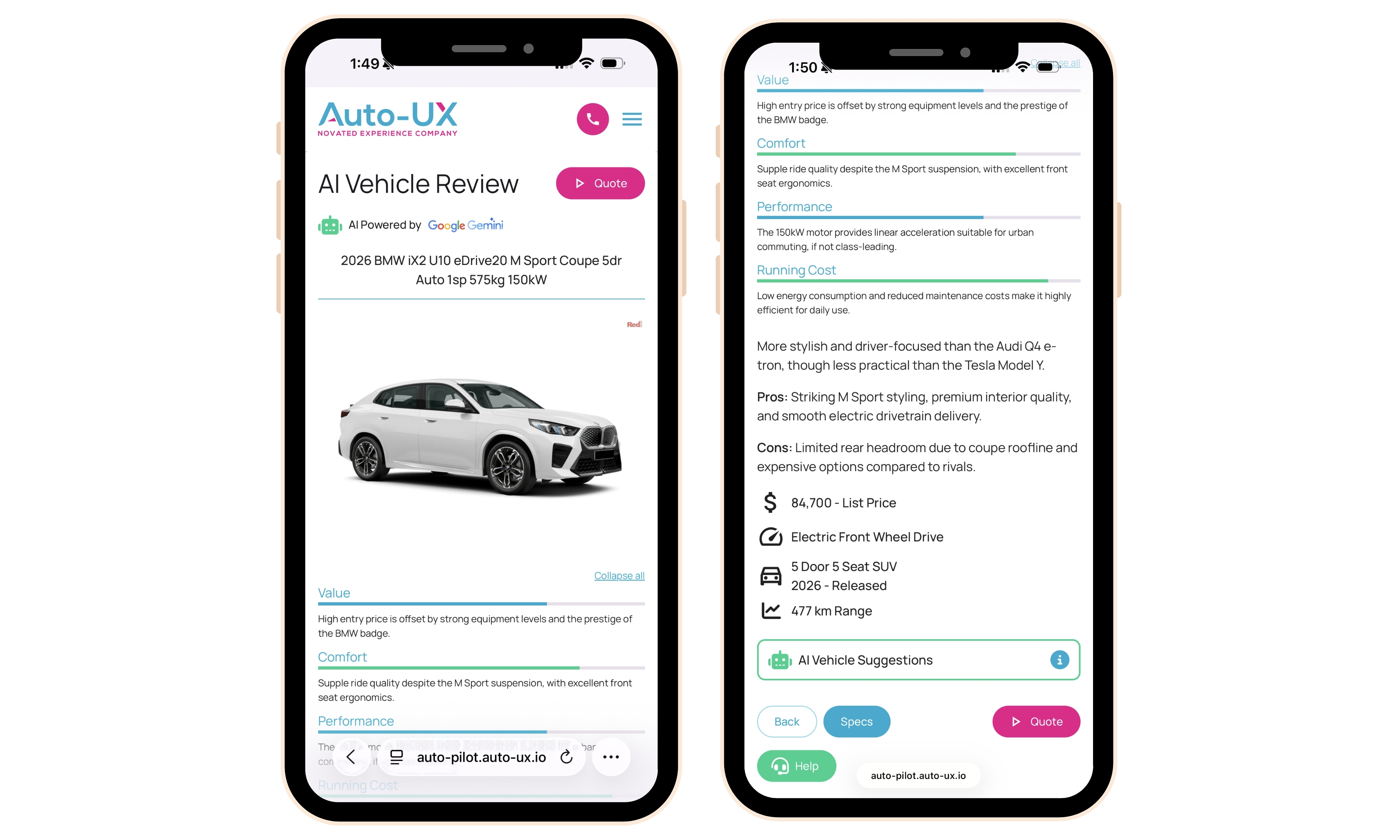
- AI Vehicle Reviews, which provide plain-English pros and cons for specific makes and models, reducing reliance on dealership narratives.
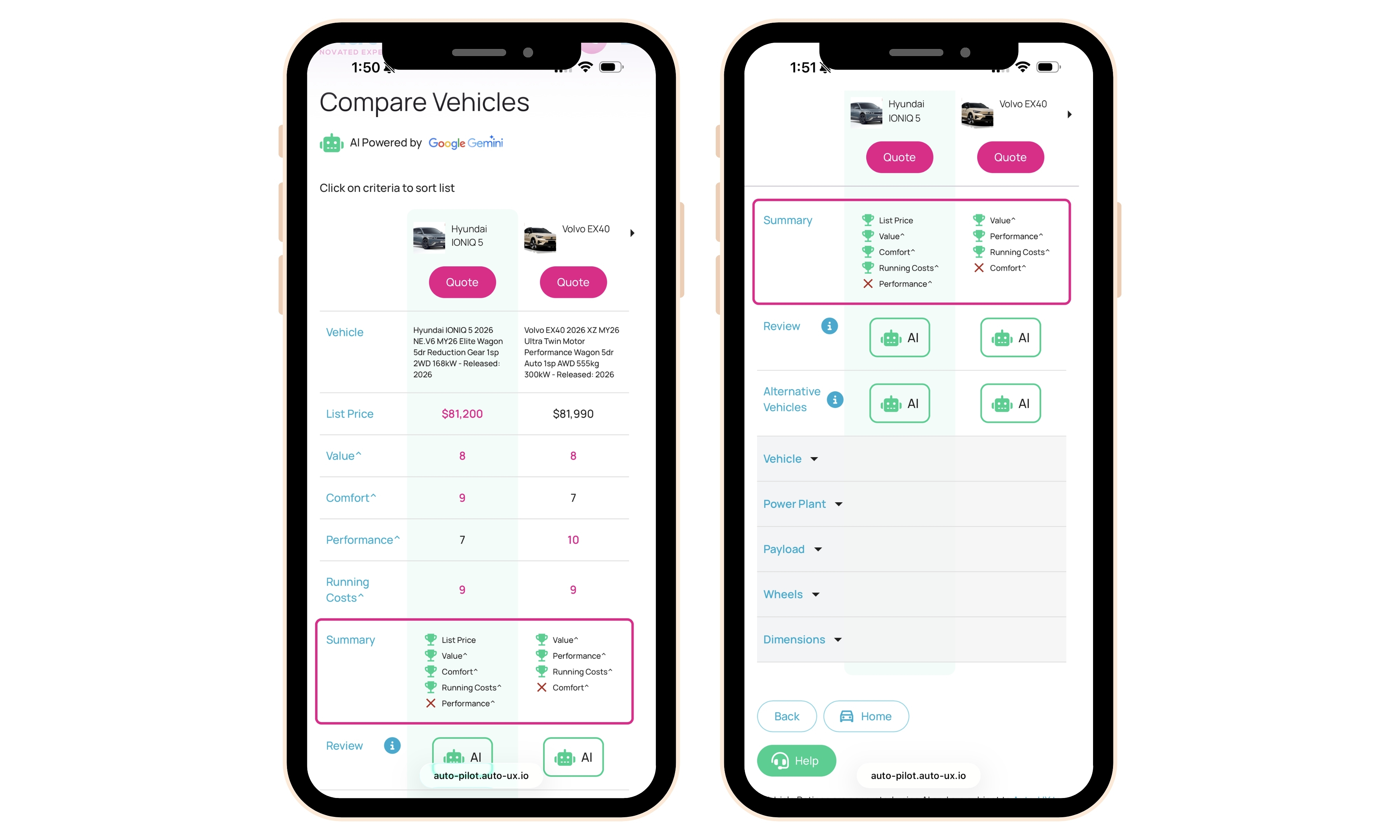
- AI Comparisons and Ratings, which evaluate vehicles side by side across value, comfort, performance and running costs.
- AI Vehicle Selection Assistance, which generates suitable options within an employee's price bracket and compares them automatically, for those who prefer not to search manually.
Parkes said the effect of these features was to address a known barrier in complex financial purchasing.
"Information asymmetry erodes trust," he said. "When someone feels they don't have enough information to make a good decision, they don't make one at all. That is what we are trying to solve."
Risk clarity as a feature
One element of inclusive benefit design that receives insufficient attention is what happens when things go wrong. What if the employee changes jobs mid-lease? What if they drive significantly more or less than expected? What happens at lease end?
In traditional novated lease sales, these questions are often addressed reactively. Auto-Pilot builds scenario modelling and risk transparency into the experience from the outset. Parkes argued this was not a peripheral feature but a central one.
"When uncertainty is addressed upfront, confidence increases," he said. "And when confidence increases, adoption follows. It sounds simple, but it represents a meaningful departure from how these programmes have typically been run."
This approach has particular relevance for employees from culturally diverse backgrounds, younger workers new to salary packaging, and anyone who has previously encountered a financial product and felt they were being moved toward a decision faster than their comfort allowed.
A strategic issue rather than a peripheral one
For HR leaders, this suggests that organisations that invest heavily in closing pay gaps while inadvertently allowing benefit design to widen them face a credibility problem, both internally and in the labour market.
Parkes framed it as a question of alignment.
"If your stated values include pay equity, your benefit architecture needs to reflect that," he said. "Increasing female participation in high-value benefits is not just good optics. It is a measurable contribution to closing the effective economic gap between male and female employees."
The $23,000 median pay gap is a structural challenge that no single benefit programme can eliminate. But if a design flaw in one benefit can add $12,500 in effective value for one cohort over another, then fixing that design flaw is a legitimate part of the solution. Closing the novated lease adoption gap from 35% female participation toward parity would not just improve a utilisation statistic. It would shift real economic value toward the employees who need it most.
In a labour market where talent attraction and retention are increasingly shaped by how organisations demonstrate their values, benefit architecture that serves the full workforce is no longer optional. It is, as Parkes put it, simply good design.
"We built Auto-Pilot for everyone who has ever felt that a financial product was not made with them in mind," he said. "That turns out to be quite a lot of people."
Bridge the adoption gap with a truly inclusive novated lease platform. Discover how Auto-Pilot’s AI-guided features deliver financial wellbeing through transparency and inclusive design.
This article was produced in partnership with Auto-UX