Seven leadership principles that drive engagement, retention, performance and workplace happiness
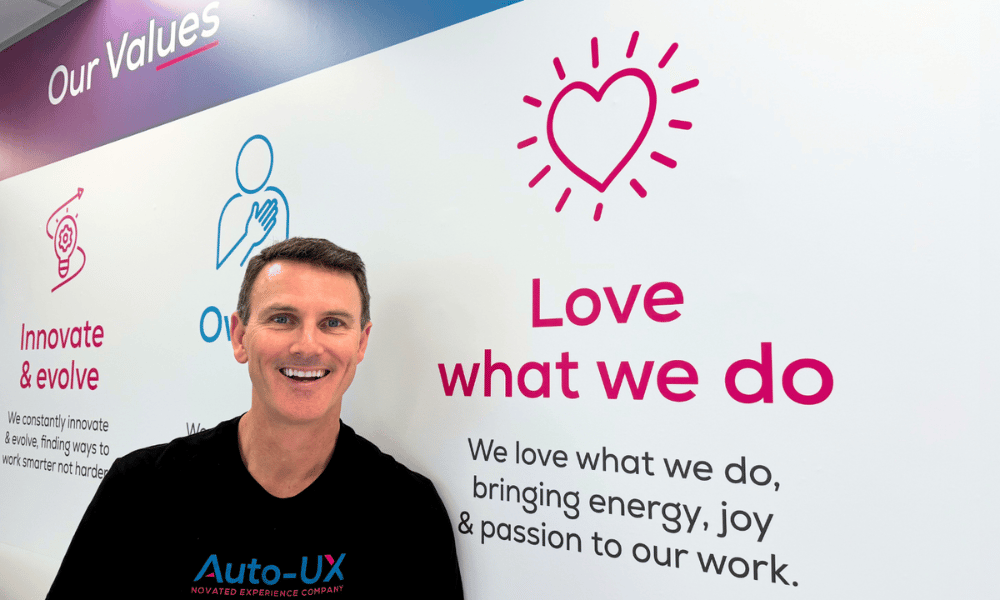
In an era of skills shortages, rising employee expectations and increasing pressure on productivity, CHROs face a fundamental challenge: how do you create an organisation where people genuinely want to stay, perform and thrive?
After more than 20 years leading and building businesses, I've found that employee engagement, retention and performance are not driven by perks, policies or remuneration alone. The most successful organisations consistently excel in seven interconnected areas that create a workplace where people can do their best work and enjoy doing it.
1. Purpose Beyond Profit
Every organisation needs a reason for existing beyond making money.
Commercial success matters. Without it, businesses cannot invest, innovate or grow. However, employees are increasingly looking for meaning in their work. They want to understand how their efforts contribute to something larger than quarterly results.
A compelling purpose creates alignment, inspires discretionary effort and gives people a reason to stay during challenging periods. The strongest cultures are built around a mission that benefits customers, employees, shareholders and the broader community.
When employees believe in what the organisation is trying to achieve, engagement becomes significantly easier to sustain.
2. A Strong Organisational Identity
Purpose explains why you exist. Identity explains who you are.
Every organisation needs an authentic story that connects its origins, values and aspirations. Employees should understand where the business came from, why it was founded and what makes it different.
A strong identity is reflected in more than a brand or logo. It shows up in the language people use, the behaviours they demonstrate and the decisions they make. The best cultures develop a unique vernacular that becomes part of everyday conversation.
When employees feel proud of the organisation's identity and are comfortable representing its brand, they become advocates rather than simply workers.
3. Communication and Connection
People want to feel informed, heard and connected.
One of the most common leadership mistakes is assuming communication has occurred simply because information has been shared. Effective communication requires repetition, context and dialogue.
Employees need to understand not only what is happening, but why it is happening.
Equally important is creating opportunities for genuine human connection. In today's hybrid workplace, this requires deliberate effort. Teams that know each other beyond job titles build stronger relationships, collaborate more effectively and demonstrate greater resilience when challenges arise.
Connection is no longer a cultural nice-to-have; it is a business necessity.
4. Trust as the Foundation
Trust is the outcome of consistently delivering on purpose, identity and communication.
Employees must trust their leaders, their colleagues and the organisation itself. Without trust, people spend energy protecting themselves rather than contributing their best work.
High-trust environments create psychological safety, encourage innovation and accelerate decision-making. They also drive retention because employees are far less likely to leave an organisation where they feel respected and supported.
Trust cannot be mandated. It must be earned through authentic leadership and consistent behaviour.
5. Measured Ambition
People perform best when expectations are both clear and achievable.
Goals should be specific, measurable and time-bound, while remaining ambitious enough to challenge people and create a sense of accomplishment.
If objectives are unrealistic, employees become disengaged. If they are too easy, growth stagnates.
The most effective organisations strike a balance between aspiration and attainability. Employees understand what success looks like, know how their contribution matters and experience the satisfaction of achieving meaningful outcomes.
6. Constant Evolution
Few people are excited by standing still.
Employees are attracted to organisations that continually seek better ways of operating, serving customers and developing people. Continuous improvement creates energy, momentum and opportunity.
A culture of evolution encourages curiosity, innovation and learning. It gives employees confidence that the organisation has a future and that they can grow alongside it.
For leaders, the challenge is to create an environment where change is embraced rather than feared.
7. Work-Life Cohesion
The final element is work-life cohesion.
The goal should not be work-life conflict or even work-life balance. Instead, organisations should create environments where work complements life and life complements work.
Employees perform at their best when they can successfully manage family commitments, personal interests and professional responsibilities without constant tension between them.
Healthy employees build healthy organisations. When people feel supported as individuals, they contribute more fully as professionals.
For CHROs seeking sustainable engagement, retention and performance, these seven principles provide a practical framework. Purpose, identity, connection, trust, measured ambition, constant evolution and work-life cohesion are not standalone initiatives. Together, they form the foundation of cultures where employees thrive and organisations outperform.
Greg Parkes is CEO of Auto-UX, a technology-driven novated leasing provider focused on reshaping employee benefits through innovation, transparency and employee-centric design.
This article was produced in partnership with Auto-UX