Huge workforce disruption possible as the country acts to protect reserves
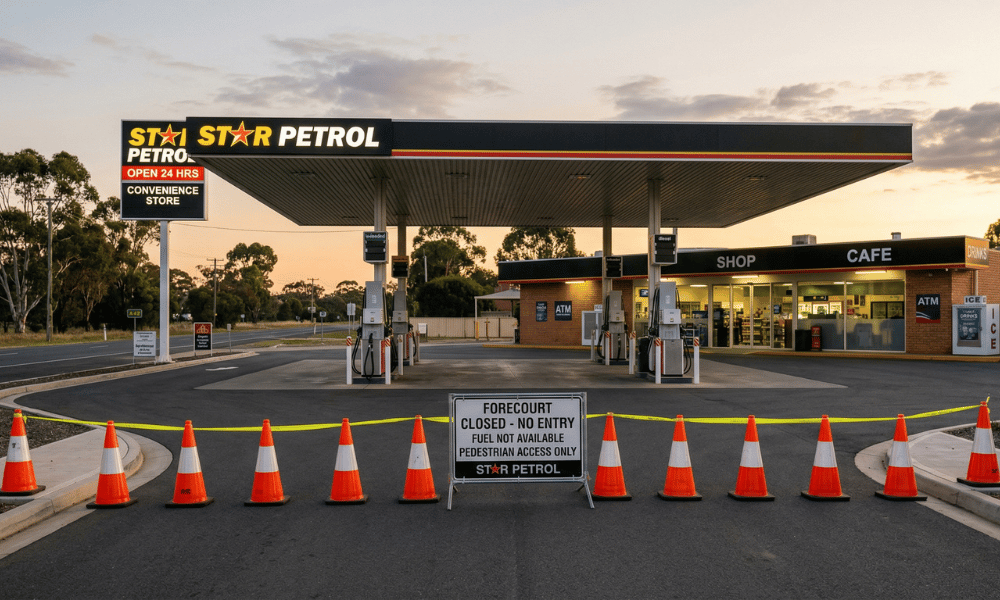
Australia is on the cusp of its most significant workforce disruption since the COVID-19 pandemic, with energy analysts and government officials signalling that fuel restrictions affecting non-essential industries are likely to be announced in the days following Easter.
Prime Minister Anthony Albanese is set to address the nation tonight at 7pm AEDT, outlining the government's response to the fuel emergency driven by the ongoing Middle East conflict. While the address is expected to project calm and stop short of announcing major new measures, the briefing provided to journalists indicates Albanese will ask Australians to begin voluntarily conserving fuel for businesses and communities that need it most.
The Tipping Point
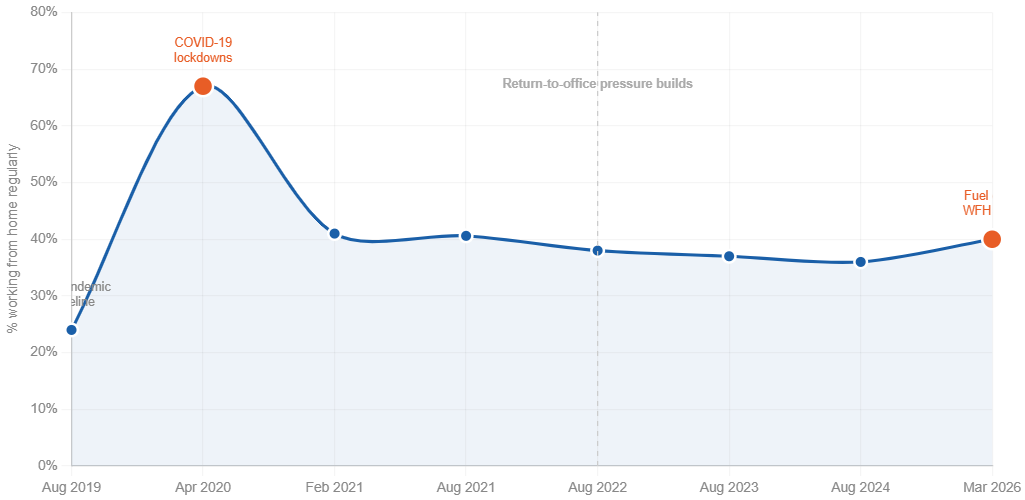
The frank assessment from energy analysts leaves little room for optimism about what follows the Easter break. Rystad Energy's head of Australia, Gero Farruggio, has said the situation is comparable to the early days of COVID-19. "We are facing a COVID-like situation where we'll have to be working from home like some other countries who already are, and restrictions for non-essential diesel users," he told the AFR.
Read next: Employers beginning to allow WFH amid fuel crisis
MST Marquee energy analyst Saul Kavonic has been equally direct about the timeline. "The second half of this month is where the real crunch point is on supply," he said, warning that Australia's stated 30 to 40 days of fuel stocks is not the ready-to-deploy buffer it appears. "The truth is we will face a structural shortage by the time stocks get to around 15 days."
The government has confirmed it is currently operating at level two of its fuel security plan. Levels three and four — involving targeted restrictions and the protection of critical services respectively — are now being actively planned with the states. Treasurer Jim Chalmers has said the government is doing everything it can to avoid COVID-style interventions, but has stopped well short of ruling them out.
Working From Home: From Resistance to Reality
The shift in employer attitudes toward working from home has been swift and telling. The Australian Chamber of Commerce and Industry, which had previously described mandatory WFH as a "poorly considered reactionary move," is now actively encouraging businesses to explore flexible arrangements. ACCI's chief of policy and advocacy, David Alexander, said businesses are already negotiating WFH agreements with employees and described the emerging pattern as "a graduated response." He noted that voluntary measures including carpooling are also being encouraged.
"So what you're seeing is a graduated response. In the early stages, your measures will be softer, voluntary," Alexander said. "If things persist, the governments may have to consider more serious measures to suppress demand, but let's not get ahead of ourselves.”
Read next: Will the government step in to allow WFH as fuel costs surge?
For HR managers who have spent the last two years working to bring employees back to offices, this is a significant and rapid reversal of the operating environment. The practical implication is that WFH frameworks that were wound back may need to be reinstated quickly — and in some cases, organisations will be implementing them for the first time for employee cohorts that have never worked remotely.
Absenteeism and Productivity Already Affected
The fuel crisis is not a future risk — it is already affecting workforce performance. Businesses have been reporting increasing absenteeism and a measurable deterioration in productivity and output as employees struggle with the cost and availability of fuel to commute. Alexander described the level of concern among employers as very high, with anxiety "rising day by day.”
Read next: Victoria's work‑from‑home push tipped to trigger surge in legal claims and costs
For HR managers, this means the business case for immediate flexibility measures is not speculative. It is already showing up in operational data.
Business Continuity Planning: The COVID Playbook Revisited
The government is actively drawing on the COVID-19 policy toolkit. The Australian Taxation Office and major banks have agreed to provide temporary payment relief for small businesses struggling with spiking fuel costs — a measure explicitly modelled on pandemic-era interventions, though described by Treasurer Chalmers as a more targeted version.
Alexander has called on government to go further, urging the development of support packages covering cash flow, employee retention, lending and insolvency measures — measures that were deployed during COVID but which he acknowledged "would only be considered at the extreme end of a fuel emergency." His pointed message was that the planning for those eventualities should be happening now.
HR managers in organisations that have not yet reviewed their business continuity frameworks in the context of a sustained fuel shock would be wise to start that review before the Easter break ends.
What HR Teams Should Be Doing Now
The window before post-Easter announcements is short but valuable. Organisations should be assessing which roles can be performed remotely and updating their WFH policies accordingly. Workforce communications plans should be prepared so that employees receive clear, timely information if restrictions are announced. Payroll and HR teams should be reviewing entitlement frameworks for any scenarios involving reduced hours, stand-downs or changed working arrangements. And for businesses with large field-based, care or logistics workforces — where remote work is not an option — contingency planning should focus on route optimisation, shift consolidation and employee financial support measures.
Farruggio's observation that farmers and rural communities are already struggling to access diesel supplies is a reminder that for many Australian workers, this is not an abstract policy question. It is already a daily operational reality.
The government has fuel secured until May. Beyond that, by its own admission, there is no guarantee. For HR teams, that is the planning horizon that matters.