Andrew Mountbatten-Windsor in police custody for allegedly sharing confidential trade material with Jeffrey Epstein
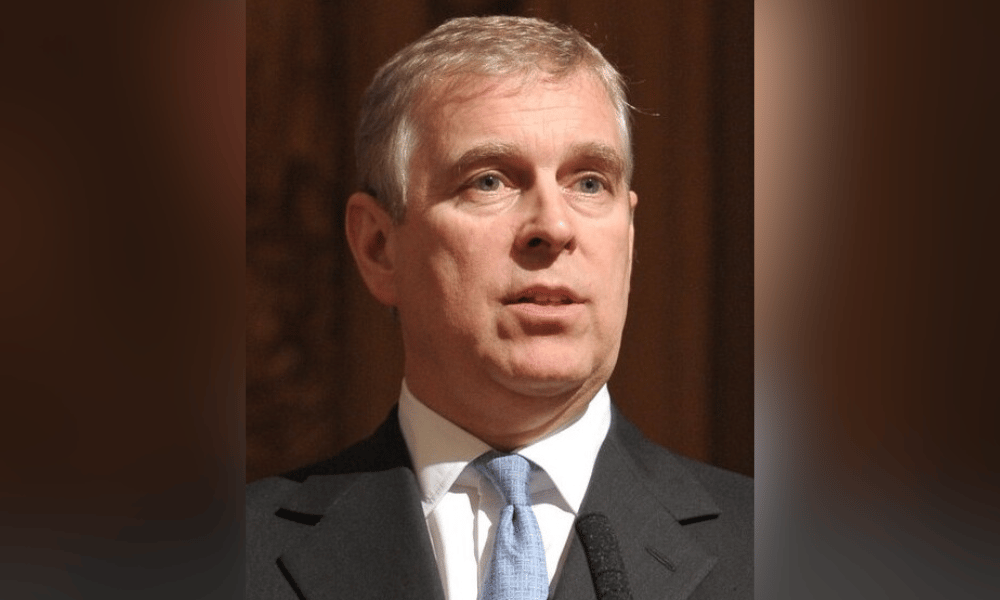
Andrew Mountbatten-Windsor, the former prince and brother of King Charles, has reportedly been taken into custody at the King’s private Sandringham Estate on suspicion of misconduct in public office under UK law.
According to media reports, the arrest follows allegations that he shared confidential government trade information with the late American financier Jeffrey Epstein.
CBC reports that police are searching properties linked to him and holding him while they determine whether to bring charges.
CBC’s coverage notes that scrutiny of his conduct intensified after newly released US “Epstein files” appeared to suggest he shared “confidential sensitive government information, which was potentially market-changing,” with Epstein while serving as a UK trade envoy.
The arrest is not related to the longstanding sexual abuse allegations made by Virginia Giuffre, one of the most prominent survivors of Epstein’s abuse. Giuffre has since died by suicide.
CBC reports that Giuffre had alleged she was trafficked to Britain to have sex with the former prince in 2001, when she was 17. Andrew has consistently maintained that he has no memory of meeting her and denies the allegations.
In a statement shared with The Associated Press, Giuffre’s family responded to the arrest, saying: “Today, our broken hearts have been lifted at the news that no one is above the law, not even royalty.
“He was never a prince. For survivors everywhere, Virginia did this for you,” her siblings said.
Information-sharing, privilege and governance risk
Separate from the abuse allegations, the current police inquiry is focused on Andrew’s conduct between 2001 and 2011, when he represented the British government abroad as a trade envoy, meeting foreign governments and business leaders on the state’s behalf.
CBC’s live coverage raises questions about the former prince’s judgement, citing an earlier email from a Royal Family account to Epstein that read: “Keep in close touch and we’ll play some more soon!!!!”
CBC’s reporting also notes that Andrew has previously been removed from royal public duties and forced out of his long-time residence amid friction over his living arrangements, even as King Charles and Queen Camilla have continued with visible public engagements intended to signal stability.
At the same time, some members of the public have openly questioned what the King knew about Andrew’s relationship with Epstein.
The King released a statement following Andrew’s arrest. It read:
“I have learned with the deepest concern the news about Andrew Mountbatten-Windsor and suspicion of misconduct in public office.
“What now follows is the full, fair and proper process by which this issue is investigated in the appropriate manner and by the appropriate authorities.
“In this, as I have said before, they have our full and wholehearted support and co-operation.
“Let me state clearly: the law must take its course.
“As this process continues, it would not be right for me to comment further on this matter.
“Meanwhile, my family and I will continue in our duty and service to you all. Charles R.”
For Australian HR and people leaders, this situation highlights a number of familiar risk themes: the governance challenges that arise when individuals hold positional power and privileged access to information; the importance of robust conflict-of-interest and information-handling policies; and the need for clear escalation pathways when concerns are raised about the conduct of senior or high-profile figures.
What is “misconduct in public office”?
Who it covers
Misconduct in public office is a common law offence in England and Wales that applies to individuals who hold a public office, such as police officers, prison officers, and certain government or local authority officials.
What the misconduct is
The official must wilfully misconduct themselves—either by doing something they know they should not do, or by deliberately failing to perform a duty they know they have. It is more than a mistake, poor judgement, or incompetence.
How serious it must be
The behaviour must be so serious that it amounts to an abuse of the public’s trust in that office. It goes well beyond internal disciplinary issues or minor performance failings.
What are the legal consequences?
Misconduct in public office is a judge-made (common law) offence, still in force in England and Wales, triable only in the Crown Court and carrying a maximum sentence of life imprisonment. It is used sparingly and is currently under review for possible replacement by a statutory offence.
Image source: Wikimedia Creative Commons