From agency enforcement to noncompete restrictions, several developments could reshape the employment-law landscape for employers
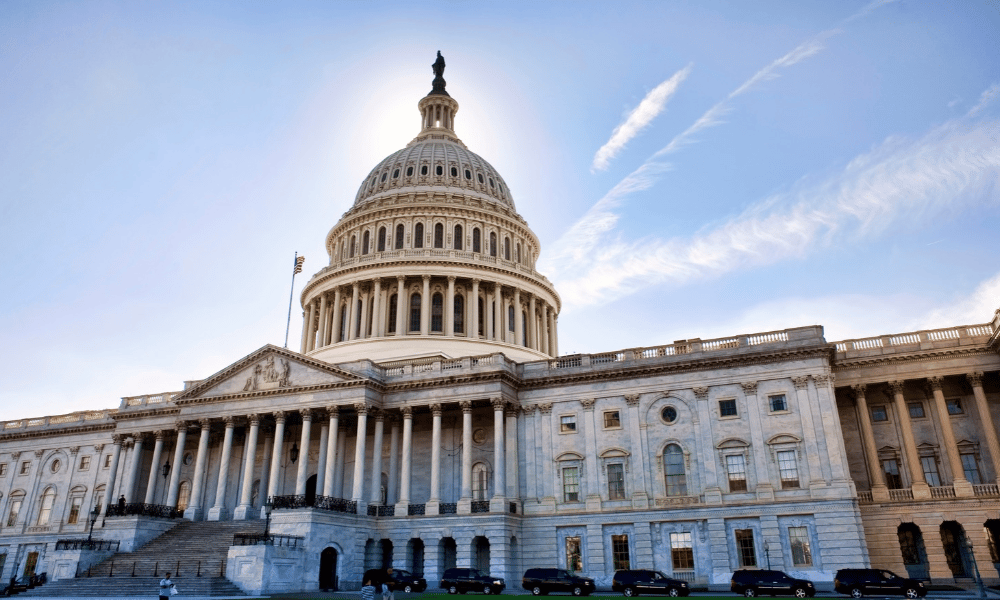
Democrats are set to control both the House and the Senate when the new Congress convenes, and employers are asking what that means for the rules they manage every day, including those enforced by the Equal Employment Opportunity Commission (EEOC) and the National Labor Relations Board (NLRB).
The answer, according to Brian Hartstein, a partner at Quarles & Brady in Chicago who advises employers on workplace issues, depends less on Capitol Hill than many might expect.
"What they should really focus on is not the day-to-day machinations of the federal legislature, but monitoring agency action, changes at the Board, enforcement priority notes from the EEOC," Hartstein said.
Agencies and states set the pace
Hartstein expects the House to pass some Democratic priorities, including a higher minimum wage and potentially the Protecting the Right to Organize (PRO) Act. He said a compromise is more plausible on the minimum wage than on the PRO Act.
Democratic control also brings closer oversight of agencies such as the EEOC and the NLRB. Hartstein said agency leaders and nominees are likely to face more adversarial questioning over policy decisions. At the NLRB, General Counsel Crystal Carey outlined in an August memo the Biden-era precedents she wants overturned, including rulings on severance agreements, workplace rules and captive audience meetings, which are mandatory employer meetings about unionization.
"It's going to be difficult with split control with the Congress and the White House to try and use the power of the purse to make changes in that way," Hartstein said. "So I would expect the directions primarily to continue to still be set by the Trump administration and its nominees."
Rulemaking at the U.S. Department of Labor (DOL) is also underway. The agency proposed a rule in February that would replace the Biden-era standard for deciding whether a worker is an independent contractor, then followed in April with a joint employer proposal, which addresses when two companies can share legal responsibility for the same worker. Hartstein said he wasn't sure where those efforts currently stand.
"I don't know what's been kind of on the docket or what's cooking with that currently to say for sure where that'll be going, but you could imagine, obviously, a loosening of rules," he said.
States have a say too. Whether a worker counts as an independent contractor or an employee is also decided under state law, and some states use tests that operate independently of the federal rule, so a DOL change doesn't override them. Hartstein said states are already active on both the independent contractor and joint employer questions.
"Obviously states have stepped in, in those and other areas, especially now with the number of states with Democratic governors and legislatures," Hartstein said. "You could see a lot of action at the state level with more pro-employee laws being enacted as well."
On overtime, the federal salary threshold for most exempt white-collar employees currently sits at $684 a week, and Hartstein said he doesn't know whether the administration will raise it. He said some states are changing their own thresholds, which can leave employers choosing between moving everyone to the higher level or treating certain workers in some states as hourly or salaried non-exempt.
Noncompetes could draw rare bipartisan interest
There's no federal ban on noncompetes. The Federal Trade Commission adopted a rule in 2024 that would have banned most of them nationwide, but a federal court blocked it before it took effect, and the agency dropped its appeal in September 2025.
"It's an interesting one because it's one of the few areas where there is some bipartisan support," Hartstein said. "I think that is an area where you could really see some movement."
Business leaders may push for clarity, he said, because the patchwork of state laws has complicated enforcement.
Recent rulings show how much the wording of these agreements matters. In Connecticut, an appeals court upheld a ruling that voided an arbitration award approving a two-year physician noncompete because it exceeded the state's limits. In North Carolina, a court dismissed IQVIA's lawsuit over former employees' noncompetes because the company's own agreements required such disputes to be filed in Delaware.
California and New York have also passed laws restricting training repayment agreements, with New York's taking effect in December. Such agreements require workers to reimburse employers for training costs if they leave early. Supporters of those laws say the contracts can keep workers in jobs they'd otherwise leave, while Hartstein said limits create a challenge for employers.
"There is a significant amount of investment in both the recruitment and the training process," Hartstein said. "And limiting employers' ability to retrieve the costs associated with that, when folks don't work very long because they're moving between jobs, would ultimately redound to harm the marketplace for employees because employers are going to be more careful about making offers when those significant expenses can't be recouped."
A monthly check on state and local rules
Many of the bills the House passes are unlikely to become law, Hartstein said, and that affects how closely HR teams need to follow Congress.
"I don't think that they need to spend their time following the day-to-day on the specifics of legislation," he said. "The House is presumably going to pass a number of, for lack of a better term, messaging bills, because of the filibuster rules. That type of legislation is unlikely to pass the Senate anyway, and even if it does, would be subject to President Trump's veto pen."
State legislatures and local governments are a different matter. Hartstein said the areas drawing the most attention in states where Democrats control the governor's office and both legislative chambers include noncompete restrictions and paid sick and paid parental leave laws. With remote workers spread across jurisdictions, an employer may have only a handful of people in any given state or locality, which makes new laws hard to track. He suggested setting up a process, through legal counsel or in-house, to monitor those developments.
"Even if they just have a cadence of every once a month, I'm going to run some AI searches, do some Googling, check with my counsel, just so that they don't get behind on rollout of new policies or new changes that might be impacting even a small number of their employees," Hartstein said.