Research on Chinese officials who fake compliance to protect themselves holds a warning for employers adding more monitoring and more reporting

When Xi Jinping's January speech to the Communist Party's anti-corruption body was published this month, its message was clear. Too many officials, he said, only pretend to carry out orders. He likened the corrupt to "sick trees" that should be pulled out.
Several hundred senior officials gather in Beijing this week for a Central Committee meeting, a year before Xi is expected to claim a fourth term as party leader. The enforcement system behind his warning is enormous. Discipline authorities punished 983,000 people in 2025, up from 889,000 the year before, according to official figures.
The interesting question for HR, however, is what that pressure does to the people working under it.
Compliance as a performance
Ben Hillman, who directs the Australian Centre on China in the World at the Australian National University, has an answer. With co-author Tan Zhao, he drew on field research in six provinces for a study published in The China Journal in January. They examined county and township officials, the people who turn Beijing's directives into results, after a decade of stricter discipline, heavier reporting and elaborate performance reviews.
Many of those officials, they found, have responded "for the purposes of self-preservation" with what Chinese policy writers call formalism: shirking, feigned compliance, falsified results and work that favors process over outcomes. Beijing has made rooting out formalism a priority. The authors argue the effort is failing and making the problem worse.
Read next: Employee monitoring tools hurting recruitment, retention efforts: survey
A cycle HR could have seen already
The Communist Party is not a company. Still, most HR leaders have watched a smaller version of the same cycle. Leaders start to doubt that people are committed, so they add check-ins, reports and monitoring. People learn what the checks reward. The reports get better, the results don't, and the doubt grows.
Harvard Business School professor Amy Edmondson's research on psychological safety, beginning with a 1999 study of work teams, helps explain why. People take the risks that learning depends on, such as admitting a mistake or asking for help, only when they believe they won't be punished for it.
Many American workers don't believe that. In a TalentLMS survey of 1,000 U.S. employees published in January, 42% said they worried speaking up would get them labeled "difficult", and 36% said they had stayed silent for fear of retaliation.
How this squeezes managers
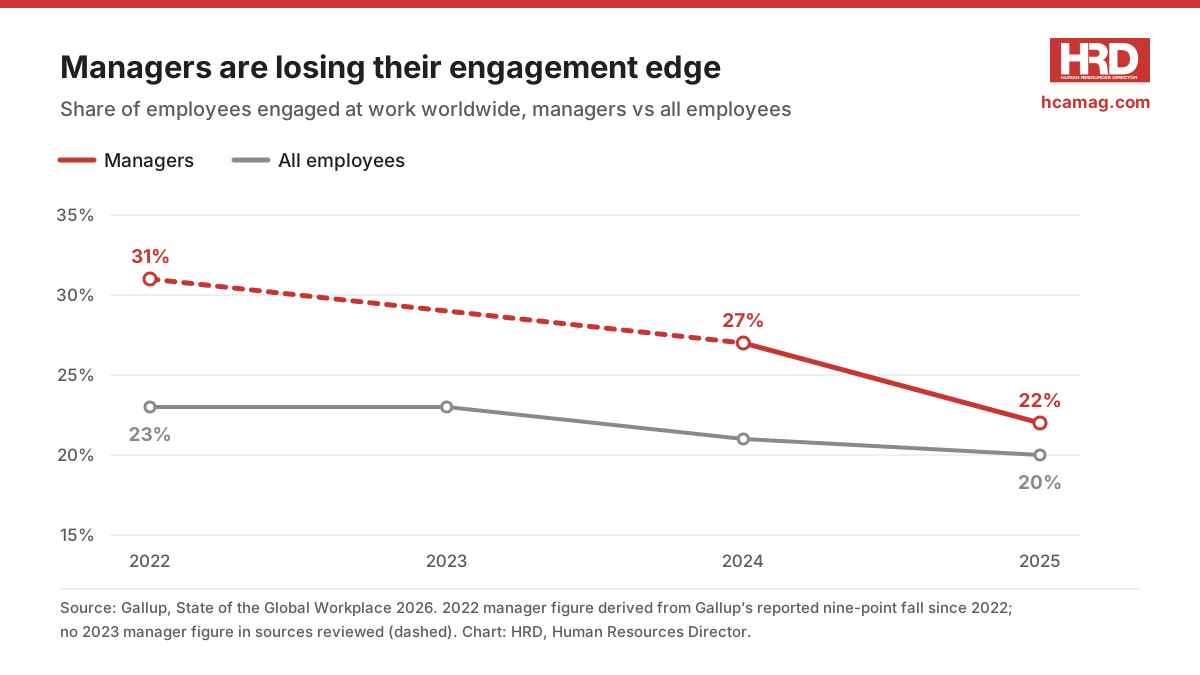
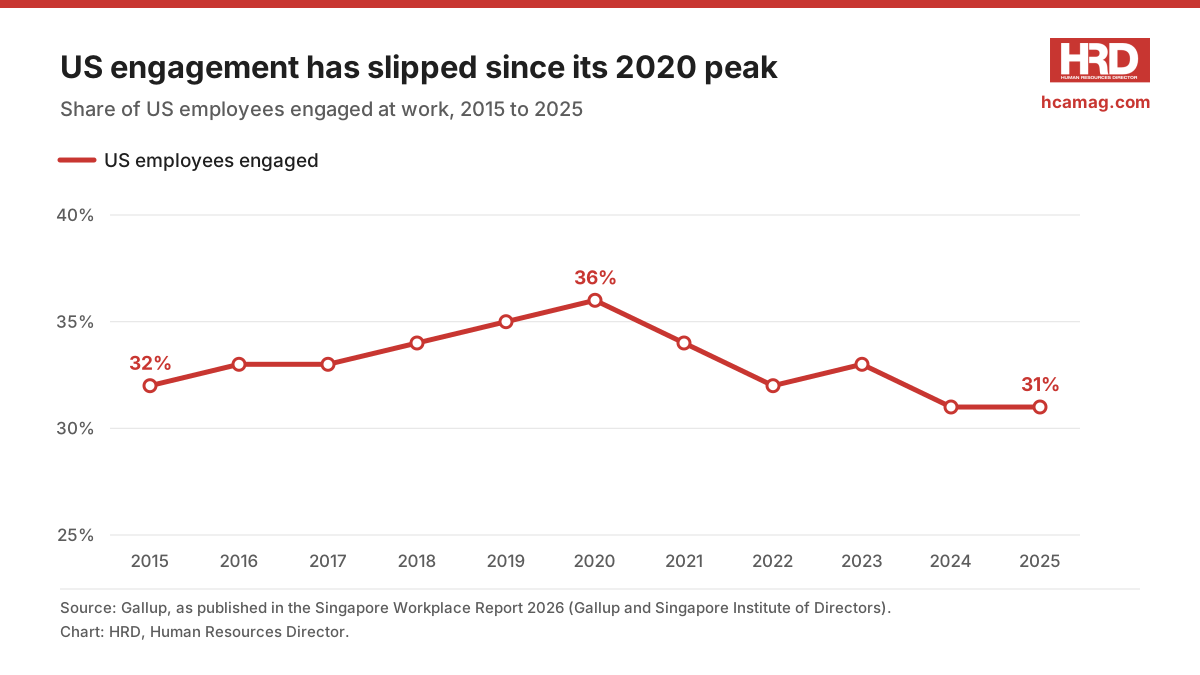
In China's system, county officials absorb pressure from above and pass it down. In companies, that is the middle manager's job, and the strain shows. Gallup's State of the Global Workplace 2026 found manager engagement worldwide fell from 27% to 22% in 2025, its biggest one-year drop, accounting for most of the slide in overall engagement to 20%. In the US, 31% of employees were engaged, down from a 2020 peak of 36%.
Read next: Managers' engagement levels falling, with direct impact on employee behaviour: report
Is Big Brother watching?
Software has made it cheap to watch everyone, and the evidence on what that does is mixed. The Government Accountability Office reviewed 122 studies and found surveillance can make workers safer but can also raise anxiety and injury risk when it is used to push productivity. Workers fared better when monitoring was explained, aimed at safety and limited in scope.
States are starting to set limits. Maine's employer surveillance law, in effect since Jan. 11, requires notice before monitoring begins and restricts audiovisual monitoring in employees' homes.
Read next: Bossware or safety net? The fine line between AI safety monitoring and worker surveillance
Breaking the cycle
Most of the fixes involve taking things away. Ask managers to list every recurring report, check-in and attestation they produce, then find out who reads each one. Expect to find some that nobody opens.
Treat a dashboard that is always green as a question, not good news. A number that never moves may only be measuring how well people have learned to hit it. And tell employees what each monitoring tool is for, and what its data will not be used for.
The harder change is cultural. When the first person to raise a problem becomes the first person questioned, everyone else learns to wait.
Hillman and Zhao's fieldwork suggests that turning up the pressure can produce an organization that looks more obedient while the people at the top know less about what is going on beneath them. Employers face the same trade-off on a smaller scale, and they can choose differently.